
Highlights
- Malaysia's new RM600M NdFeB magnet facility, with South Korea's JS Link and Lynas Malaysia, produces 3,000 tons annually.
- The facility elevates Pahang as a critical downstream processing hub for EVs, wind turbines, and defense systems.
- The partnership positions Malaysia as a contested territory between US-backed supply chains and China's rare earth dominance.
- Both superpowers compete for influence in Southeast Asia's critical minerals sector.
- Malaysia faces both opportunity and risk:
- Success could establish it as Asia's neutral rare earth broker.
- Mismanagement risks being caught between competing US-China industrial empires in the resource cold war.
When Malaysian Prime Minister Anwar Ibrahim announced a RM600 million “super magnet” plant in Pahang—a partnership between South Korea’s JS Link (opens in a new tab) and Lynas Malaysia (opens in a new tab)—the news sounded like a domestic industrial victory. But behind the fanfare lies something larger: Malaysia, as Rare Earth Exchanges (REEx) has chronicled, is quietly turning into a strategic battleground for influence between Washington and Beijing in the global race for rare-earth dominance.
Table of Contents
A New Axis in the Magnet War
The planned facility will produce up to 3,000 tons of neodymium–iron–boron (NdFeB) magnets annually—key components for electric vehicles, wind turbines, drones, and defense systems. JS Link’s investment signals South Korea’s push to anchor supply chains outside of China, while Lynas—the only major non-Chinese rare earth producer—extends its foothold in Southeast Asia.
Sino-American Rare Earth Clash—Contested Terrain?
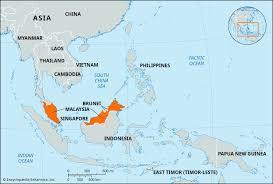
For Malaysia, as highlighted in numerous media this morning, including the Malay Mail (opens in a new tab), this is both an opportunity and a risk. The partnership elevates Pahang’s role in downstream processing, but it also situates Malaysia squarely between the United States–Lynas supply chain bloc and China’s tightening grip on refining and magnet exports. With the U.S. now promoting rare earth agreements across ASEAN and China deepening its presence in Myanmar and Laos, Malaysia could become contested commercial territory—a proxy zone where trade, technology, and geopolitics converge.
The Strategic Undercurrents
Anwar’s pitch at the APEC Leaders’ Meeting framed the project as an ESG-friendly investment that “supports global sustainability.” Yet for seasoned observers, it is also a quiet alignment with Western critical-mineral strategies. Washington views Lynas as an indispensable node in its rare earth security architecture; Beijing sees Malaysia as a soft flank to be kept close through trade and diplomacy.
Meanwhile, the Namhae Chemical (opens in a new tab) agreement to expand Malaysian imports of phosphaterock, potassium chloride, and green ammonia further intertwines resource trade with geopolitical positioning—strengthening ties with Seoul while hedging against China’s dominance in fertilizers and advanced materials.
Between Opportunity and Overexposure
The Malay Mail’s reporting accurately portrays the economic optimism, but omits the geopolitical tension. If Malaysia succeeds, it could emerge as the neutral broker in Asia’s rare earth ecosystem. If it mismanages the balance, it risks being squeezed between competing industrial empires. For investors, this isn’t just a regional story—it’s a barometer for whether Southeast Asia can industrialize without becoming collateral in the next resource cold war.
Summary
This Rare Earth Exchanges (REEx) analysis finds Malaysia’s “super magnet” project both visionary and volatile. It signals Southeast Asia’s growing leverage but also its exposure to the U.S.-China rivalry. As this media has chronicled, China has many interlocking, intertwining financial ties to Malaysia. Ye, the contest for Malaysia’s processing capacity could define the next phase of global rare earth realignment.
© 2025 Rare Earth Exchanges™ – Accelerating Transparency, Accuracy, and Insight Across the Rare Earth & Critical Minerals Supply Chain.


0 Comments