
Highlights
- Malaysia has enforced a nationwide moratorium on exporting unprocessed rare earth materials since January 1, 2024.
- The aim is to capture more economic value domestically.
- The export ban is part of a broader national strategy to:
- Develop downstream industries.
- Prevent resource exploitation.
- A new National Minerals Policy is expected in 2025.
- The Natural Resources, Environment and Climate Change Ministry will enforce the ban.
- Six-monthly reviews will be conducted to ensure compliance and effectiveness.
Today Rare Earth Exchanges reported that Malaysian media (New Straits Times (opens in a new tab)) pointed to a rare earth element export ban policy. But such a policy has been in effect since January 1, 2024. In September 2023, Prime Minister Anwar Ibrahim announced in Parliament (during the 12th Malaysia Plan Mid-Term Review) that the government will develop a policy to ban the export of raw rare earth materials. This move is aimed at preventing exploitation and resource loss and ensuring maximum returns for Malaysia. Officials emphasized that exporting unprocessed rare earth would deprive Malaysia of value-added opportunities – instead, by prohibiting raw exports, the country can develop downstream industries and capture more economic value domestically. As part of this strategy, the Prime Minister also stated that a new National Minerals Policy would be drafted to guide sustainable and comprehensive development of the mineral industry.
Implementation via Export Moratorium (2023–2024)
Following the announcement, Malaysia’s cabinet approved a moratorium on exporting raw rare earth elements (specifically non-radioactive rare earths) in late October 2023. This moratorium took effect on January 1, 2024. In practice, this means only processed rare earth products can be exported, while shipments of unprocessed rare earth ore/concentrate are prohibited under the new policy, as cited by Reuters (opens in a new tab).
Malaysia, Important on the Rare Earth Element Supply Chain Map
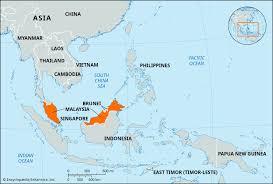
The Science, Technology and Innovation Minister (MOSTI) at the time, Chang Lih Kang, affirmed that Malaysia (opens in a new tab) “will allow exports of only processed rare earths” to ensure local value-addition, mirroring policies in other countries like Indonesia.
Enforcement: The Natural Resources, Environment and Climate Change Ministry (NRECC) (opens in a new tab) has been tasked with enforcing this ban. All state governments were formally notified of the moratorium (via a letter dated 20 Dec 2023) since mining licenses are under state jurisdiction. Some states initially requested the ban be reconsidered, but the federal government reaffirmed the policy. At a Feb 21, 2024, cabinet meeting, the Prime Minister insisted that state authorities must comply with the federal rare-earth export ban as it falls under national trade jurisdiction, cited Bernama (opens in a new tab).
As reported again by Bernama (opens in a new tab), a reminder was issued to states in March 2024 to ensure adherence. The moratorium on raw rare earth exports is to be reviewed every six months by the federal government for effectiveness and compliance, as reported in the Malaysian Business Today (opens in a new tab). According to that account, the export policy went into effect on January 1, 2024.
Ongoing Policy Development (2024–2025)
The rare-earth export ban is part of a broader policy shift in Malaysia’s mineral resource management. The government has been actively working on a new National Mineral Policy 3 (NMP3) to update the country’s minerals strategy in line with these decisions. In July 2024, the National Mineral Council discussed the NMP3 framework developed by NRECC, which will supersede the 2009 National Mineral Policy 2 as reported in The Star (opens in a new tab).
This upcoming policy was expected to institutionalize measures like the export ban on raw rare earths, promote domestic processing/value-chain development, and ensure mining activities align with sustainability and responsibility principles. According to officials, the new National Mineral Policy will serve as the primary guideline for Malaysia’s mineral industry, balancing economic development with environmental stewardship and state-federal coordination.
Sources
The above information is drawn from official Malaysian government communications and reports. Prime Minister Anwar’s announcement of the export ban was recorded in Parliament and reported by the national news agency Bernama. The implementation details (moratorium effective Jan 2024, Cabinet decisions, and directives to state governments) were confirmed by the Natural Resources Minister in Dewan Rakyat proceedings and documented via Bernama bernama.com (opens in a new tab). These measures have been reiterated in ministry press statements and aligned with Malaysia’s forthcoming National Mineral Policy as noted in government briefings businesstoday.com, my (opens in a new tab)thestar.com.my (opens in a new tab). All indicate a clear official policy in Malaysia to prohibit the export of raw rare earth materials, with the intent to process these resources domestically for greater economic benefit and strategic security. REEx is currently reaching out to the various Ministries as well.
©!-- /wp:paragraph -->


0 Comments