
Highlights
- Malaysian PM Anwar Ibrahim pushes to accelerate Khazanah Nasional's rare earth partnership with China to develop refining capacity, signaling Malaysia's strategic entry into the global REE processing race.
- Malaysia holds an estimated 16.1 million tonnes of non-radioactive REE valued near RM810 billion and aims to move beyond raw resource export toward midstream processing with Chinese state-owned firms.
- Despite deepening ties with Beijing, Malaysia maintains a multilateral approach through separate agreements with the US and South Korea, attempting to balance economic interdependence with China while pursuing Western market opportunities.
A new courtship: Kuala Lumpur and Beijing aligning on rare earth elements? According to news out of Malaysia Prime Minister Anwar Ibrahim’s call to accelerate Khazanah Nasional’s rare earth partnership with China signals Malaysia’s bold entry into the global REE race. If readers recall, Malaysia announced an agreement with the United States as well.
However now, the proposal—conveyed directly to Premier Li Qiang—hints at deepening sovereign cooperation to develop refining capacity on Malaysian soil. Reuters previously reported early-stage talks between Khazanah and a Chinese state-owned firm to build a refinery, underscoring Malaysia’s intent to move beyond raw resource export toward midstream processing. Rare Earth Exchanges (REEx) validated with sources on the ground the Chinese aim of establishing the Southeast Asian nation as a rare earth element processing hub.
Table of Contents
Malaysia: Imminent Rare Earth Processing?
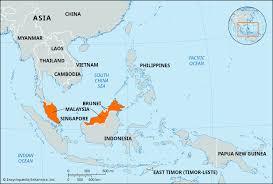
Malaysia, with an estimated 16.1 million tonnes of non-radioactive REE valued near RM810 billion, sees REEs as its next strategic lever. The partnership fits China’s pattern of leveraging bilateral ties to maintain refining dominance, while Malaysia gains technology, financing, andmarket access.
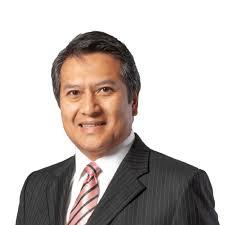
Datuk Amirul Feisal Wan Zahir, Khazanah’s Managing Director
From Vision to Refinery: Reading the Signals Behind the Soundbites
Khazanah’s Managing Director, Datuk Amirul Feisal Wan Zahir (opens in a new tab), struck a cautious tone—emphasizing research and alignment with government policy rather than immediate capital deployment. That phrasing suggests the investment remains exploratory, not yet a greenlighted project. The mention of “supporting government efforts to explore” reveals Malaysia’s balancing act: courting Chinese expertise without ceding too much control over its mineral destiny. REEx noted Malaysia’s conflicted positioning—caught between deep economic interdependence with China and a growing capitalist impulse fueled by the allure of Western, particularly American, wealth and market opportunity. But what about both—can Malaysia have its cake and eat it to?
This dovetails with Lynas Rare Earths Ltd’s separate July agreement with South Korea’s JS Link to produce up to 3,000 t of NdFeB magnets in Pahang—a quiet assertion that Malaysia can play host to multiple strategic partners, not just Beijing. Anwar’s clarification that Malaysia’s trade pact with the U.S. “does not restrict REE to America” further underlines this multilateral approach.
Between Opportunity and Overreliance
What’s accurate:
Malaysia’s reserves and G2G discussions are well-documented. Reuters, Bernama, and MITI confirm the figures and intent, and via reputable sources on the ground REEx suggests China collaboration a real imminent prospect.
Where speculation creeps in:
The implied pace of “acceleration.” No finalized refinery site, equity terms, or environmental framework is public.
Potential bias:
National outlets frame China’s involvement as pure opportunity,omitting risks of overdependence or regulatory capture—lessons others in Southeast Asia know too well.
If executed prudently, Malaysia could emerge as the region’s most diversified REE hub outside China. If not, it risks becoming another spoke in Beijing’s circular economy.
©!-- /wp:paragraph -->


0 Comments