
- Southern Alliance Mining reported 95% YoY revenue growth to $35M USD in 1HFY2026, driven by its 40% stake in Malaysia's first operating ionic-adsorption clay rare earth mine, though the company still recorded a net loss of RM4.2 million.
- The Gerik Mine in Perak contains 84 million tonnes of ionic clay ore with ~30% heavy rare earth content, positioning SAM as a strategic non-Chinese rare earth player, but production currently stops at the carbonate stage, requiring export to China for processing.
- SAM trades at S$293M market cap with a strong cash position but faces critical challenges, including thin 4% margins, continued Chinese processing dependency, and unresolved questions about downstream value capture and project economics resilience.
Southern Alliance Mining Ltd. (opens in a new tab) (SGX: QNS), also known as “SAM,” reported a 95% year-over-year revenue surge in 1HFY2026, driven primarily by its newly acquired stake in Malaysia’s first operating rare earth mine. For investors following the rare earth supply chain, the real story is the company’s entry into ionic-adsorption clay (IAC) rare earth production, a deposit style historically dominated by China and often associated with heavy rare earth elements (HREEs). Rare Earth Exchanges™ has already reported “on the company’s significant potential.”
Rare Earth Exchanges™ highlights some key points about this Southeast Asian treasure trove. First, with the completion of SAM’s 40% stake acquisition in MCRE, SAM can offer investors exposure to a world-first producing ionic clay rare earth mine outside the Chinese stock market. Second, rare earth is not a volume-driven industry; therefore, the quality of the ore, particularly its heavy rare earth content, is more important than sheer production scale.
The headline numbers are certainly impressive. But a closer look at the company tells a more measured story. SAM remains in the early stages of its transition into rare earths, with modest margins, ongoing net losses, and continued reliance on China for downstream processing. But that could change as the company has hinted to Rare Earth Exchanges discussions outside of China as well.
For investors seeking exposure to rare-earth supply outside China, SAM represents an intriguing entry point. While still far from a fully integrated supply-chain solution, the company gains momentum, and Rare Earth Exchanges suggests a valuable, underappreciated asset.
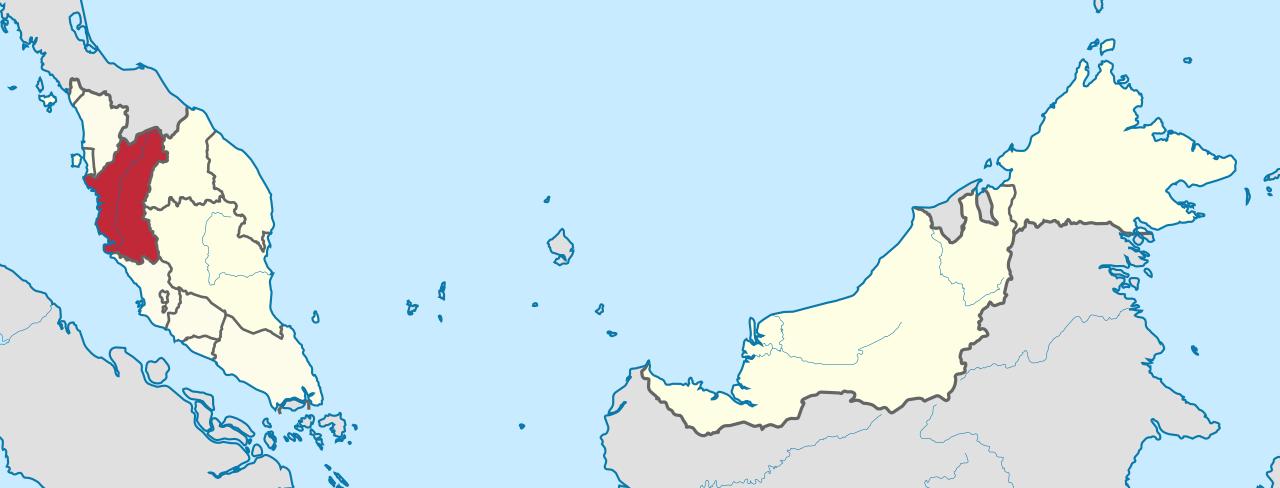
Perak, Malaysia
Revenue Surge Fueled by Rare Earth Acquisition
SAM reported RM137.3 million ($35m USD) in revenue for 1HFY2026, up 95.4% from RM70.3 million a year earlier. The increase was largely attributable to its 40% stake in MCRE Resources, which generated RM63.1 million ($16m USD) from the sale of 580 dry metric tonnes of rare earth oxide equivalent product. This new segment helped the company swing from a RM7.1 million gross loss last year to a RM5.4 million gross profit, lifting margins to roughly 4%. However, the broader picture remains mixed. The group still recorded a net loss of RM4.2 million, highlighting that the rare earth business has not yet reached scale sufficient to fully offset other operating costs.
The Strategic Asset: Ionic-Adsorption Clay Rare Earths
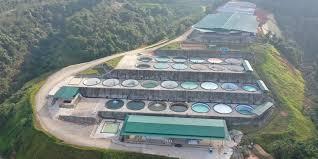
SAM’s rare earth exposure comes through the Gerik Mine in Perak, operated by MCRE Resources. The deposit contains approximately 84 million tonnes of ionic-adsorption clay ore grading roughly 495 g/t soluble rare earth oxides.
MCRE Resources Gerik Mine in Perak
Source: MCRE Resources
This geology matters.
Ionic-adsorption clay deposits are important because they:
- historically supply a large share of the world’s heavy rare earth elements,
- are amenable to in-situ leaching extraction, and
- typically involve lower capital intensity than hard-rock rare earth projects.
Company materials suggest the operation sits within the first quartile of the global NdPr cost curve, implying potential cost competitiveness if production scales as planned. If confirmed, this would make the project one of the few ionic clay operations outside China. One ready to roll with important heavy rare earth bearing content.
Critical Constraint: China Still Controls Processing
Investors should focus on one crucial detail. MCRE’s production currently stops at rare earth carbonate, which is exported to China for separation into individual oxides. That means the project participates only in the upstream portion of the rare earth value chain. The midstream—chemical separation and refining—remains overwhelmingly controlled by China. Barring some unforeseen events and until Southeast Asia develops independent processing capacity, much of the economic value will continue to accrue there.
Production Outlook: Early Ramp-Up Phase
During the reporting period, the Gerik operation produced approximately 3,800 tonnes of rare earth carbonate, with mining currently active on two of nine land parcels. Development of the third and largest parcel is expected to begin production in FY2026–2027. According to the company's interaction, about 30% of the output consists of vitally important heavy rare-earth elements.
If that expansion proceeds successfully, the project could significantly increase output over the next several years. Still, investors should monitor several critical factors:
- conversion of resources into proved reserves,
- verified heavy rare earth element composition,
- regulatory and environmental oversight of in-situ leaching, and
- the company’s ability to secure stable downstream processing, and
- Company sophistication in deal-making.
Stock Perspective: Growth Story, Not Yet a Mature Rare Earth Producer
SAM trades on the Singapore Exchange Catalist board (opens in a new tab), with an estimated market capitalization of roughly S$293 million in early 2026.
Strengths
- Exposure to Malaysia’s first operating REE mine
- Ionic clay geology with declared HREE content
- Strong cash position (~RM111 million)
Risks
- Smaller production scale
- Continued reliance on Chinese refining
- Thin operating margin (~4%)
- Ongoing net losses
In short, SAM currently trades more as a rare-earth-themed growth equity than as a fully established rare-earth producer.
Key Questions Investors Should Ask
Several critical issues remain unresolved:
- What percentage of heavy rare earths is actually present in the Gerik deposit?
- Can Malaysia develop the capacity to separate to capture midstream value?
- How resilient are project economics if rare earth prices decline again?
- What happens if China restricts imports of rare earth carbonate feedstock?
Bottom Line for Investors
SAM’s entry into rare earth mining clearly boosted revenue and improved financial performance in the short term. That portion of the company’s announcement appears credible and supported by the financial filings. But the long-term investment thesis hinges on something much bigger: whether the company—and Malaysia more broadly—can move beyond upstream extraction into midstream processing, which dominates rare-earth economics.
For investors seeking non-Chinese exposure to rare earth resources, SAM represents a Southeast Asian foothold, but it is not yet a substitute for China’s dominant position in rare earth refining and magnet supply chains.


0 Comments
No replies yet
Loading new replies...
Moderator
Join the full discussion at the Rare Earth Exchanges Forum →