
Highlights
- China Minmetals strategically positions itself in deep-sea minerals, non-ferrous metal clusters, and AI-enabled trade infrastructure.
- Company enhances operational control over critical minerals like antimony and copper through technological and logistical upgrades.
- Coordinated approach combines technological innovation, policy alignment, and regional economic development in Southeast Asian markets.
China Minmetals pushed a coordinated message (opens in a new tab) this week: expand upstream optionality, tighten midstream control, and digitize the commercial front door to Southeast Asia. In four separate releases, the state-owned metals giant highlighted four key announcements.
1. Closer ties with the International Seabed Authority (ISA)
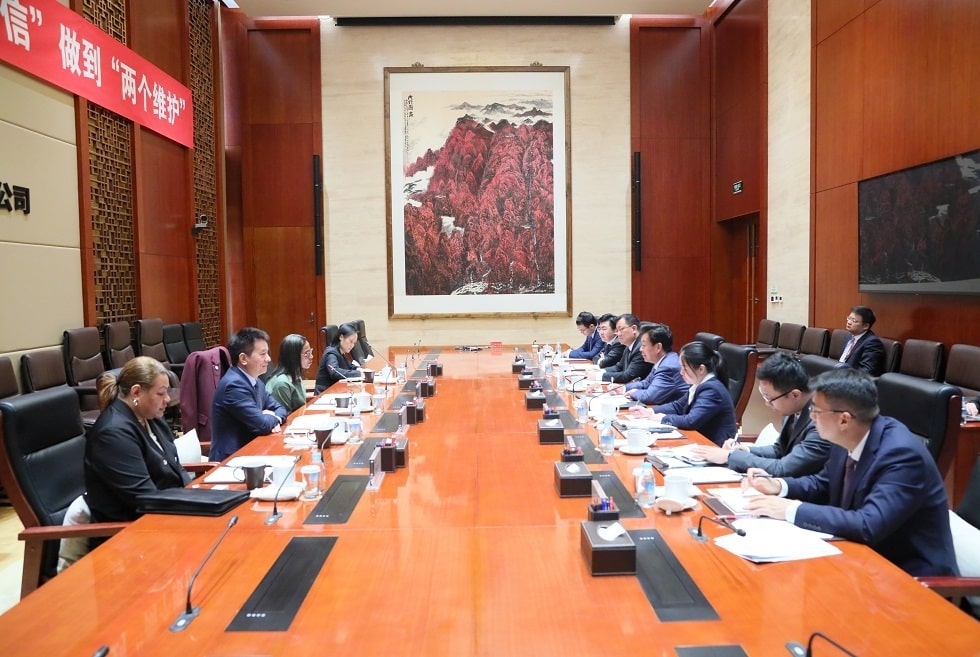
Chairman Chen Dexin’s meeting with ISA Secretary-General Leticia Reis de Carvalho underscores Beijing’s long game in deep-sea minerals. The readout stresses technological R&D, environmental stewardship, and “contributing Chinese experience to rule-making.” For U.S. and allied supply chains, the signal is clear: China intends to shape future deep-sea frameworks—and potentially lock in optionality on polymetallic resources—before commercial exploitation ramps.
China Minmetals Meets with ISA
2. New central-local cooperation in Guangxi
Minmetals’ Guangxi engagements matter because the region brands itself as China’s “hometown of non-ferrous metals.” The company’s working sessions with the Guangxi Zhuang Autonomous Region government and Wuzhou leadership point to bigger plans: build out a high-end, intelligent, green industrial cluster; accelerate the Nandan Key Metals pilot zone; and develop storage and transportation bases for key bulk metals. For an American audience, that reads as capacity, logistics, and policy alignment coming online together—precisely what underpins pricing power and export resilience.
3. Operational upgrades in antimony and copper blending
On-site inspections at Guangxi Antimony and Fenglian Copper reveal operational intent. Antimony—on many Western critical lists—gets a push toward “specialized, refined, distinctive, innovative” upgrades and cost discipline. At Fenglian Copper’s Fangchenggang terminal, Minmetals is leaning into “three-ization” (digital, intelligent, green) and upgrading ore-blending capabilities while shifting from toll processing to independent operation—a margin and risk-management pivot with commercial bite. Net takeaway: more control over product slate, quality, and trading terms at a strategic port facing ASEAN.
4. An AI-heavy China-ASEAN Expo that positions Minmetals inside a more tech-enabled trade corridor
Minmetals’ presence at the China-ASEAN Expo (CAEXPO) came with an AI flourish: new pavilions, multilingual “AI Exhibition” agents, and an explicit move from “hardware connectivity” to “intelligent linkage.” For U.S. firms, two implications stand out: expect a slicker, data-rich interface for Chinese industrial buyers and sellers across ASEAN, and anticipate faster qualification cycles for regional partners that plug into these AI workflows.
Conclusion
Why is this business-worthy now? The ISA engagement hints at rule-shaping in future seabed mining; Guangxi coordination bundles resources, logistics, and policy to scale non-ferrous value chains; antimony and copper upgrades tighten operational control in products that influence defense, energy, and electronics; and the ASEAN AI play modernizes the demand funnel. None of this is a single “breakthrough,” but together it’s a methodical capacity-plus-influence build with downstream pricing and availability implications for the West.
Disclaimer: This news item originates from communications by a Chinese state-owned enterprise. Statements should be independently verified by non-state sources before investment or policy decisions.
©!-- /wp:paragraph -->


0 Comments