
Highlights
- Nigeria possesses substantial rare earth mineral deposits across multiple states, with monazite as a primary REE-bearing mineral.
- The country aims to transition from oil dependency by developing its critical minerals sector.
- Targeting 10% GDP contribution from mining by mid-decade.
- Recent investments like the $400 million Hasetins rare earth processing plant signal Nigeria's strategic commitment to becoming a key global rare earth supplier.
Nigeria is renowned for its oil and an array of solid minerals, but a less-heralded asset lies in its rare earth elements (REEs). These 17 elements – comprising the 15 lanthanides plus scandium and yttrium – are critical to modern high-tech industries, from renewable energy and electric vehicles to electronics and defense. As global demand for REEs surges (the market grew from $3.39 billion in 2023 to $3.74 billion in 2024 and is projected to reach over $8 billion by 2032), Nigeria stands at the threshold of leveraging its substantial yet underdeveloped rare earth resources for economic diversification and technological advancement. Countries like China, Australia, and the United States dominate REE supply today, and even smaller African nations such as Malawi and Burundi are emerging in this sector. Nigeria, by contrast, has remained mostly on the sidelines despite significant deposits in various states. This article provides an overview of Nigeria’s rare earth mineral potential, key deposits and players, recent developments, and the challenges and opportunities ahead.
Rare Earth-Bearing Minerals in Nigeria
Nigeria’s geology offers a surprisingly rich suite of rare earth–bearing minerals, with monazite standing out as the heavyweight. This phosphate mineral, packed with cerium, lanthanum, neodymium, and praseodymium, occurs in heavy mineral sands and as a by-product of historic tin mining on the Jos Plateau. Significant deposits stretch across Plateau, Benue, Nasarawa, and Cross River States, with beach sands in coastal Cross River offering easier extraction potential. The USGS estimates roughly six million tonnes of monazite ore in just four states—Cross River, Kaduna, Kebbi, and Niger—while active mining, mostly by small operators, is already underway in Plateau’s Kanam area. Other contributors to Nigeria’s critical mineral portfolio include columbite–tantalite (with trace yttrium), zircon in coastal and riverine sands, bauxite deposits that could yield scandium, and titanium minerals like ilmenite and rutile, all of which form part of broader placer assemblages often containing REEs.
These deposits are scattered across the country—from the north-central REE belt of Plateau, Nasarawa, and Benue, to northwest zones in Kaduna, Kebbi, and Niger, down to Cross River’s coastal sands, and even into northeastern states like Taraba and Adamawa. Yet, despite the breadth of occurrences and the variety of REE-bearing minerals, most reserves remain untouched, with monazite and xenotime (an ytterbium-rich phosphate) largely unexploited. This underdevelopment underscores both the scale of Nigeria’s latent rare earth wealth and the opportunity for strategic investment to move from geological promise to globally competitive production.
Current Exploration and Production Status
Nigeria’s rare earth industry is still in its infancy, with limited formal exploration and no major dedicated rare earth mines yet. In fact, Nigeria has yet to develop any industrial-scale REE mine, and most extraction activities are informal or small-scale. Much of the rare earth recovery so far has come as by-products of other mining (such as tin/columbite mining yielding monazite concentrates). Geological data deficiency is an ongoing issue – comprehensive surveys to quantify REE reserves are needed, and little is published about Nigeria’s total REE endowment beyond the monazite estimates mentioned.
Despite these constraints, Nigeria has recently appeared on the map of REE producers. According to the USGS, the country produced roughly 13,000 metric tons of rare earth oxides in 2024, an 80% increase over the previous year. This output – likely derived from aggregated small-scale operations – vaulted Nigeria into the top 5 rare earth-producing nations globally in 2024. However, industry experts note that this figure comes with uncertainty, as the supply chains are not well documented, and the extent of Nigeria’s extractable rare earth reserves remains unclear, as cited by Investing News and others.
On the ground, certain enterprising local firms and artisanal miners are already active in rare earth extraction. For example, Sadaris Integrated Services (based in Jos, Plateau State) and led by Mr. Idrees Salisu Abdulhameed, is a monazite-focused mining company. Salisu Abdulhameed recently claimed (opens in a new tab) they process about 135 metric tons of REE-bearing monazite material per week. This is just one among hundreds of small operators reportedly mining or processing REE-rich minerals across the country. Such figures hint at an informal boom in critical minerals mining. Yet the lack of oversight and formal structure means much of this activity doesn’t translate into substantial economic gains or a reliable supply for Nigeria. As of early 2025, the mining sector contributes under 1% to Nigeria’s GDP, a fraction the government aims to elevate to 10% by mid-decade.
Why Rare Earth Elements Matter
The clamor for rare earths is driven by their indispensable role in modern industries. In the energy transition, rare earth magnets (neodymium-iron-boron magnets augmented with dysprosium or praseodymium) are key for wind turbines and electric vehicle (EV) motors. Each EV and wind turbine can contain several kilograms of rare earth magnets. REEs like lanthanum and cerium are used in rechargeable batteries and catalytic converters, while yttrium, europium, and terbium are critical for LEDs, fiber optics, and display screens. In defense and aerospace, rare earth alloys and components are found in jet engines, precision-guided munitions, and satellite communications.
In short, REEs underpin both the green technology revolution and advanced defense/electronics manufacturing. As countries worldwide race to secure these critical materials (and to reduce overreliance on China, which currently controls the bulk of global supply), new sources like Nigeria are attracting interest. The global rare earth market’s robust growth (forecast ~10% CAGR through 2032) presents a lucrative opportunity for resource-rich nations. If Nigeria can develop its rare earth supply chain, it could become a key player in meeting this rising demand, all while diversifying its economy beyond oil.
Challenges to Overcome
Unlocking Nigeria’s rare earth potential will not be without difficulties. Several major challenges have been identified:
| Challenges | Summary |
| Geological Knowledge Gaps | There is a need for comprehensive exploration and data gathering. Many of Nigeria’s REE occurrences are not well quantified or mapped. Enhanced geological surveys and resource estimates (led by agencies like the NGSA) are vital to identify viable deposits and attract investment. |
| Technical and Infrastructure Deficits | Extracting and refining rare earths is technologically complex, often involving sophisticated separation processes and handling of radioactive by-products (monazite contains thorium). Nigeria currently lacks local expertise and specialized facilities for REE processing. Infrastructure at prospective mining sites (roads, power, processing plants) is underdeveloped, raising the cost and difficulty of any new mining project. |
| Investment and Policy Hurdles | Decades of focus on oil meant underinvestment in solid minerals. As a result, Nigeria has missed out on the global critical minerals boom. A 2024 report by the Lagos Chamber of Commerce and Industry pointed to poor mineral beneficiation capacity and the absence of a robust strategy to attract exploration investment as key barriers. Additionally, regulatory and administrative bottlenecks have made the mining sector less appealing. The government has begun addressing this (for instance, recently revoking hundreds of dormant mining licenses to make way for serious investors), but policy reforms need to continue to provide clarity and incentives. |
| Informal Mining & Traceability | As noted, much of Nigeria’s rare earth output comes from informal artisanal mining. This poses challenges in supply chain transparency and consistency of supply. Unregulated mining can also lead to revenue loss and environmental damage. Ensuring that artisanal miners are organized into cooperatives or linked with formal projects (with fair offtake agreements) will be important for scaling up production sustainably. |
| Environmental Concerns | Rare earth mining and processing have significant environmental and health impacts if not managed properly – including radioactive waste from monazite and chemical pollutants from processing. Nigeria will need to enforce stringent environmental regulations and adopt best practices to avoid soil and water contamination. Early planning for waste management and community health safeguards is essential, especially given Nigeria’s experience with environmental issues in resource extraction. Aligning new mining projects with ESG (Environmental, Social, Governance) principles is not only ethically sound but will make Nigerian REE products more acceptable on the global market. |
Recent Developments and the Way Forward
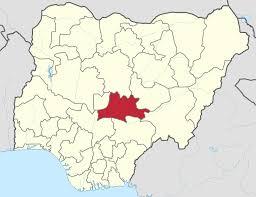
Encouragingly, Nigeria has begun taking concrete steps to develop its rare earth and critical minerals sector. In June 2025, the federal government announced its support for what is poised to be Africa’s largest rare earth processing plant. A local company, Hasetins Commodities Ltd, (opens in a new tab) is spearheading a $400 million investment to establish this facility in Nasarawa State, in central Nigeria. The project is expected to create over 10,000 jobs and is a flagship for the country’s push toward in-country value addition. Minister of Solid Minerals Development Dele Alake hailed it as a “significant milestone” for investor confidence. According to project plans, the Nasarawa plant will boost Nigeria’s rare earth processing capacity by adding 12,000 tonnes annually on top of an existing 6,000-tonne capacity (presumably from smaller operations), with groundbreaking already in progress.
Nasarawa State
What makes the Hasetins project particularly interesting is its integrated approach: the company intends to source raw materials by partnering with artisanal miners, providing them training, protective equipment, and a guaranteed offtake, while performing early-stage beneficiation locally. This model could address both the supply chain opacity and the community aspect of mining, bringing informal miners into the formal economy. It exemplifies how Nigeria can bridge the gap between its ambitious processing plans and the current paucity of large-scale mines.
Beyond this high-profile project, Nigeria’s government has signaled a strong commitment to critical minerals development. Policy now mandates at least 30% local processing of mined ores before export (rising to 35% by 2030 for industrial minerals), aiming to spur domestic refinery and smelter investments. In late 2023, the Minister (Alake) revealed that Nigeria’s untapped critical mineral deposits (including REEs, lithium, etc.) are valued at over $700 billion – a figure highlighting why diversifying from oil is so crucial. There is active encouragement of foreign direct investment and public-private partnerships: the government has been inaugurating committees, forging roadmaps (with institutions like the Raw Materials Research Council and African Development Bank involved), and revamping regulations to make the sector more investor-friendly.
To truly harness its rare earth potential, experts suggest Nigeria pursue a multi-pronged strategy:
Invest in Geological Surveys
Allocate resources to mapping and drilling programs focused on REE-bearing zones. Identifying the richest deposits (in both primary hard-rock contexts and secondary alluvial contexts) will provide the data needed to attract major mining companies or investors. Government and research institutions can collaborate on this, possibly with technical assistance from countries experienced in REE exploration.
Develop Local Expertise and Research
Establish training programs and centers of excellence in minerals processing and metallurgy (perhaps at Nigerian universities or through international partnerships). Building domestic capacity in REE extraction technology will reduce reliance on foreign expertise. Similarly, investing in R&D for sustainable extraction methods (for example, techniques to extract REEs from coal ash or to refine monazite with minimal environmental impact) could give Nigeria a technological edge.
Attract and Incentivize Investors
Nigeria should continue to improve the business climate for mining ventures. This can include tax incentives or royalty relief for first-movers in REE mining, streamlined licensing processes, and assurances around security and infrastructure support at mining sites. The recent uptick in investment (over $800 million in new processing plants in 2024 alone, according to the ministry) is a positive sign. Leveraging this momentum, Nigeria can reach out to strategic partners – for instance, technology companies or allied nations seeking diversified REE sources – to co-develop mines and processing facilities. The goal is to channel both foreign capital and know-how into building an end-to-end rare earth supply chain domestically.
Promote Sustainable and Transparent Mining
It is imperative to adopt eco-friendly practices from the outset. This means enforcing environmental regulations on waste handling (e.g. safe storage or neutralization of thorium-rich residues), requiring impact assessments, and engaging local communities in decision-making. Artisanal miners should be formalized and included in the supply chain with fair compensation and safety standards, as the Hasetins model proposes. Furthermore, traceability systems (potentially blockchain-based or a minerals traceability initiative) could be implemented to assure international buyers that Nigerian-sourced rare earths are responsibly mined. This emphasis on sustainability will ensure long-term viability and help Nigeria’s REE products meet global market standards.
Conclusion
Nigeria’s venture into rare earth minerals represents a significant opportunity to diversify its economy and join the frontlines of the 21st-century tech materials supply chain. The country possesses the geological ingredients – evidenced by substantial monazite reserves and widespread critical mineral occurrences – to become a significant source of REEs. Thus far, this potential remains largely untapped, held back by historical neglect, data gaps, and infrastructural challenges. But with strategic planning and decisive investment, Nigeria is beginning to chart a new course. The recent commitment to major processing facilities and policy reforms indicates that Nigeria is serious about unlocking this “hidden” wealth. As one analyst noted, rare earths present a “golden opportunity” for Nigeria (at least to Nigeria boosters) – but realizing it will require the right mix of policies, investment, and sustainable practices. If Nigeria can surmount the challenges and maintain momentum, it could within the next decade emerge as a key supplier of critical minerals, fueling not just its own economic growth but also contributing to the global transition toward clean energy and advanced technologies. In a world increasingly scrambling for alternative REE sources, Nigeria’s rare earth riches are indeed a treasure trove waiting to be unlocked.
Sources: BusinessDay Nigeriabusinessday.ng (opens in a new tab)businessday.ng (opens in a new tab); VerifAfricaverivafrica.com (opens in a new tab)verivafrica.com (opens in a new tab); Ecofin Agencyecofinagency.com (opens in a new tab)ecofinagency.com (opens in a new tab); Xinhua Newsenglish.news.cn (opens in a new tab)english.news.cn (opens in a new tab); NigerianMining.comnigerianmining.com (opens in a new tab)nigerianmining.com (opens in a new tab); Investing News Networkinvestingnews.com (opens in a new tab); Nigerian Mineral Exchange https://nigerianmineralexchange.com/unveiling-nigerias-rare-earth-mineral-potential-a-wealth-of-untapped-opportunities/ (opens in a new tab); Rare Earth Exchanges multiple articles.


Great insight on Nigeria’s mineral wealth.