
Highlights
- Pahang state has disclosed an estimated 1.4 million tonnes of non-radioactive rare earth reserves valued at approximately US$7.9 billion.
- 70% of the reserves are located within environmentally-sensitive forest reserves, requiring multilayered permitting and oversight.
- Malaysia is positioning itself to control more of its REE value chain through a proposed state-controlled processing hub in Pahang.
- This initiative aims to move beyond raw material exports to capture midstream value under newly approved NR-REE mining SOPs.
- Malaysia remains the only country outside China with fully permitted cracking and leaching facilities.
- This unique position allows Malaysia to potentially act as a dual-track supplier by combining upstream NR-REE feed with established midstream separation capacity.
Malaysia’s rare earth narrative enters a new chapter. Pahang—long a state with a complex mineral legacy—has disclosed an estimated 1.4 million tonnes of rare earth element (REE) reserves, valued at roughly RM37.4 billion, or about US$7.9 billion.
For markets hungry for non-Chinese supply and for governments pushing to diversify upstream sources, the headline lands with understandable excitement.
Yet, as Rare Earth Exchanges has chronicled for the last year, Malaysia’s significance in the global REE chain has never been merely geological—it is regulatory, technical, geopolitical, and increasingly strategic—the crossroads in Asia where China, America and potentially Europe will converge.
Table of Contents
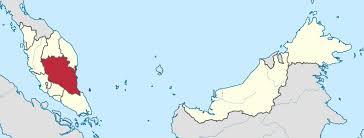
State of Pahang
Note Malaysia major rare earth element mine owned by Southern Alliance Mining (MCRE Resources Sdn Bhd) is located in the state of Perak, Malaysia — specifically at the “Gerik” / “Kenering / Hulu-Perak” ionic-adsorption clay rare-earth deposit.
The Numbers: Glimmering Potential, Grounded Realities
Pahang’s valuation per the Malay Mail (opens in a new tab) piece, aligns with Malaysia’s growing NR-REE (non-radioactive rare earth elements) positioning: ionic-clay style material, typically easier to leach and process, and non-radioactive—an important political distinction after Malaysia’s long scrutiny of thorium-bearing ores.
- Accurate: The pricing reference (US$6,456/t RE carbonate) is consistent with late-2025 market levels.
- Accurate: Malaysia’s deposits often fall within forest reserves or state-managed lands—mirroring geological mapping patterns across Peninsular Malaysia.
But the fact that 70% of REE-prospective areas lie within forest reserves introduces the country’s perennial tension: environmental oversight. After years of public pressure surrounding Lynas Malaysia, any attempt to scale extraction inside sensitive ecosystems will face multilayered permitting, civil-society scrutiny, and reputational risk. The Malaysians are taking land stewardship and care very seriously.
The State-Controlled Hub: A New Industrial Ambition
Pahang’s interest in a state-owned or state-controlled REE processing hub fits a broader regional template—Indonesia’s nickel industrial parks, Vietnam’s state-directed REE consolidation, and Thailand’s ionic-clay ambitions.
- Accurate: Malaysia approved NR-REE mining SOPs in June, consistent with its national push to formalize and regulate ionic-clay extraction.
- Speculative: The idea that Lynas or any foreign operator will automatically control processing is not supported; the government’s language signals openness, not inevitability.
For investors, the signal is unmistakable:
Malaysia intends to own more of its REE value chain rather than exporting raw material or relinquishing the midstream to foreign operators. But the states are open to partners. Rare Earth Exchanges has highlighted one venture on the ground there—DTEC MMT, collaborating with local state governments.
The Glow Beneath the Headlines
The valuation (RM37.4B) risks creating false certainty. Ionic-clay REE extraction is highly dependent on leaching performance, impurity management, water balance, and environmental compliance costs. These are inferred reserves, not feasibility-level economic deposits. The article’s economic framing oversimplifies what remains a technically challenging pathway.
Why Malaysia Still Matters More Than the Tonnage
Malaysia’s importance to the REE sector stems from three enduring advantages:
- The only fully permitted cracking and leaching facility outside China—Lynas Malaysia. This has made Malaysia indispensable to the Western rare earth supply chain for over a decade.
- A strategic geographic position between ASEAN mining jurisdictions and global magnet manufacturers in Japan, Korea, and increasingly India.
- Striving for a technocratic capacity and regulatory sophistication, allowing Malaysia to operate midstream REE processing at industrial scale—something few countries have managed.
If Pahang develops its ionic-clay resources responsibly, Malaysia could become a rare dual-track supplier:
upstream NR-REE feed + established midstream separation capacity.
No other nation besides China currently holds that configuration.
Notes
Pahang hosts some of Malaysia’s most geologically significant ionic-clay rare earth deposits, concentrated largely in weathered granitic terrains across districts such as Kuantan, Raub, Lipis, Jerantut, and Cameron Highlands.
These clays—classified as non-radioactive rare earth elements (NR-REE)—are similar in style to China’s southern ionic clays, containing commercially relevant concentrations of light and medium rare earths, including Nd, Pr, Dy, and Tb, essential for permanent magnets.
Estimates cited by state officials indicate roughly 1.4 million tonnes of REE-bearing material, with about 70% located inside forest reserves and the remainder on state or private lands. Historically, Pahang’s REE potential has been underexplored, but recent state-led mapping, SOP development, and interest in a centralized processing hub have elevated the region as Malaysia’s primary candidate for scalable, regulated NR-REE production.
© 2025 Rare Earth Exchanges™ – Accelerating Transparency, Accuracy, and Insight Across the Rare Earth & Critical Minerals Supply Chain.


0 Comments