
Highlights
- U.S. and China are planning high-level talks in Paris that may include rare earths on the agenda, signaling these materials are being used as strategic leverage in trade negotiations rather than simple commodity discussions.
- China's dominance over rare earth refining and downstream processing gives it significant geopolitical power, despite Western efforts over the past decade to rebuild supply chains outside Chinese control.
- For rare earth investors, policy shifts emerging from these negotiations—not geology or mining capacity—will likely determine which Western projects succeed in the evolving strategic materials landscape.
For the casual reader, the story sounds like another round of trade diplomacy. The United States and China plan high-level talks in Paris before a possible meeting between President Donald Trump and President Xi Jinping. But buried inside the reporting is a strategic signal: rare earths may be part of the negotiation agenda.
According to reporting from Qatar Tribune and the South China Morning Post and some chatter in our network—citing sources in Washington, Beijing, and Paris—delegations led by U.S. Treasury Secretary Scott Bessent and Chinese Vice Premier He Lifeng could discuss tariffs, investment deals, agricultural trade, and rare earths ahead of Trump’s planned visit to Beijing later this month. If accurate, that single line matters more than it appears.
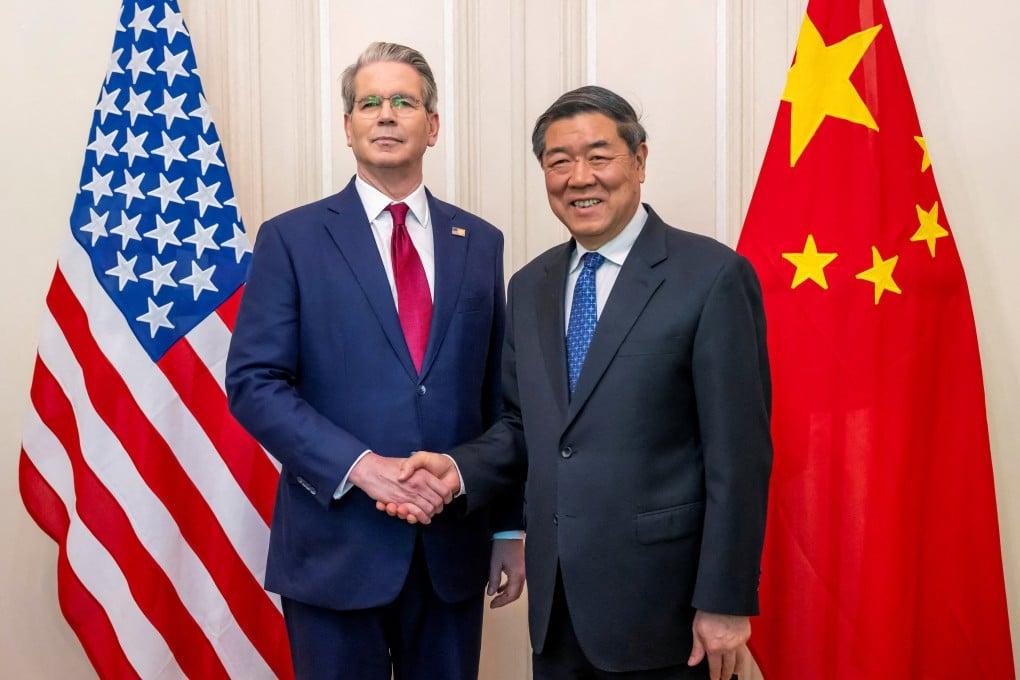
Source: SCMP
The Leverage Few Headlines Explain
Rare earth elements sit at the center of modern industrial power.
China dominates global rare earth refining, magnet production, and heavy rare earth processing, even though mining itself is geographically broader. These materials underpin electric vehicles, missiles, drones, wind turbines, and advanced electronics.
When rare earths appear in trade negotiations, they rarely represent a simple commodity issue. They signal strategic leverage. Western policymakers have spent the past decade trying to rebuild supply chains outside China. But the hard reality remains: China still controls most of the downstream value chain.
What the Reporting Gets Right
Several elements of the coverage align with known facts.
First, the talks fit into a broader cycle of negotiations that began after the Trump administration launched tariffs in 2025. According to the reporting, this Paris meeting would represent the sixth round of talks between the two governments.
Second, rare earths are frequently discussed in parallel with agricultural trade—particularly soybeans—in U.S.–China diplomacy. Commodity swaps have historically been used as political “deliverables” ahead of high-profile summits.
Third, the negotiations are unfolding amid geopolitical instability, including Middle East tensions, war and energy disruptions. Such crises often accelerate conversations about strategic materials security.
The Fog of Anonymous Sources
Still, investors should read the reporting carefully.
The rare earth reference is attributed entirely to unnamed sources. And our network sources are not fully verified. No concrete policy proposals are described. Important unknowns remain:
- Are negotiators discussing export controls or quotas?
- Could tariffs on rare earth products change?
- Is China offering supply stability in exchange for technology concessions?
Without answers, the mention of rare earths may serve as a bargaining chip rather than a concrete policy shift.
Why This Matters for the Supply Chain
Even the possibility of rare earths entering the negotiation agenda highlights a fundamental reality:
Rare earths are no longer merely mining commodities. As we have tried to convey to the world since our launch in late 2024, they are instruments of industrial strategy and geopolitical influence. For investors watching Western rare earth companies, the lesson is simple. Policy shifts—not geology—may determine which projects succeed.


0 Comments
No replies yet
Loading new replies...
Moderator
Join the full discussion at the Rare Earth Exchanges Forum →