
Highlights
- Pensana Plc and ReElement Technologies meet with White House National Security Council to discuss rare earth supply resilience.
- The companies are targeting first production in 2027 and positioning themselves as a strategic alternative to Chinese rare earth supplies.
- Current challenges include securing financing, establishing offtake contracts, and demonstrating processing capabilities at scale.
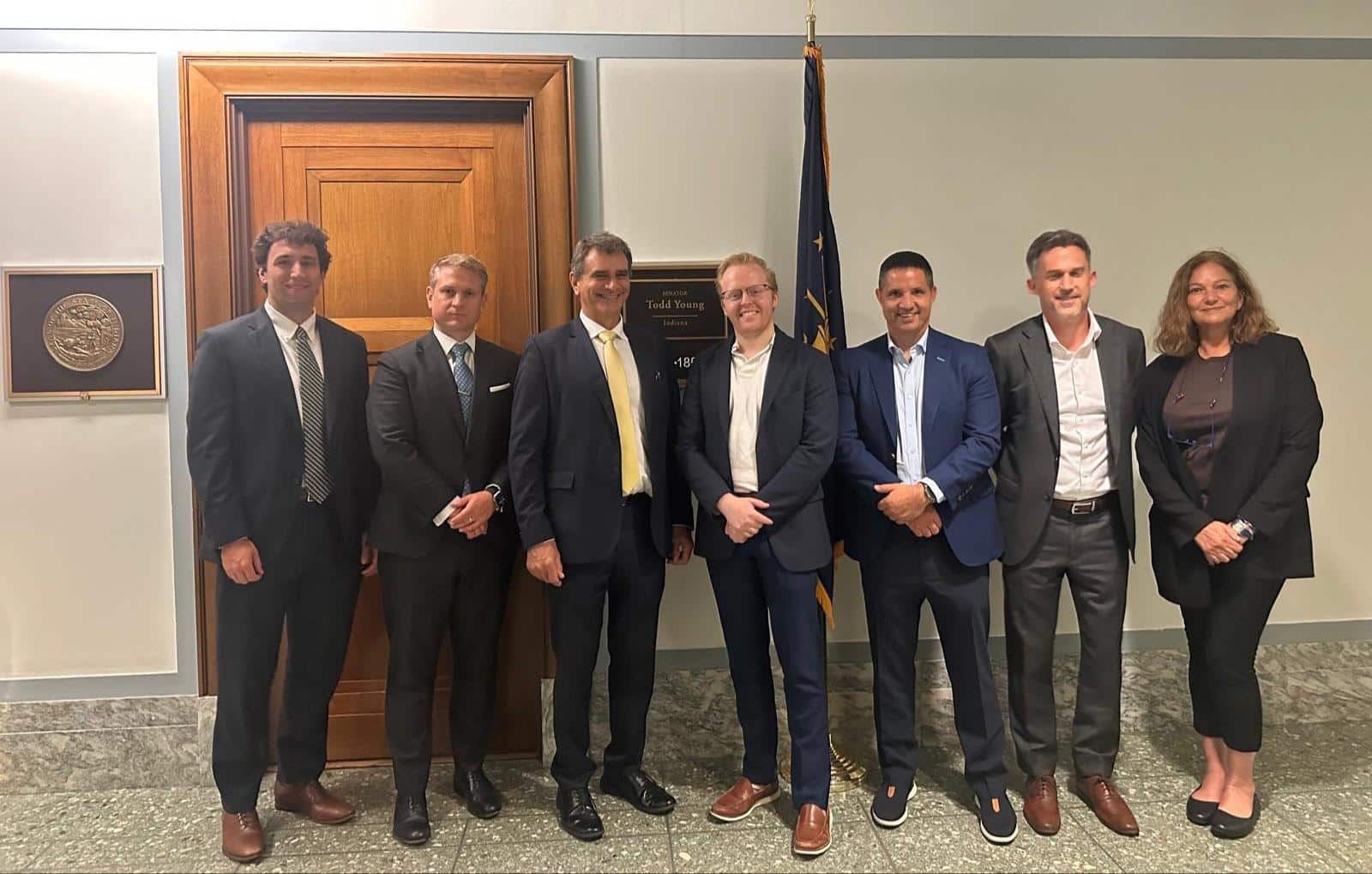
Pensana Plc (opens in a new tab) based in the UK along with partner ReElement Technologies (opens in a new tab) based in the U.S. have taken their lobbying drive straight to the heart of U.S. power. CEO Tim George and CCO Will Izod met last week with David Copley (opens in a new tab), Deputy Director for Critical and Emerging Technology at the White House National Security Council, to discuss rare earth supply resilience. The meeting capped a flurry of high-level engagements across Washington, including with EXIM, DFC, USTDA, Commerce, State, and Senator Ted Cruz’s office. Strategic partner ReElement joined to showcase how its domestic processing could dovetail with Pensana’s Longonjo project in Angola.
What We Know
Pensana is pitching Longonjo as one of the world’s largest rare earth deposits, now targeting first production in early 2027. That timing is no coincidence: the U.S. Defense Federal Acquisition Regulation Supplement (DFARS) will soon bar defense-related imports of rare earths from non-allied nations. Angola, as an “allied partner,” positions Pensana well. The Washington meetings also come as China tightens reporting rules for both domestic and imported rare earths—a reminder that Beijing’s grip extends beyond its borders.
Investors Need More
The announcement leans a tad bit on geopolitical theater, leaving material investor data untouched unless the team’s walking away with a major deal with the U.S. federal government. Some key items to learn more about:
- Funding Gap: Pensana has not disclosed whether financing for Longonjo’s build-out is secured. Past attempts to raise capital have struggled. Who foots the bill for a 2027 start remains unanswered.
- Offtake Clarity: No U.S. buyer contracts or binding MOUs were mentioned. Pensana has inked a deal with ReElement Technologies as reported by REEx. Without offtakes, rhetoric of “strategic supply” risks being aspirational.
Processing Scale: ReElement is highlighted as a partner, but the scale of its separation capacity compared to Lynas, MP Materials, or emerging players isn’t specified. Can it handle Longonjo volumes? CEO Mark Jensen was interviewed by the REEx team (opens in a new tab) (see YouTube channel (opens in a new tab)), proactively declaring he is ready to scale—that he only needs more capital.* Logistics Reality: Shipping heavy concentrate from Angola to the U.S. adds cost and complexity—no details yet on economics, infrastructure, or risk exposure in Angola.
Strategic Context
Chairman Paul Atherley, who was also recently interviewed by REEx, positioned Pensana as “a trusted partner” for America’s long-term needs, citing tightening Chinese controls as an urgent fuel. But investors should note: the U.S. has already seeded multiple “ex-China” supply lines—from MP’s Mountain Pass (CA) to Lynas’ Texas facility to Arafura’s Australia projects. Pensana must still demonstrate it can carve out a defensible niche.
Atherley has shared with REEx that it would appear America will be the nexus of the ex-China rare earth supply chain market, and hence his company’s pivot from Europe to the United States.
Bottom Line
The Washington tour gives Pensana and ReElement Technologies (19% owned by American Resources Corporation (opens in a new tab)) political visibility, but visibility isn’t the same as viability. Without clear financing, offtakes, and credible processing scale, investors should treat this as an early-stage policy signal rather than a de-risked commercial path. Unless, of course, the team walks away with a major deal involving the U.S. feds. We’ll have to see, watch, as the story is worth tracking carefully.
©!-- /wp:paragraph -->


why even bother
Are you aware that MP can only separate 10,670 t.p.a of REO concentrate ? (SRK N43-101 Page 103) enough for just 5,000 t.p.a magnets.
I’ll expand on my previous, Financing is confirmed from the FSDEA, ABSA and the AFC.
From March 18th RNS
The Board of the Africa Finance Corporation (“AFC”), has approved its US$81.2 million participation in an approximately US$160 million syndicated loan facility (“the Facility”) alongside major South African bank Absa Bank Limited, subject to the conclusion of definitive loan documentation and the fulfilment of conditions precedent contained therein.The Facility will provide senior funding for the Phase 1 development of the Company’s Longonjo rare earth mine (“Longonjo”) in Angola through its 84% owned subsidiary Ozango Minerais SA (“Ozango”). The Facility will comprise approximately 60% of Phase 1 project funding for Longonjo. In addition to the US$15.0 million bridging loan already provided by the Angolan Sovereign Wealth Fund (“FSDEA”), the balance of Phase 1 funding will be provided through equity, with FSDEA having approved an investment of US$38 million in the form of equity and a convertible loan, and the AFC having approved an investment of US$54.9 million in the form of a convertible loan. The equity investments will be at subsidiary level and are also subject to the conclusion of definitive documentation and the fulfilment of conditions precedent contained therein.
From 23rd January RNS
Leading Pan-African bank Absa Bank Limited, acting through its Corporate and Investment Banking Division (“Absa”), has conditionally approved a credit term sheet for its 50% participation in an approximately US$160 million syndicated loan facility (“the Facility”), subject to the conclusion of definitive loan documentation and the fulfilment of conditions precedent contained therein as well as obtaining political and commercial risk insurance cover from a reputable political risk insurer on Absa’s exposure under the Facility.The Facility will provide senior funding for the Phase 1 development of the Company’s Longonjo rare earth mine (“Longonjo”) in Angola through its 84% owned subsidiary Ozango Minerais SA (“Ozango”). The debt financing will look to deliver approximately 60% of all project funding for Longonjo with the balance (40%) funded through equity provided at the Ozango level.
From 15th May RNS
Pensana is pleased to announce that, further to the Longonjo Finance announcement of 18 March 2025 (“the Financing”), wherein the Company announced the approval for the full financing of the Longonjo Rare Earth Mine, the Company has now agreed the terms and timing for the deployment of the first USD 25 million equity tranche, as part of the Financing, to be deployed by the Angolan Sovereign Wealth Fund (“FSDEA”) at subsidiary level into Ozango Minerais SA.
“It’s misleading to frame Longonjo’s exports as if they were bulk concentrate shipments. The plant will produce 20,000 tonnes per year of Mixed Rare Earth Carbonate in Phase 1 — packed in 1-tonne big bags, inside containers. That’s less than two containers a day, not a logistical headache. It’s a clean, upgraded product, already stripped of radionuclides, and directly marketable to separators like Solvay or ReElement. The economics are entirely different from shipping raw concentrate, as Lynas still does from Mt Weld to Malaysia.”
Funding gap? That is just poor journalism and it is misleading. Aside from the company announcing finance earlier this year, ReElement’s CEO has also specifically stated Longonjo is financed, as well as Pensana putting out a recent RNS stating the mine build was on schedule.
For an early stage online platform it is important to build trust to improve engagement, otherwise you become just like any other low budget proposition. Up until now I’ve enjoyed reading your articles but moving forward I’ll take them with a pinch of salt
Watch for potential Chinese moves in Africa with Peak as the model in relation to the likes of African RE miners such as Pensana, Lindian, Altona, Mkango, Namibia CM and Ionic RE, etc. Unlikely that these RE wannabee retail shareholders will have reservations about selling into a nice premium offer (as did Peak), even if a hostile takeover.
Africa is already China’s choice for source with its money and investment flooding the continent’s metals sectors, along with less African gov’ antipathy towards and ESG concerns. China wants to vacuum RE feedstock projects (self-interest re., own RE needs and ROW supply oppo; reduction) and those in the US, CAD, AUS, EU, etc., are likely already off the grid.
GLTA – REI
Reply
Using Peak as the “model” for Africa is a poor read of the market. Peak shareholders sold under duress — no financing options, a fatigued register, and an acquirer that paid barely $0.50/kg for contained NdPr. That isn’t a model; it’s a capitulation.
Africa today is not the same story. Pensana, for example, already has Phase 1 fully funded by African institutions (FSDEA, AFC, ABSA) with ESG conditions embedded — a world away from Peak’s reliance on speculative retail equity. Other players like Namibia CM are also tied into government mandates for local beneficiation. That means these assets aren’t “up for grabs” in the way you suggest.
As for “no reservations about selling into a premium,” Peak’s so-called premium still delivered a fire-sale valuation. African projects with structured funding, sovereign support, and enforceable in-country value-add requirements are not going to roll over for the same treatment.
In short, Peak is the cautionary exception, not the rule. Treating it as the playbook for China in Africa misunderstands both the financing landscape and the political environment on the continent today.