
Highlights
- Phuket Island soils from former tin-mining areas show REE concentrations averaging 345 mg/kg with naturally occurring radioactivity (²²⁶Ra, ²³²Th, ⁴⁰K) slightly above UNSCEAR safety limits.
- Study reveals that rare earth supply chains carry hidden radiological risks from uranium and thorium in REE-bearing minerals like monazite and xenotime.
- Environmental and radiological compliance is becoming a gating factor for ex-China rare earth projects, affecting permitting timelines, costs, and bankability.
A new in-press paper (opens in a new tab) in the Journal of Environmental Sciences puts a spotlight on an under-discussed reality of the rare earth and critical minerals supply chain: REEs often travel with naturally occurring radioactivity, and old mining districts can leave a long environmental afterimage.
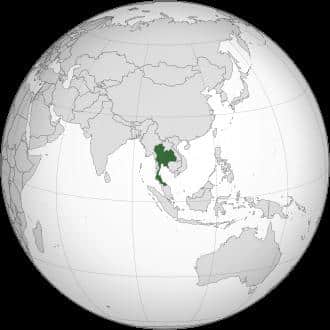
Researchers assessed soils across Phuket Island, Thailand—once a major tin-mining center—measuring both rare earth elements (REEs) and natural radionuclides linked to REE-bearing minerals such as monazite and xenotime (notably uranium and thorium).
Their headline finding: Phuket soils show light rare earth enrichment and heavy rare earth depletion, consistent with weathered granitic geology, but with signals that past tin-mining activity also plays a role.
What the Data Says
The reported total REE levels ranged from 0.14 to 1287 mg/kg, averaging ~345 mg/kg. Chondrite-normalized patterns show LREE enrichment and HREE depletion, while negative cerium (Ce) and europium (Eu) anomalies point mainly to granite weathering—with “exogenous” inputs suggested in places (a polite way of saying: not purely natural background).
Ecological risk metrics (EF, Igeo, PERI) largely land in the “moderate enrichment / moderate contamination / low ecological risk” bands. But the attention-grabber is radiological: average activity concentrations for ²²⁶Ra (149 Bq/kg), ²³²Th (105 Bq/kg), and ⁴⁰K (~825 Bq/kg) produced hazard indices slightly above UNSCEAR reference limits.
Supply Chain Implications: ESG Is Now a Market Constraint
For rare earth developers, processors, and offtakers, this is a reminder that “rare earth opportunity” can come bundled with radioactivity management, tailings liability, and land-use conflict—especially in former tin districts. For Thailand—where old mining regions overlap with high-value tourism—baseline studies like this can harden permitting, monitoring, and remediation expectations. That can raise costs, slow timelines, and reshape which projects become bankable.
What’s Still Unknown
This is labeled a preliminary assessment, not a definitive exposure or health-outcome study. “Slightly above limits” is a flag for follow-up, not a verdict. But for investors and policymakers, the direction is clear: environmental and radiological data is becoming pricing power—and a gating factor for “ex-China” supply.
Source: Nuchdang S. et al., Journal of Environmental Sciences (In Press, available online Jan 6, 2026). DOI: 10.1016/j.jes.2026.01.006
©!-- /wp:paragraph -->


0 Comments