
Highlights
- China launched 'Justice Mission 2025,' its largest live-fire drills encircling Taiwan, demonstrating the ability to blockade the island while Western powers express concern over regional stability.
- Beijing controls 85% of rare earth refining and has previously weaponized these critical minerals, with recent export controls disrupting Western defense manufacturing until alternate supplies were secured.
- The escalating geopolitical tensions are driving Western nations to diversify critical mineral supply chains, though full independence from Chinese sources won't be achieved until 2029, creating near-term volatility risks.
Table of Contents
Highlights
- Encirclement Drill Escalates Tensions: China’s Eastern Theater Command launched its largest-ever live-fire drills around Taiwan, code-named “Justice Mission 2025.” Beijing calls it a justified warning to separatists, but Taiwan’s government condemned the move as destabilizing and Western observers see an aggressive show of force.
- Rare Earths in the Crosshairs: China dominates ~85% of rare earth refining and has weaponized these minerals before. Each U.S. F-35 jet needs over 920 lbs of rare earths – so any conflict could both spur demand and disrupt supply, straining defense and tech industries.
PLA Drill Sends a Message
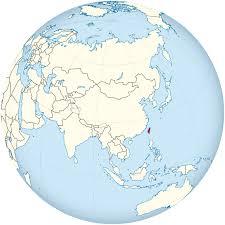
At dawn on Dec. 29, the PLA kicked off “Justice Mission 2025,” a joint exercise encircling Taiwan with simultaneous air, naval, and missile drills. State outlets like China Daily cast the live-fire exercise as a “legitimate and necessary” step to defend sovereignty and deter “Taiwan independence” forces. Fighter jets and bombers crossed the Taiwan Strait’s median line while warships to the east practiced blockades.
Beijing’s intent is to show it can cut off Taiwan from outside support in a conflict – effectively warning Taipei and its Western backers.
Western Counterpoint: Provocation Concerns
Taiwan’s government denounced the drills as a brazen act of coercion, warning that such military pressure endangers regional stability. While no incidents occurred, Taiwan’s forces were on high alert. The U.S. reaction was cautious; President Donald Trump said he’s “not worried” and suggested Beijing isn’t about to invade, even as American naval assets monitored the situation.
Meanwhile, the United States' action against Venezuela is a multi-pronged strategy primarily centered on economic sanctions and, more recently, military operations targeting alleged drug trafficking networks and the Maduro government. The stated goals include restoring democracy, combating corruption, and stopping the flow of narcotics to the U.S. But as Rare Earth Exchanges has suggested, Washington’s renewed pressure on Venezuela also centers on an oil-sanctions story, with a deeper endgame involving resource geopolitics. Could America be moving to constrain China’s access to petrol and strategic minerals that move through the same shadow logistics as crude?
While Venezuelan oil continues to reach China via re-labeling and ship-to-ship transfers, the underreported risk lies in minerals—gold, iron ore, bauxite, coal, nickel, and illicitly mined coltan—flowing out of the Orinoco Mining Arc through opaque networks to Chinese processors, where traceability is weakest.
Venezuela does not possess proven, bankable rare earth reserves at scale, but reported Guayana Shield occurrences remain a geological possibility that amplifies uncertainty. Rare Earth Exchanges suggests that a core insight for investors centers on the reality that commodities are no longer siloed: tightening oil access can ripple into mineral supply chains, and as the United States–China rivalry hardens, energy pressure may trigger stress at midstream mineral chokepoints that underpin modern manufacturing and technology, making Venezuela less the target than the pressure valve.
Rare Earth Chokehold
Back to China, that nation’s near-monopoly in rare earth elements has become a focal point amid the Taiwan crisis. Beijing dominates production of these 17 critical minerals, refining roughly 85% of the global supply. In 2010, China abruptly cut rare earth exports to Japan during a territorial spat, sending prices soaring.
More recently, in April 2025, Beijing imposed export controls on dysprosium, terbium, and other magnet-critical rare-earth metals in retaliation for U.S. tech sanctions. That “shot across the bow” of the U.S. defense sector forced Western manufacturers into frantic supply-chain adjustments.
Those curbs earlier this year disrupted the output of missiles, fighter jets, and even electric vehicles until alternate supplies were secured. Although China later eased some restrictions, EU officials say rare-earth flows have only resumed in “dribs and drabs (opens in a new tab)”. One EU industry chief likened Beijing’s tactic to “racketeering (opens in a new tab)”. The latest Taiwan Strait flare-up underscores that if China weaponized its rare earth chokehold in a conflict, Western defense and tech sectors could face crippling shortages.
Market Impact and Investor Outlook
This saber-rattling is intensifying efforts in Washington and allied capitals to secure non-Chinese sources of critical minerals. The U.S. Department of War has been funding domestic rare earth projects (e.g., with Lynas and MP Materials, and others) to build a mine-to-magnet supply chain, but a fully independent capacity won’t be online until around 2029. In the near term, any escalation could send rare earth prices higher and roil industries from defense to electronics. Investors have reacted to past China-Taiwan flare-ups by bidding up shares of rare earth miners outside China, anticipating shortages.
As the PLA’s Justice Mission 2025 (opens in a new tab) unfolds, analysts warn of turbulence ahead: geopolitical flashpoints like Taiwan increasingly translate into supply chain shocks for critical resources.
For markets, the takeaway is clear – diversify supply lines and brace for volatility as great-power rivalry intertwines with resource security.


0 Comments