
Highlights
- China controls 85-90% of rare earth refining and magnet production, a strategic chokepoint that tariffs alone cannot overcome.
- True Western independence will require coordinated allied efforts until 2035-2040.
- The U.S. lacks critical processing infrastructure and remains 90% dependent on China across the supply chain.
- Quick fixes are structurally impossible without a comprehensive six-point industrial policy.
- The industrial policy should include global alliances, market stability measures, and dedicated funding.
- Without strategic interventions like price floors, offtake agreements, and a Critical Minerals Czar to coordinate efforts, new Western projects risk being undercut by Chinese dumping tactics.
President Trump’s go-it-alone “Liberation Day” tariff strategy may score political points, but it ignores a fundamental truth: China still controls 85–90% of rare earth refining and magnet production, a strategic chokepoint no single country can bypass on its own. Many of the same problems exist in the much broader critical minerals segment as well. While President Trump must be commended for acknowledging and acting to overcome the systemic, deeply rooted crisis, unless China acts swiftly to reform and open up its markets—fully embracing U.S. and Western investors (which is extremely unlikely) we must change course and design a critical mineral and rare earth element industrial policy---a comprehensive, enduring one that places security, resiliency and circular economy above all else.
Table of Contents
Right Intentions, But Correct Strategy?
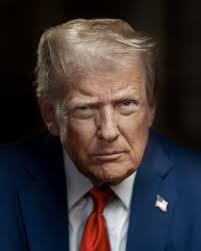
Despite optimistic promises that the U.S. will be “less dependent on China within a year,” the reality is starkly different. Industry roadmaps per Rare Earth Exchanges (REEx) indicate it will take well over a decade of concerted effort – and tens of billions in investment – for the West to achieve even 50% rare-earth supply chain independence we are looking at 2035 to 2040. Quick fixes are structurally implausible given the current dependency.
Without a coordinated allied industrial policy – from price floors and strategic stockpiles to multi-national supply alliances – any gains risk collapse under China’s ability to undercut prices and outlast competitors. REEx has urged a comprehensive six-point strategy to build a resilient mine-to-magnet supply chain, warning that anything less leaves the U.S. vulnerable to “déjà vu” shutdowns if Beijing decides to play hardball.
Tariffs and Rhetoric vs. Reality on the Ground
President Trump’s “Liberation Day” approach – leveraging one-off tariffs and bilateral deals in hopes of freeing America from myriad, intertwining production dependences- including Chinese minerals – is a dramatic gambit, but it’s not solving the real problem. Tariffs can grab headlines, yet rare earth elements (REEs) are not a commodity one can swap suppliers for overnight. Unlike soybeans or steel, rare earth supply chains are dominated at every stage by one player: China. Beijing currently controls roughly 85–90% of global rare-earth refining capacity and magnet production, a near-monopoly that serves as a strategic chokehold on high-tech and defense industries. This means that virtually every electric vehicle motor, wind turbine generator, or guided missile in the West relies on materials processed in China. Tariff threats alone do nothing to change this underlying reality.
Indeed, the very notion that tariffs or quick deals can liberate the U.S. supply chain in the near term is fanciful. Trump’s optimism – exemplified by pledges to “make a deal on everything” or declare victory within months – glosses over deep structural truths. The United States remains almost entirely dependent on China for the refining, separation, and alloying of rare earth elements. No amount of political theater can undo decades of offshored supply chains in a year’s time.
As one REEx analysis put it, the idea that “everything” could be resolved in one swift trade maneuver “ignores a deep structural truth” about our rare earth dependence. In reality, any trade “deal” that doesn’t address processing and manufacturing leaves the U.S. nearly as vulnerable as before. Recent much-touted agreements with Beijing underscore this point: they turned out to be limited, short-lived measures that failed to loosen China’s stranglehold on critical magnet materials for U.S. defense. The pomp of “tariff liberation” risks becoming a dangerous delusion, cultivating a false sense of security while little actually changes on the ground.
The Processing Bottleneck: Why the U.S. Can’t Go It Alone
The major bottleneck in the rare earth and broader critical mineral supply chain isn’t finding raw ore – it’s processing: the separation and the turning mined minerals into refined oxides, metals, and magnets. Here lies the crux of why a unilateral, country-by-country tariff approach falls flat. Even if the U.S. mined more rare earths at home or sourced from countries like Vietnam or Brazil, we would still lack the ability to refine most of those materials. China’s dominance is most pronounced in processing and refining, not just mining.
For example, as of 2025 the West (primarily the U.S. and Australia’s Lynas) handles only a single-digit percentage of global rare-earth refining. Nearly all heavy rare earth separation – for critical elements like dysprosium and terbium – is done in China, leaving even allied nations no choice but to send ores to China for finishing, or figure out a very long pathway to refinement. This is the Achilles’ heel: you cannot build a supply chain on raw ore alone if you must ship that ore right back to your geopolitical rival for processing.
Solving this midstream bottleneck requires tight partnerships with allies and new partners, not tariff sparring. “No nation can tackle China’s rare earth dominance alone. An isolationist stance won’t suffice,” REEx warned in an open letter to President Trump. The U.S. must lead in forging a global rare earth alliance – coordinating with trusted partners in Europe, Japan, Australia, ASEAN, Africa, and the Americas (North and South) – so that mines, refineries, and factories are linked across friendly borders. Such an alliance means removing trade barriers among allies, integrating supply chains, and signing cooperative offtake agreements so that Western producers have guaranteed buyers.
In practical terms, Australia or Brazil might supply the ore, ASEAN nations (like Malaysia or Vietnam) could host processing plants, and the U.S. and EU build out magnet manufacturing – with each step reinforced by mutual agreements. By banding together, the U.S. and its partners can match China’s scale and prevent Beijing from playing them off against each other in a race to the bottom. This multilateral approach is the polar opposite of a tariff war: it’s about building an alternative ecosystem, not just penalizing the current one.
A Reality Check on Timeline: Independence Is Not One Year Away
While President Trump touts that America will be “just fine” or “less dependent on China” within a year, nothing could be further from the truth. The hard reality is that rebuilding a rare earth supply chain is a decade-plus project, not a political quick win or something that can help with the midterms next year.
According to the REEx detailed 2040 roadmap, even under the most aggressive “Operation Warp Speed” scenario (on the order of $50–$75 billion invested across mines, refineries, and factories), the West could aim to achieve about 50% of global rare earth magnet production on allied soil by 2040. In other words, with 15 years of effort, friendly nations might collectively replace roughly half of China’s chokehold. We must remember that China is not sitting still — both expanding capacity and focusing heavily on innovation downstream.
On our current trajectory – making deals in piecemeal fashion without a broad strategy – we would be lucky to inch to 30% or so independence by 2040. As the REEx analysis bluntly states, “the conservative path inches there after 2040 – if at all.” These numbers lay bare how implausible a one-year turnaround is.
Today, at the end of 2025, the uncomfortable fact is the West is still about 90% dependent on China across critical stages of the rare earth supply chain. That is why REEx and other experts insist a “comprehensive, synchronized industrial policy” is needed among the U.S. and its allies. The path to true supply chain security will be measured in several years to even decades, not months, and it will require strategic planning that outlives any one administration or trade tactic. Over-promising rapid independence isn’t just misleading – it can be counterproductive. If leaders declare the problem essentially solved in a year, investors and policymakers may let off the gas, thinking the crisis is averted when it’s not.
This could undermine support for the very long-term investments and alliances that are required to actually fix the problem. The bottom line: there are no shortcuts. Washington must level with the American people (and the markets) that reducing our reliance on China will take sustained effort into the 2030s and beyond. Claims to the contrary only breed complacency and confusion.
Mixed Signals Hurt Investment and Help China
Every time rosy pronouncements are made that America is“all set” on rare earths, it sends mixed signals to the market. The result is confusion in capital allocation at best, and complacency at worst. The rare earth sector is notoriously volatile and hypersensitive to policy signals. As REEx has observed, markets hate ambiguity – yet this sector “feeds on it,” with each political tremor in Washington or Beijing sending rare earth stocks on a rollercoaster.
For investors, hearing the President insist the supply problem will be fixed within a year raises questions: Should we even invest in new mines or processing plants if the crisis is supposedly ending? Nothing could be more dangerous for future supply. Bold claims unsupported by reality risk scaring off serious capital or misdirecting it. They can diffuse the sense of urgency, leading some to believe that the government will somehow handle it all quickly, when in fact private investment and innovation are desperately needed for the long haul.
Meanwhile, Beijing watches these dynamics closely. Chinese state actors have a long history of price manipulation to undercut competitors, honed over decades, as we have cited in REEx. If new Western-backed projects start to gain traction, China can (and almost certainly will) respond by flooding the market to crash prices, as they did in the 1990s when Mountain Pass and other non-Chinese mines were driven out of business. REEx analysts warn that without protective measures, it’s “déjà vu” waiting to happen: “Underpricing (‘dumping’) can bankrupt fragile rivals”, and without long-term offtake contracts, price floors, stockpiles, or tariff backstops in place, expect déjà vu.” In other words, if Western companies try to set up new mines or refineries in the current free-for-all market, many could be snuffed out by a well-timed Chinese price plunge that makes their product uncompetitive. This is not hypothetical – it’s exactly how China gained its near-monopoly in the first place.
That’s why strategic market intervention is not a dirty word here; it’s common sense. To give investors confidence to pour money into non-Chinese projects, the U.S. and allies need to stabilize the playing field. This means implementing the kind of safeguards Rare Earth Exchanges and industry experts have advocated: floor pricing and guaranteed offtakes for critical minerals, strategic buying for stockpiles, and other tools to buffer against China’s volatility. The Department of Defense’s partnership with MP Materials last year was a step in this direction – essentially buying a decade-long price floor (around $110/kg for NdPr) to ensure the sole U.S. rare earth mine can develop its processing capacity without fear of sudden price collapse. But that needs to be the rule, not the exception. Right now, no policy extends such protection to other would-be producers or refiners. So long as that’s the case, big financiers will view new U.S. rare earth projects as high-risk gambles.
In short, mixed signals and half-measures discourage investment, while clear commitments and safety nets would attract it. The U.S. government must send a consistent message: We will support this industry and shield early-stage projects from predatory pricing. Otherwise, China’s capacity to expand production and dump cheap products on the market will scare off investors or bankrupt the next MP Materials before it ever leaves the pilot stage. President Trump's declarations of imminent victory not only ring hollow – they may inadvertently aid China by sowing uncertainty and delaying the tough actions needed to truly break Beijing’s grip.
Credit to Trump’s Efforts – And Why They’re Not Enough
It’s important to acknowledge that President Trump has done more than perhaps any recent president to put rare earths and critical minerals on the national agenda. REEx has noted that his leadership “to date has been commendable” in elevating the issue. The Department of Defense-MP Materials deal mentioned above is genuinely path-breaking – it’s the first time Washington has directly invested ($400 million for a 15% stake) and set a price floor to bolster a domestic rare earth supply. The Trump Administration also signed executive orders on critical minerals and took initial steps to use the Defense Production Act to fund this sector. These moves broke the ice on an issue that had languished for years, and the President deserves credit for that. When Trump says he’s done more than his predecessors on rare earths, that claim has merit.
However, what’s been done so far is still only a start, nowhere near the comprehensive strategy required. A single flagship deal (MP Materials) and a scatter of tariffs or MOUs do not add up to supply chain security. The MP Materials example needs scaling up across the entire industry: as REEx urged, “expand on the MP model across the industry”. That means establishing a broader Strategic Rare Earth Reserve to purchase materials at a set floor price and offering long-term offtake agreements or price insurance to any qualified U.S. rare earth refiners and magnet makers. So far, no such comprehensive program exists – leaving most would-be entrants exposed to market whiplash. Likewise, while Trump’s tariffs signaled seriousness, they haven’t been paired with domestic measures like streamlined permitting or major R&D funding that would actually enable new mines and refineries to get off the ground quickly. The gap between rhetoric and implementation remains wide.
In effect, Trump’s approach tackles the symptoms (China’s trade behavior) more than the disease (our lack of capability). Tariffs and import restrictions can pressure Beijing, but they don’t build a refinery, train an engineer, or finance a new magnet factory on U.S. soil. Without those concrete actions, tariffs alone risk being mere “theater” – a show of strength with little follow-through. The situation is analogous to energy independence: one can tax imported oil, but unless you drill wells or deploy alternatives at home, you’re still at OPEC’s mercy. Here, unless the U.S. builds an end-to-end rare earth supply chain with our allies, we remain at China’s mercy no matter the tariffs imposed.
The good news is that a blueprint for what needs to be done does exist – and it’s much more ambitious than the status quo. REEx recently outlined a six-point industrial strategy in an open letter to President Trump. This comprehensive plan goes well beyond tariffs, focusing on root fixes to U.S. and allied capabilities. Key pillars of this strategy include:
1. Forge a Global Rare Earth Alliance
Work closely with trusted allies (from Five Eyes and the EU to Japan, Australia, and beyond, such as Brazil and ASEAN) to integrate supply chains and remove allied trade barriers. By coordinating production and guaranteeing markets among friendly nations, the U.S. and its partners can collectively counterbalance China’s dominance. (No more tariffs on Canadian or Australian critical minerals, for example – instead, treat this like a NATO for resources.)
2. Appoint a Critical Minerals Czar
Establish high-level leadership to streamline strategy across agencies. Currently, efforts are fragmented among DoD, DOE, DOI, EPA, etc. A dedicated Critical Minerals Czar could cut through bureaucratic red tape, fast-track permitting (even using federal lands or military bases for new facilities), and ensure mines-to-magnets projects move with urgent priority. This single point of accountability would align government actions with the national game plan.
3. Invest in American Talent & Innovation
Close the skills and R&D gap that China has exploited. This means funding university programs, technical colleges, and apprenticeships to train a new generation of mining and metallurgical engineers. It also means pouring money into research for better extraction technologies, recycling methods, and substitutes for rare earths. (Notably, China holds tens of thousands more patents in this field than the U.S., a gap we must shrink.) If we don’t have the people and IP, we can’t break China’s grip – so we must cultivate expertise at home and attract top talent from abroad.
4. Ensure Market Stability with Strategic Support
As discussed, market volatility is the poison that kills new projects. The plan calls for expanding the MP Materials model by establishing a Strategic Reserve to purchase key oxides (like NdPr) at a guaranteed floor price and by providing long-term offtake contracts to nascent refiners and magnet makers. This would reassure investors that if they back a new U.S. processing plant or magnet factory, it won’t be wiped out by a sudden price crash. Think of it as analogous to the Strategic Petroleum Reserve – except here it’s about buffering strategic minerals so that our industrial base survives and grows through the early, vulnerable years.
5. Build Industrial Base with Hubs and Incentives
China succeeded by clustering mines, refineries, and manufacturers together with massive state support. The U.S. can do a free-market version of this: designate Critical Mineral Industrial Zones (for example, around known resource sites in California or Texas) where projects get expedited permits, tax credits, and infrastructure support. Use federal procurement (e.g., military and renewable energy orders) to provide anchor demand for products from these hubs. By creating regional centers of excellence – where a mine, a separator, and a magnet plant feed into each other – we can rebuild an integrated supply chain efficiently. Recent legislation like the IRA’s tax credit for U.S.-made rare earth magnets is a step in this direction, but more is needed to catalyze full mine-to-magnet ecosystems domestically.
6. Unleash Private Capital via Smart Financing
Finally, supplement government funding by mobilizing Wall Street. The proposal suggests a National Critical Minerals Investment Fund or development bank to provide low-interest loans and guarantees to strategic projects. This would reduce risk for private investors. In addition, it highlights market-driven ideas like a dedicated “ex-China” rare earth supply chain ETF (something Rare Earth Exchanges itself has modeled) to channel capital into Western producers, processors, and manufacturers. By making it easier for investors to bet on the non-China supply chain as a whole, we attract more funding to scale these industries. In short: align financial incentives with national security goals so that big money sees upside in solving this problem.
Together, these six points form the outline of an industrial policy approach that is global in scope, yet grounded in free-enterprise principles. It is not about copying China’s state-run model; it’s about leveraging America’s and our allies’ strengths – innovation, markets, and mutual cooperation – to achieve what China did through top-down control.
The current U.S. strategy, however, only scratches the surface of this playbook. Tariffs and ad hoc deals address maybe one or two aspects (trade leverage, one joint venture here or there) but leave gaping holes elsewhere. Without the full-court press described above, the U.S. will continue to make marginal gains at best, always one Chinese countermove away from a setback.
Change Course or Face Bigger Problems
If the U.S. does not change course – moving from a tariff-centric posture to a comprehensive alliance-driven strategy – we risk finding ourselves in an even more precarious position down the road. Right now, China’s dominance is an urgent vulnerability; left unaddressed, it could become a permanent strategic weakness for the United States. Consider what’s at stake: everything from the fighter jets that keep us safe to the electric vehicles and wind turbines that power our economy depend on rare earth materials.
In a future conflict or crisis, China could weaponize that dependence, choking off supplies and crippling our defense capabilities and high-tech industries. Even in peacetime, China’s control allows it to dictate prices and terms, effectively taxing the world by value extraction in the supply chain. Every year we delay serious action, the harder it becomes to catch up – because Beijing is not standing still. They are expanding production, refining new materials, and securing resource deals worldwide even as we debate our next steps.
President Trump’s current approach, while well-intentioned, risks underestimating the scope of the challenge. Declaring victory prematurely could be catastrophic: it might cause policymakers to take their eye off the ball, only to wake up a year or two later to find that little has improved – or that China has tightened its grip further. As one industry expert told REEx about recent token deals, “We do not have a secure supply; we are just as stuck on China as before.” That hard truth will not change unless Washington treats this issue with the seriousness of a long-term national project. The 2027 deadline facing the U.S. defense sector to eliminate Chinese rare earth magnets (set by Congress) is fast approaching – and we are nowhere near ready. If we continue with half-measures, we will blow past that deadline and still be scrambling for Chinese parts to keep our missiles and jets working, which is an alarming prospect.
In Conclusion
Trump’s “Liberation Day” unilateralism is not the liberation the U.S. needs. The real battle for rare earth (and by extension critical mineral) security won’t be won with bluster or tariffs alone, but with patient, strategic groundwork: building alliances, incentivizing industry, and planning over years and decades. REEx’ verdict on this is clear: when it comes to critical minerals and rare earth elements, it’s not a choice between free markets or industrial policy – it’s a choice between dependency and resiliency. Paying a premium now through smart policy – “premium NdPr pricing and grants are a feature, not a bug” as REEx notes – “buys time to scale and learn”, yielding resilience and bargaining power when the next crisis hits. In other words, invest now or pay far more later. If America wants a different outcome than the last rare earth crunch (think back to the Molycorp collapse), we must write a different playbook now.
The message to President Trump, and to any U.S. leader listening, is sobering but hopeful: lead boldly and collaboratively, or we will remain at Beijing’s mercy. The clock is ticking, and rhetoric won’t mine the ore, build the factories, innovate downstream, nor train the engineers and all the other talent we need. It’s time to move beyond tariff theater and implement the hard, unglamorous work of industrial strategy with our allies. America’s economic security and national security hang in the balance. The longer we cling to the illusion of quick fixes, the bigger the problems we’ll face when reality inevitably intervenes.
It’s past time to get serious, get strategic, and get allies on board – so that a decade from now, we can truly celebrate a real Liberation Day from rare earth, and by extension, critical mineral supply chain dependence.
©!-- /wp:paragraph -->


0 Comments