
Highlights
- Tsinghua University researchers confirm praseodymium is the only lanthanide capable of reaching a formal +5 oxidation state, settling decades of scientific debate with new quantum-chemical analysis.
- The team introduces the Ionization Quotient (IQ) framework and design rules showing how extreme oxidation states can be stabilized, potentially enabling next-generation catalysts and separation methods.
- This breakthrough underscores China's dominance not just in rare-earth processing capacity but in frontier rare-earth science, widening the technological gap Western competitors must overcome.
A Chinese–German team led by PhD researcher Lian-Wei Ye (opens in a new tab) and professor Jun Li at Tsinghua University (opens in a new tab), working with theoretical chemist W.H. Eugen Schwarz, (opens in a new tab) University of Siegen, has just redrawn the upper limits of rare-earth chemistry. In a new open-access minireview in Angewandte Chemie International Edition (opens in a new tab), they trace a century of attempts to force rare earth elements into unusually high “oxidation states” and explain why praseodymium (Pr) appears to be the only lanthanide that can truly reach a formal +5 state, while most of its cousins top out at +3 or +4.
Table of Contents
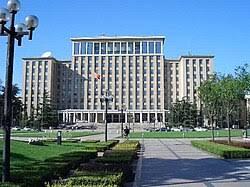
Tsinghua University
In plain English: the authors are asking how many electrons a rare-earth atom can realistically put to work in bonding before nature says “enough.” Their answer gives chemists a new map for designing exotic compounds—and quietly underlines how far ahead China now is in rare-earth science.
What Is an Oxidation State, and Why Does +5 Matter?
An oxidation state is just a bookkeeping number chemists use to track how many electrons an atom is “sharing” or “giving up” in a compound.
- Most rare earths in industry sit at +3 (for example, Nd³⁺ in magnets or La³⁺ in catalysts).
- A few can reach +4 (Ce⁴⁺ is the classic example).
- Going to +5 is like putting the atom into maximum overdrive: more electrons pulled into bonding, stronger attraction to very electronegative partners such as fluorine, oxygen, or nitrogen, and potentially very different magnetic, catalytic, or optical behavior.
For decades, chemists argued over whether Pr(+5) really existed or whether earlier claims were misassignments. Ye and colleagues show how the story has progressed from incorrect 1930s claims, through modern gas-phase detections of Pr(+5) oxide and nitride-oxide molecules, to recent, carefully characterized solid compounds where praseodymium truly behaves as +5 under well-defined conditions.
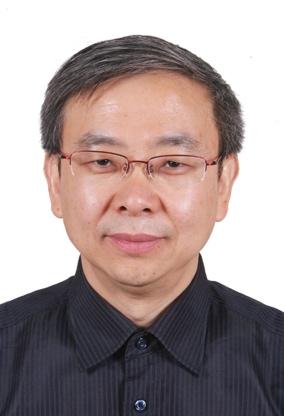
Prof Jun Li at Tsinghua University, Theoretical Chemistry Center, Department of Chemistry
What Did Ye and Co-Authors Actually Do?
This paper is a minireview and theory-heavy analysis, not a new industrial process. The team:
- Summarizes historic experiments and modern breakthroughs that finally pinned down Pr(+5) in both isolated molecules and solid compounds.
- Uses advanced quantum-chemical calculations to explain why high-valent rare earths are so hard to make: the key is how deeply buried and tightly bound the 4f electrons are in these elements.
- Introduces a practical yardstick called the Ionization Quotient (IQ)—a way of comparing how much energy it takes tostrip multiple electrons from an atom and whether a given oxidationstate is plausible under normal lab conditions.
From that analysis, they conclude:
- Praseodymium is unique: it sits at a “sweet spot” where +5 is just barely achievable without absurd conditions.
- Oxidation state +4 should, in principle, be reachable for nearly all lanthanides, with likely exceptions such as ytterbium.
- The newly synthesized Pr(+5) complexes rely on very carefully designed ligands (electron-withdrawing nitrogen–phosphorus groups) that can both pull charge away from Pr and then “back-donate” a little into its 4f and 5d orbitals, stabilizing this extreme state.
The result is a coherent set of design rules for pushing rare earths to their limits.
How Does This Relate to China’s Rare-Earth Processing Monopoly?
The review itself is fundamental chemistry, but the context matters.
- China now controls around 60–70% of global rare-earth mining and roughly 85–90% of separation and refining capacity, plus over 90% of high-performance magnet production.
- The lead and senior authors are anchored at Tsinghua University and the Fundamental Science Center of Rare Earths in Ganzhou, a region that is already a major hub of China’s rare-earth industry.
What this minireview signals is that China’s edge is not just low-cost processing; it is also deep, high-end rare-earth science:
- Understanding exactly which oxidation states are feasible (and how to stabilize them) feeds directly into the design of new separation methods, catalysts, and advanced materials.
- If Chinese labs and institutes are the first to exploit these design rules in practice, the technological moat around their processing and materials know-how widens, even if the ore itself comes from outside China.
For Western policymakers and investors, the implication is straightforward:
To challenge China’s rare-earth monopoly, it is not enough to fund mines and basic refineries. There must be sustained investment in frontier rare-earth chemistry on par with what Tsinghua and CAS are doing in Pr(+5) and related systems.
Limitations and What Comes Next
Ye, Schwarz, and Li are careful not to overclaim.
- The Pr(+5) compounds currently known are fragile, low-temperature, small-scale species, not plug-and-play industrial reagents.
- There is no immediate new magnet, catalyst, or separation plant described in this paper; these are design rules and conceptual tools, not commercial flowsheets.
- Even the definition of “oxidation state” remains contested at the expert level—the authors review how different charge-analysis methods give smaller “real” charges than the formal +5 label and argue that IUPAC’s convention is still the most useful for guiding synthesis.
Still, the direction of travel is clear. By showing that Pr(+5) is real, rare, and chemically understandable, and by mapping which other rare earths might reach +4, this work gives chemists—and, eventually, industry—a clearer playbook for the next generation of rare-earth materials.
Source: L.-W. Ye, W.H.E. Schwarz, J. Li, “The Highest Oxidation States of the Rare-Earth Elements and the Challenge of Praseodymium(+5) Compounds,” Angew. Chem. Int. Ed. 2025, e20932 (open access).
© 2025 Rare Earth Exchanges™ – Accelerating Transparency, Accuracy, and Insight Across the Rare Earth & Critical Minerals Supply Chain.


0 Comments