
Highlights
- Greenland's Kvanefjeld project represents a significant rare earth deposit with complex political and regulatory challenges.
- The article critiques sensationalized 'new cold war' narratives around Greenland's mineral resources and geopolitical interests.
- Political and environmental hurdles, including uranium mining restrictions, currently impede the project's development.
A recent piece paints Greenland as the epicenter of a looming “new cold war,” complete with Donald Trump’s musings about “buying” the territory. While the U.S. has strategic Arctic interests, there is no credible evidence of current U.S. military plans to “take” Greenland. The framing leans toward sensationalism, designed to hook audiences rather than reflect the slow, bureaucratic pace of actual Arctic policy.
What’s Real in the Rocks
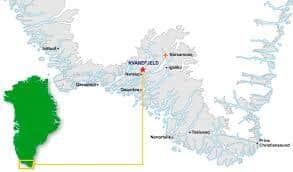
Energy Transition Minerals (opens in a new tab) (ETM) does control the Kvanefjeld rare earth project (opens in a new tab) in southern Greenland, holding one of the world’s largest undeveloped rare earth deposits. The resource has been well-documented through drilling and feasibility studies over the past two decades. The claim that only “one fifth” has been tested is plausible but lacks cited assay data in the broadcast — investors should note that “tested” in this context refers to exploration drilling coverage, not necessarily proven reserves under JORC or NI 43-101 standards.
The Project
Omissions and Oversimplifications
The narrative implies that Greenland’s government is uniformly opposed to mining, but this is misleading. In reality, political sentiment is split: the current Greenlandic coalition banned uranium mining in 2021, which directly affects Kvanefjeld because the deposit contains uranium as a byproduct. This is a regulatory roadblock not addressed in the piece. Omitting the uranium factor glosses over why ETM’s project has been stalled, despite “$150 million spent” on development.
China’s Shadow: More Nuanced Than Portrayed
The story highlights China’s 9% stake in ETM as a potential lever of influence — true, but it fails to mention that China holds minority stakes in multiple Australian rare earth juniors without operational control. Suggesting this alone could “coax” ETM into selling to China oversimplifies both Australian foreign investment rules and Greenland’s permitting control.
Market Shock Claims — Evidence Needed
The piece asserts that Chinese export restrictions “recently” shut down car factories in the U.S. and Europe with “immediate and shocking impact.” This is highly suspect. While China has used export controls strategically (notably on gallium, germanium, and some rare earth products), there is no verified report in 2025 of Western auto factories closing overnight solely due to rare earth cutoffs. Without sourcing, this claim edges into misinformation territory.
Investor Takeaway
The resource potential at Kvanefjeld is real, but Greenland’s regulatory climate and uranium policy are the defining hurdles. The “new cold war” framing and abrupt shutdown claims are more narrative spice than market reality. For serious investors, the question isn’t whether the deposit exists — it’s whether political, environmental, and processing challenges can be overcome in time to matter in the West’s rare earth diversification push.
Source: Dawson, Shea. “Untapped superpower: Why Greenland is at the centre of a new cold war (opens in a new tab).” 60 Minutes Australia, Nine Entertainment, Aug. 2025.


0 Comments