
Highlights
- Renault is replacing French supplier Valeo with a potential Chinese stator manufacturer for its E7A electric motor project, prioritizing cost efficiency over national industrial autonomy.
- Despite pursuing rare-earth-free motor technology to avoid China's material monopoly, Renault may ironically depend on Chinese manufacturing for cost-effective production.
- The shift reflects Europe's deeper struggle to balance localization rhetoric with economic reality, as Chinese suppliers offer stator assemblies at half the cost and twice the speed.
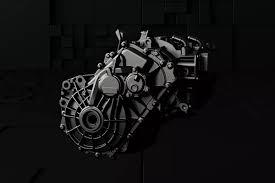
Renault’s (opens in a new tab) decision to drop French supplier Valeo from its E7A electric motor project and court a Chinese stator manufacturer marks more than a corporate reshuffle—it’s a quiet admission of economic gravity. According to Reuters (opens in a new tab), the French automaker will now pursue its 200 kW, rare-earth-free motor mostly in-house, except for the stator, which “could be sourced from a Chinese supplier.”
Table of Contents
The E7A, originally branded as an “innovation made in France,” was to symbolize European industrial autonomy. But in 2025’s climate of tight margins and intense EV price wars, cost—not nationalism—appears to be driving the motor. Renault’s own subsidiary, Ampere, (opens in a new tab) admitted “a Chinese partner is a possibility,” underscoring a shift from industrial purity to pragmatic survival.
The E7A
The Irony of Independence
Renault’s electric dreams have always leaned on self-reliance. Since 2012, its motors have avoided rare earth magnets—a strategy meant to insulate the company from China’s near-monopoly on NdFeB materials. Yet in a twist of global irony, the French carmaker’s path to rare-earth independence may now run through China itself.
Valeo’s exit from the project, reportedly for cost reasons, is telling. Developing stators and magnetless architectures in Europe has proven expensive, even as the EU talks up “strategic autonomy.” Chinese firms, meanwhile, offer high-quality stator assemblies at half the cost and twice the speed. The supply chain gravity that Europe sought to escape continues to pull it eastward.
REEx Assessment
Reuters’ reporting confirms Renault’s internal deliberations and Valeo’s withdrawal. Renault’s Cléon plant remains central to E7A production, and STMicroelectronics’ role in supplying SiC inverter modules is verified. Still, speculative dynamics persist, as Renault has not publicly identified its Chinese supplier nor confirmed a final sourcing decision. The shift may still be exploratory. Finally, Electrive and others frame this as a one-off cost compromise, but it reflects a deeper European vulnerability—industrial policy that preaches localization while the balance sheet demands globalization.
For investors, this isn’t just about Renault. It’s about whether Europe can build rare-earth-free technology without Chinese manufacturing scaffolding. The rhetoric of independence, it seems, still requires imported bolts.
© 2025 Rare Earth Exchanges™ – Accelerating Transparency, Accuracy, and Insight Across the Rare Earth & Critical Minerals Supply Chain.


0 Comments