
Highlights
- Ukrainian intelligence reports that three Kremlin-linked figures—Sergey Kiriyenko, Igor Sechin, and Kirill Dmitriev—have consolidated control over Russia's Arctic resources, including rare earths, oil, gas, and the Northern Sea Route.
- Despite political consolidation, Russia remains technologically behind in rare earth processing and refining, lacking the separation and magnet-grade capabilities that drive real market power.
- For investors, the key lesson holds: rare earth influence stems from processing capacity, not resource possession—Russia's Arctic control doesn't translate to near-term supply chain disruption.
Take three influential men and one frozen frontier. A December 14 report carried by Ukrainian National News (UNN), citing Ukraine’s Foreign Intelligence Service (FISU), asserts that effective control over Russia’s near-Arctic resources—spanning rare earth elements, oil, gas, and the Northern Sea Route (NSR)—has consolidated around three Kremlin-linked figures: Sergey Kiriyenko, Igor Sechin, and Kirill Dmitriev.
The claim is not that these men directly operate mines or processing plants, but that political authority, state corporations, capital flows, and Arctic logistics increasingly converge through their institutional domains.
Table of Contents
For rare earth investors, the relevance is structural. If accurate even in part, the report reinforces a long-observed Russian pattern: strategic minerals governed through proximity to power rather than transparent industrial markets.
The Three Figures—What Is Known, What Is Alleged
Sergey Kiriyenko (opens in a new tab), First Deputy Head of Russia’s Presidential Administration, is widely understood to be a key political overseer of strategic state assets. Through Rosatom (opens in a new tab), which manages much of the Northern Sea Route’s infrastructure, Kiriyenko’s influence plausibly extends to Arctic logistics and enabling frameworks for mineral development. Publicly available evidence supports Rosatom’s central role in NSR governance; claims of direct control over rare earth deposits remain inferred rather than demonstrated.
Igor Sechin (opens in a new tab), CEO of Rosneft Oil Company (Rosneft (opens in a new tab)) and a longtime confidant of Vladimir Putin, has well-documented authority over Russia’s energy sector and Arctic offshore projects. Rosneft’s involvement in shipbuilding (via the Zvezda shipyard) and Arctic hydrocarbons is established. Its role in rare earths is secondary and indirect, tied more to infrastructure, capital allocation, and political leverage than to a mature REE production base.
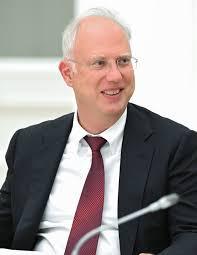
Kirill Dmitriev (opens in a new tab), head of the Russian Direct Investment Fund (opens in a new tab) (RDIF), functions as a financial intermediary between Russian state projects and foreign capital, particularly from non-Western partners. RDIF has promoted Arctic and mineral investment vehicles. However, RDIF does not itself operate mines; its relevance lies in attempts to attract capital into projects constrained by sanctions and technology gaps.
Kirill Dmitriev, head of the RDIF
What Rings True—and What Requires Caution
It is accurate (and we need to validate given the source) that Russia holds meaningful but underdeveloped rare earth potential, much of it geographically tied to the Arctic and sub-Arctic. It is also well-established that Russia lacks modern separation, refining, and magnet-grade processing capacity, a constraint worsened by sanctions limiting access to Western technology.
Where caution is required is in equating political consolidation with industrial capability. Russia’s rare earth sector remains fragmented, technologically lagging, and far from China’s vertically integrated model. No credible public evidence suggests Russia has overcome the processing bottleneck, which remains the true source of power in global rare earth markets.
Why This Matters for the Rare Earth Supply Chain
Even if Arctic governance is increasingly centralized, Russia does not meaningfully alter global rare earth supply dynamics in the near term. Control over deposits or shipping routes does not translate into control over magnet-grade oxides, alloys, or downstream manufacturing. Efforts to tighten NSR control may raise geopolitical risk premiums, but they do not create alternative supply chains overnight.
For investors, the lesson is consistent with Rare Earth Exchanges™ core framework: rare earth power flows from processing, not possession. Until Russia—or any newcomer—solves that problem, consolidation at the top remains more about politics than production.
Source: UNN, citing the Foreign Intelligence Service of Ukraine (Dec. 14, 2025)
©!-- /wp:paragraph -->


0 Comments