
Highlights
- Brazil's Serra Verde secured $565M DFC financing to expand its Pela Ema ionic clay project from 5,000 to 6,500 tpa TREO capacity, with a U.S. government equity option included.
- Serra Verde ended long-term Chinese offtake agreements in December 2025, joining MP Materials in reducing dependence on Shenghe Resources and pivoting to Western buyers.
- The project represents a rare Western de-risking win: already in commercial production with heavy rare earths (Dy, Tb, Y) critical for defense and EVs, outside Chinese control.
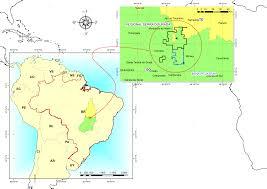
Brazil’s Serra Verde (opens in a new tab) has crossed a strategic threshold that many Western rare-earth projects never reach: commercial production, sovereign-backed financing, and a clean exit from long-dated Chinese offtake. This week, the U.S. International Development Finance Corporation (DFC) (opens in a new tab) confirmed a $565 million financing package for Serra Verde’s Pela Ema ionic clay project in Goiás, Brazil, including an option for the U.S. government to acquire an equity stake. Proceeds will refinance existing loans and fund Phase I optimization and expansion, lifting total rare earth oxide (TREO) capacity from 5,000 tpa to ~6,500 tpa by end-2027. Pela Ema entered commercial production in 2024.
Why This Deal Matters
This is not a greenfield promise. Pela Ema (opens in a new tab) already produces mixed rare earth carbonate (MREC) enriched in dysprosium (Dy), terbium (Tb), and yttrium (Y)—critical inputs for defense systems, EV traction motors, wind turbines, and advanced electronics. Ionic clay deposits are typically lower grade than hard-rock peers, but they offer faster ramp-up, simpler metallurgy, and steadier operating profiles—attributes increasingly prized by Western buyers seeking reliability over theoretical peak output.
From China to the Western Stack
The most consequential signal predates the financing. In December 2025, Serra Verde renegotiated and dramatically shortened its Chinese offtake agreements—originally expected to run roughly a decade—so that they now expire at the end of 2026. That move places Serra Verde alongside MP Materials (and more recently VHM Ltd) in stepping away from long-term dependence on Shenghe Resources. Over the past year, that shift has become a defining pattern as Western capital offers more attractive financing and faster downstream alignment.
What the U.S. Gets
For Washington, this is near-term leverage, not a ten-year option. Serra Verde delivers existing, scalable heavy rare earth supply outside China—precisely where U.S. vulnerabilities are most acute. With Chinese offtake ending this year, industry expectations are that new offtake agreements will be signed in 2026, likely with U.S. buyers or with processors in jurisdictions that already host separation capacity (e.g., Malaysia, Australia, Estonia, France).
Context: China Still Moves the Board
The backdrop underscores the stakes. Even as Western-backed projects consolidate, Shenghe finalized its acquisition of Peak Rare Earths and the Ngualla project in Tanzania in September 2025—a reminder that China continues to lock up upstream optionality even as some downstream contracts unwind.
REEx Take
This is what a credible rare-earth “de-risking” win looks like: producing asset, heavy rare earth mix, shortened China exposure, and Western capital with optional equity. Serra Verde won’t end China’s dominance—but it meaningfully narrows the gap where it matters most.


0 Comments
No replies yet
Loading new replies...
Moderator
Join the full discussion at the Rare Earth Exchanges Forum →