
- Christopher Ecclestone's March 2026 report positions Somaliland as an overlooked mining frontier based on historic geological work, though it lacks modern exploration and is not yet a proven rare earth investment thesis.
- The strongest opportunity lies in industrial minerals like gypsum-anhydrite near Berbera port, with “scores of millions of tons” identified, plus potential in pegmatite-linked metals and base metals across underexplored Precambrian terrain.
- Significant limitations include reliance on colonial-era data rather than modern compliant exploration, Somaliland's unrecognized political status creating investment hurdles, and unproven assumptions about infrastructure and export channels.
Christopher Ecclestone of Hallgarten + Company (opens in a new tab) argues that Somaliland, and to a lesser extent Puntland, may represent an overlooked frontier mining story—one grounded less in modern drilling than in historic British, Italian, and U.S. geological work, combined with Somaliland’s recent efforts to modernize mining rules and attract outside capital. In his March 2026 report, Somaliland & Puntland: A New Region to Conjure With (opens in a new tab), Ecclestone frames the opportunity as a blend of favorable geology, a pro-mining policy posture, and shifting geopolitics around recognition, Berbera, and the Gulf of Aden.
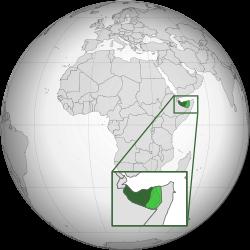
For Rare Earth Exchanges™ readers, the most important nuance is this: this is not yet a clean, proven rare earth investment thesis. Ecclestone explicitly flags “No (known) Rare Earths,” even while noting historical mentions of monazite, allanite, and samarskite in pegmatite areas—minerals that can, in some contexts, be associated with rare earth element mineralization. That creates geological intrigue, but it does not, on current evidence, amount to a bankable rare earth district.
Opportunities?
The report’s central case is that Somaliland has seen little meaningful modern exploration since the 1950s despite an administration described as actively building a more investable mining framework. Hallgarten points to updated licensing structures, draft mining reforms, and a government posture that appears broadly supportive of mineral development. At the same time, the paper revives historical references to gypsum, anhydrite, beryl, columbite, cassiterite, rutile, mica, molybdenite, manganese silicates, and lead occurrences, while also emphasizing underexplored Precambrian terrain and pegmatite systems.
The clearest opportunity, at least from the evidence presented, appears to lie in industrial minerals and bulk materials rather than rare earths. Colonial geologists reportedly viewed the gypsum-anhydrite series near Berbera as the most promising production prospect, with “scores of millions of tons” exposed relatively close to the harbor. The report also highlights historical USGS interest in wider non-fuel mineral potential, including banded iron formation, tin-bearing veins, phosphorite, barite, base metals, and other industrial minerals that could theoretically benefit from proximity to Gulf markets and shipping lanes.
Underlying Assumptions
Still, the investment thesis rests on several assumptions that investors should handle carefully. It assumes that old geological observations will translate into modern economic deposits once revisited with contemporary geophysics, geochemistry, and drilling. It assumes Somaliland’s political and legal trajectory will become sufficiently stable and internationally legible to support foreign mining investment. And it assumes infrastructure, permitting, logistics, and export channels—especially around Berbera—can support commercial mine development. Those assumptions are plausible, but they remain assumptions.
Limitations
The limitations are substantial. First, the technical base is thin by modern standards: much of the case relies on colonial-era work and a 1984 USGS review, not NI 43-101- or JORC-compliant exploration programs. Second, Somaliland’s political status remains a real investment hurdle; mining capital usually discounts unrecognized or contested jurisdictions heavily. Third, parts of the report’s geopolitical language are overtly opinionated, so readers should distinguish the useful geological observations from the author’s political framing.
Conclusion
The bottom line is that Ecclestone’s report is best read as a frontier-option thesis. Somaliland may be underexplored, strategically located, and increasingly open to mining capital, but it remains early, politically complicated, and technically under-validated. For critical minerals investors, it is a jurisdiction worth monitoring—particularly for industrial minerals, pegmatite-linked metals, and broader base-metal potential—but it is not yet a proven rare earth story. In Rare Earth Exchanges' terms, Somaliland is one to watch closely, not yet one to underwrite aggressively.


0 Comments
No replies yet
Loading new replies...
Moderator
Join the full discussion at the Rare Earth Exchanges Forum →