
Highlights
- Taiwan People's Party Chairman Huang Kuo-chang leads delegation to Washington demanding transparency on Taiwan's $36.6 billion special defense budget amid insufficient documentation from the DPP government.
- Visit addresses unresolved U.S. tariffs on Taiwanese goods, including a 20% levy initially characterized as temporary but still in effect entering 2026, threatening Taiwan's export-dependent economy.
- Mission highlights Taiwan's strategic importance in global semiconductor and critical minerals supply chains, with opposition parties seeking independent channels to assess U.S.-Taiwan defense and trade alignment.
The Taiwan People’s Party (opens in a new tab) (TPP) has dispatched a senior delegation to Washington this week, led by party chairman Huang Kuo-chang (opens in a new tab), underscoring growing political unease in Taipei over U.S. defense procurement terms and unresolved trade tariffs.
Speaking before his departure, Huang said the delegation aims to secure direct, first-hand clarification from U.S. officials on Taiwan’s proposed NT$1.25 trillion (US$36.6 billion) special defense budget, arguing that Taiwan’s legislature has received insufficient detail from the ruling Democratic Progressive Party (DPP) government to properly evaluate the spending. Huang criticized the Executive Yuan for providing minimal documentation, calling the information gap “hard to even describe.”
Huang Kuo-chang, TPP Chairman
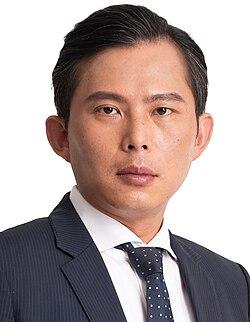
The visit also highlights persistent friction over U.S. tariffs on Taiwanese goods, including a 20% levy that Taipei previously characterized as temporary. More than a year later, and now entering 2026, Huang said no meaningful update or resolution has been communicated, raising concerns about longer-term trade exposure for Taiwan’s export-dependent economy.
While the trip was only publicly disclosed shortly before departure, Huang indicated discussions with U.S. counterparts had been underway for some time, emphasizing the TPP’s desire for face-to-face engagement rather than indirect messaging. He did not clarify whether the visit was formally invited by Washington or initiated by the party.
From a Rare Earth Exchanges™ perspective, the visit is notable beyond party politics. Defense procurement, tariff policy, and U.S.–Taiwan relations directly shape critical minerals, advanced manufacturing, and defense supply chains, including rare–earth–dependent systems. As Washington recalibrates trade and security policy in Asia, Taipei’s opposition parties are increasingly seeking independent channels to assess risk, cost, and strategic alignment.
Huang is expected to return to Taiwan on Wednesday.
The United States does not have a formal embassy in Taiwan, but it maintains de facto diplomatic relations through the American Institute in Taiwan (AIT), which functions in practice like an embassy by handling diplomacy, security coordination, trade, visas, and cultural exchanges. AIT is legally a non-profit corporation rather than an official diplomatic mission because, in 1979, the U.S. switched formal recognition from the Republic of China (Taiwan) to the People’s Republic of China under the One China policy.
To preserve substantive ties with Taiwan despite this shift, Congress enacted the Taiwan Relations Act, (opens in a new tab) which provides the legal framework for ongoing unofficial relations, including defense cooperation, with AIT headquartered in Taipei in a modern compound comparable to standard U.S. embassies.
Note Taiwan's semiconductor industry is critically important to the world, producing the vast majority (around 90-92%) of the world's most advanced logic chips, essential for everything from AI and smartphones to cars, with Taiwan Semiconductor Manufacturing Company (TSMC) dominating global foundry services, making the island's chip output indispensable to global tech and a significant geopolitical factor. This dominance makes the global supply chain extremely vulnerable to disruptions, highlighting Taiwan's strategic role in the world economy and security.
Source: Taipei Times / CNA. This brief reflects publicly reported statements and should not be interpreted as an official U.S. or Taiwan government position.
©!-- /wp:paragraph -->


0 Comments