
Highlights
- Macron's Chengdu meeting with Xi featured cultural diplomacy while Europe urgently seeks to reduce dependence on Chinese rare earth refining amid growing supply chain tensions.
- Chinese state media framed the visit through soft imagery and civilizational partnership narratives, strategically omitting critical minerals, export controls, and EU diversification efforts.
- Investors should expect diplomatic rhetoric to soften but not resolve underlying tensions—monitor Europe's intensifying efforts to rebuild critical mineral supply chains outside Chinese control.
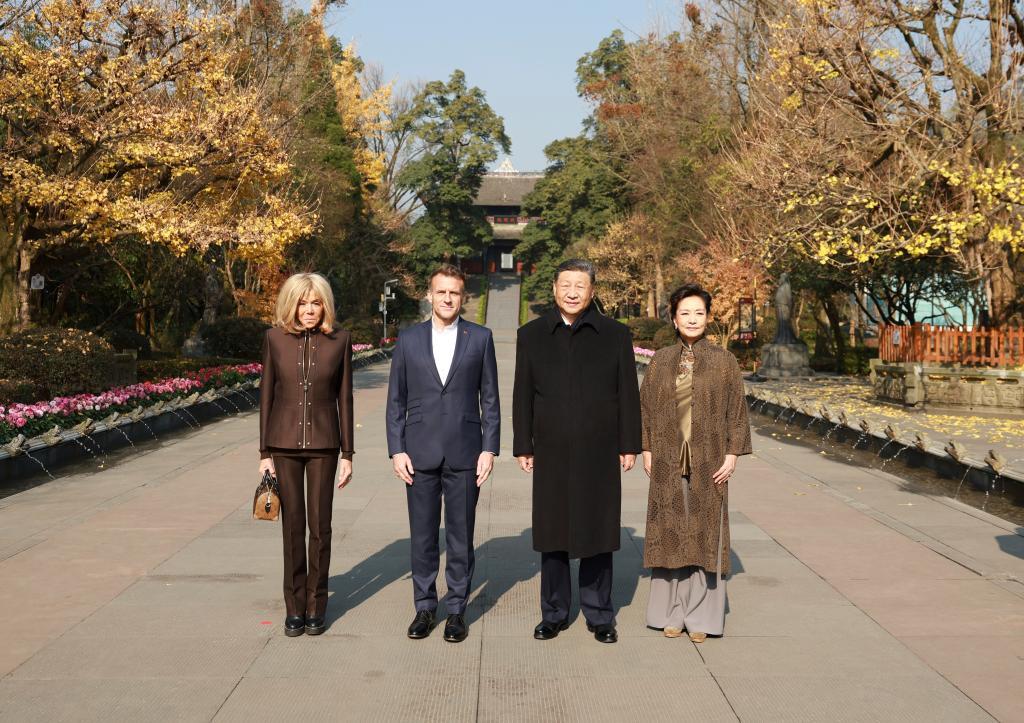
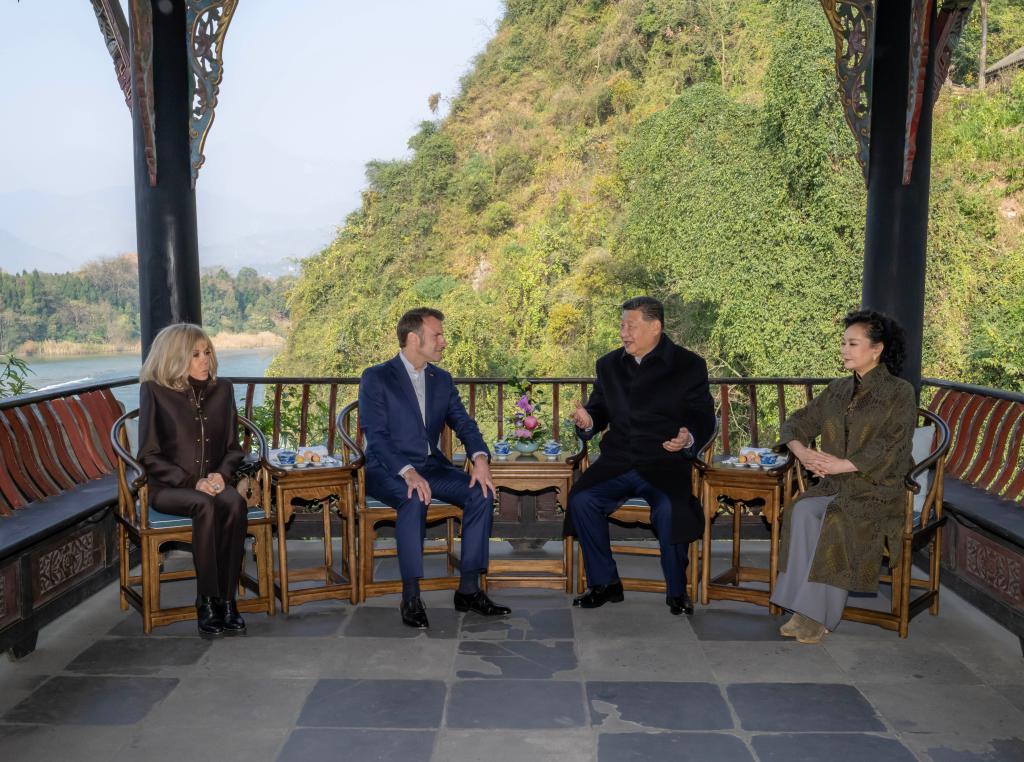
France’s President Emmanuel Macron to meet President Xi Jinping and discuss the future of Sino-French cooperation. State media—including Xinhua and the State Council Information Office—framed the visit through soft-focus imagery: the two leaders and their spouses strolling the ancient waterways of Dujiangyan, sharing tea by a pavilion, and reflecting on history, harmony, and peace.
But beneath the pastoral scenes lies a far more strategic reality. Europe’s most influential political figure was sitting down with the global leader in rare earth refining at a moment when the EU is urgently trying to de-risk its dependence on Chinese processing. Investors should look past the bamboo and mist to the real implication of this diplomatic choreography: China and France are recalibrating their tone precisely as Europe seeks greater leverage in the rare earth supply chain.
Chinese President Xi Jinping and his wife Peng Liyuan pose for a group photo with French President Emmanuel Macron and his wife Brigitte Macron in Dujiangyan in Chengdu, southwest China's Sichuan Province, Dec. 5, 2025. Xi and Macron had friendly exchanges on Friday in Dujiangyan. (Xinhua/Ding Haitao)
Table of Contents
What’s True in the Narrative—and What’s Conveniently Glossed Over
The recent piece accurately recounts the symbolic choreography of Sino-French relations: cultural admiration, civilizational dialogue, and references to uninterrupted Chinese statehood. These details fit Beijing’s longstanding diplomatic script. Also factual are the joint statements on global governance, nuclear energy, and climate cooperation—areas where France is a natural European bridge.
The Chinese framing avoids the harder economic reality: France, like the rest of the EU, is structurally dependent on Chinese rare earth separation and magnet materials. While the article celebrates harmony, it omits the sharp negotiating context—Europe’s Critical Raw Materials Act, EU-backed magnet plants, and accelerated funding for non-Chinese refining. Macron’s presence in Chengdu is as much about cultural diplomacy as ensuring France isn’t frozen out of supply chain access during tightening Chinese export regimes.
Where the Literary Tone Masks Strategic Tension
Calling China and France “outstanding representatives of Eastern and Western civilizations” makes for elegant prose, but also serves a political purpose: reframing the relationship as cultural peers rather than asymmetric economic partners. The article’s serene images obscure the fact that France has been one of the EU’s loudest advocates for reducing rare earth exposure to Chinese dominance. Xinhua’s narrative leans toward“civilizational partnership” over “industrial competition,” revealing a subtle but real bias.
For Rare Earth Exchanges readers, the omission is key. No mention is made of rare earths, critical minerals, or export controls—precisely the domains where EU–China tensions are most acute. The silence is strategic, not accidental.
Why This Matters for Investors
Diplomatic warmth does not neutralize supply chain risk. If anything, this meeting signals that Europe and China are managing friction—not resolving it. The Chengdu choreography tells us Beijing seeks stability with France at a moment when Western rare earth diversification is accelerating.
Chinese President Xi Jinping and his wife Peng Liyuan, together with French President Emmanuel Macron and his wife Brigitte Macron, take seats at Huaigu Pavilion, where they enjoy tea by the waterside and hold wide-ranging discussions on global affairs, in Dujiangyan of Chengdu, southwest China's Sichuan Province, Dec. 5, 2025. Xi and Macron had friendly exchanges on Friday in Dujiangyan. (Xinhua/Zhai Jianlan)
For investors, the takeaway is simple: Expect diplomacy to soften rhetoric—but not China’s grip on refining, nor Europe’s urgency to escape it. The tea was calm. The tectonics underneath were not.
Also start to monitor if Europe intensifies its rare earth element and critical mineral supply chain rebuilding efforts.
© 2025 Rare Earth Exchanges™ – Accelerating Transparency, Accuracy, and Insight Across the Rare Earth & Critical Minerals Supply Chain.


0 Comments