
Highlights
- Meteoric Resources delivered a 10 kg Mixed Rare Earth Carbonate sample from its Caldeira pilot plant to MagBras, marking a qualification milestone for Brazil's first integrated domestic permanent magnet supply chain.
- MagBras is a Brazilian public-private initiative backed by BNDES and partnered with Vale, Stellantis, and WEG, aimed at reducing import dependence and establishing “Mine to Magnet” production capability within national borders.
- The sample delivery signals Brazil's strategic positioning as a vertically integrated magnet ecosystem partner to Western supply chains, though binding offtake agreements and separation plant economics remain key items to watch.
Meteoric Resources (opens in a new tab) (ASX: MEI) has delivered (opens in a new tab) a 10 kg bulk sample of Mixed Rare Earth Carbonate (MREC) from its Caldeira pilot plant in Poços de Caldas, Brazil (opens in a new tab), to MagBras — a Brazilian initiative seeking to build a fully integrated domestic permanent magnet supply chain.
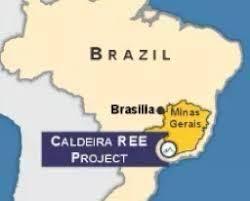
Note: MagBras (or MAGBRAS) is a Brazilian public-private initiative aimed at creating the country's first fully integrated, domestic supply chain for rare earth permanent magnets, ranging from mining to final industrial production. Led by the SENAI Institute for Innovation, (opens in a new tab) this initiative, which includes partners like Stellantis, WEG, and Vale, aims to reducedependence on imported rare earths and establish a "From Mine toMagnet" production chain
In practical terms, this is a qualification milestone. Material has moved beyond lab-scale proof and into a downstream pathway where composition, impurity profile, consistency, and process repeatability will be evaluated in a magnet-focused setting. This is where chemistry meets commercial scrutiny.
Ten kilograms is not a commercial volume. But it is meaningful enough to test whether pilot-plant claims translate into real-world processing performance.
MagBras: Brazil’s Industrial Ambition
According to Meteoric’s announcement, MagBras, described above, is led by SENAI MG, SENAI SC, and the Rede de Institutos SENAI de Inovação, financed by Brazil’s development bank (BNDES), with partners including Vale, Stellantis, and WEG. That roster signals institutional alignment. It suggests Brazil is not merely exploring rare earth mining — it is attempting to anchor downstream magnet capability inside national borders.
If MagBras can consistently convert mixed carbonate into separated oxides, alloys, and ultimately magnet products at demonstration scale, Brazil would move incrementally up the value chain — beyond concentrate exports toward industrial integration. That is a strategic shift, if executed.
What Appears Substantiated
Meteoric reports that its pilot plant is producing MREC at or above nameplate capacity and specification, enabling bulk sample distribution. This is company-sourced data. It has not yet been independently verified in public technical disclosures. However, the delivery of a bulk sample suggests operational continuity sufficient to support downstream engagement. The meeting between Meteoric’s executive and Brazil’s Vice President reinforces visible political engagement. That is notable — though engagement is not the same as formal policy backing or capital allocation.
What We Need to See
Keep an eye on binding offtake agreements, separation plant construction decisions, or magnet manufacturing economics that were disclosed in this release. These are material items investors need to keep inmind.
Investors should distinguish milestones from momentum.
The Supply-Chain Signal Beneath the Headlines
The deeper takeaway is structural.
A mixed rare earth carbonate sample entering a magnet demonstration initiative suggests Brazil is actively testing vertical integration: mine → intermediate product → magnet.
The accompanying invitation to participate in a Brazil–U.S. Critical Minerals Forum further signals a diplomatic and commercial alignment with Western supply chains.
Brazil is marketing itself as a future magnet ecosystem partner, not merely a resource origin.
Whether that narrative converts into separation infrastructure, metallization capability, and competitive magnet production remains an open question. Rare Earth Exchanges will be monitoring.
Why this REEx note exists: To separate verified operational steps from forward-looking optimism — and to translate what a 10 kg sample actually means within the rare earth magnet supply chain.


0 Comments
No replies yet
Loading new replies...
Moderator
Join the full discussion at the Rare Earth Exchanges Forum →