
Highlights
- Canada is funding the Strange Lake rare earth project years before approvals, deploying pre-production capital for geopolitical positioning rather than near-term returns in a Western-aligned supply chain buildout.
- The project's capital structure involves ~$175M Canadian public funding, U.S. private equity via Cerberus Capital, and downstream links to European and U.S. processing—revealing integration into a Western critical minerals bloc rather than pure sovereignty.
- Key risks remain material: the project is pre-permit with hundreds of approvals pending, offtake pathways suggest processing outside Canada, and value capture is distributed across multiple jurisdictions—making this a long-dated option on supply security, not a producing asset.
Canada just made a calculated—and unusually early—bet. Ottawa is funding a rare earth project years before environmental approvals, permitting, or construction are complete. In plain terms, this is pre-production capital deployed for geopolitical positioning, not near-term returns. This is not conventional project finance. It is industrial policy in motion.
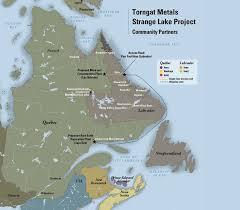
Follow the Capital, Not the Ore
As reported (opens in a new tab) by CBC, the Strange Lake deposit, controlled by Torngat Metals, is rich in heavy rare earths like dysprosium and terbium—materials essential for permanent magnets used in EVs, advanced weapons systems, and aerospace platforms.
The capital stack matters more than the geology:
- Canadian public funding (~$175M across agencies)
- U.S. private equity via Cerberus Capital Management
- Downstream linkages to European and U.S. processing and magnet supply chains
This is not purely a Canadian industrial effort. It is a Western-aligned supply chain buildout.
What Holds Up Under Scrutiny
Several fundamentals are solid:
- Heavy rare earth supply outside China remains extremely limited
- Western governments must move earlier in the project lifecycle to compete
- The real choke point is midstream: separation, metals, and magnets—not mining
Canada’s urgency reflects a structural gap: without feedstock, downstream ambitions in the U.S. and Europe collapse.
Where the Narrative Breaks Down
The political framing dominates—but key industrial realities are underplayed:
- The project remains pre-permit, with “hundreds” of approvals still required
- Offtake pathways suggest material may be processed outside Canada
- Feasibility does not equal bankability—economics remain unproven
Most importantly, control is diffuse. Capital, processing, and end-use demand sit across multiple jurisdictions.
Sovereignty or Supply Chain Integration?
Canada presents this as a matter of national economic security. But the structure tells a more complex story:
- U.S. defense-linked capital influences strategic direction
- European processors shape downstream value capture
- Canadian public funds absorb early-stage risk
This is less sovereignty than integration into a Western critical minerals bloc.
Investor Takeaway: A New Model—With Old Risks
The emerging formula is clear:
Government capital + geopolitical urgency + private equity = accelerated upstream bets
But the risks remain unchanged—and material:
- Permitting and environmental delays
- Community and Indigenous opposition
- Value leakage across borders
- Political influence shaping capital allocation
Bottom Line: Optionality Today, Execution Tomorrow
This is not a producing asset. It is a long-dated option on supply security.
The key investor question is not whether the resource exists—but who ultimately captures the value chain.
In rare earths, control—not geology—could define winners.


0 Comments
No replies yet
Loading new replies...
Moderator
Join the full discussion at the Rare Earth Exchanges Forum →