
Highlights
- South Korea's dependency on China for key rare earths has increased from 62% to 74%, posing a critical vulnerability for its export-driven tech economy due to semiconductor-grade silicon stockpiles lasting under three weeks.
- The Korea Times urges Seoul to join the U.S.-Japan-Australia critical minerals coalition, warning that hesitation risks entanglement in China's value chain as Western nations realign supply infrastructure.
- Korea's advanced processing and recycling capabilities could enhance Western supply resilience.
- Seoul must act quickly to secure its position in the emerging minerals alliance before geopolitical neutrality becomes a strategic disadvantage.
The Korea Times doesn’t mince words: “Join the global rare earth alliance—or be left behind.” This editorial, published October 23, is less a policy suggestion than a flare fired into the geopolitical sky. It captures an anxiety rippling through East Asia’s tech economy: that Korea, the silicon engine of global manufacturing, remains dangerously exposed to Beijing’s mineral chokehold while the U.S., Japan, and Australia knit together a fortified critical-minerals supply chain.
The facts are sobering. Korea’s dependency on China for key rare earths has climbed from 62% to 74% in recent years. Nickel from New Caledonia sits at 99%, and manganese from South Africa at 98%. Stockpiles of semiconductor-grade silicon would last less than three weeks. For a nation whose exports hinge on high-purity metals and advanced components, that’s not a vulnerability—it’s a live wire.
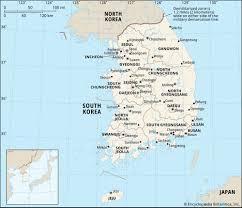
South Korea
Fact, Fear, and Framing
On substance, the editorial’s alarm is justified. China’s dominance in rare earth processing remains north of 80%, and its readiness to use export controls as leverage is well-documented. The call for diversified sourcing through alliances with Washington, Canberra, and Tokyo aligns with emerging frameworks like the Critical Minerals and Rare Earth Supply Chain Agreement signed this week between the U.S. and Australia.
But the tone leans from analytical to existential. Phrases like “matter of survival, not choice” and “self-reliance begins with alliance” betray a nationalist urgency bordering on moral panic. While the facts check out, the rhetoric reads like a warning shot aimed at Seoul’s political class—less data-driven than diplomacy-shaping.
Why This Story Matters
For investors and strategists, Korea’s decision point is pivotal. Should Seoul formally join the Western minerals bloc, it could unlock co-funded refining and recycling ventures, joint exploration across Africa and Southeast Asia, and technology-sharing in advanced separation chemistry. Korea’s processing and recycling know-how could elevate Western supply resilience far beyond symbolic alliance-building.
Conversely, hesitation risks pushing Korean firms to remain entangled in China’s value chain just as Washington incentivizes supply realignment. In rare earth geopolitics, neutrality isn’t stability—it’s drift.
Final Take
The Korea Times piece may overdramatize, but it’s not wrong. Korea’s manufacturing miracle runs on materials it doesn’t control. The West’s new mineral coalition offers a seat at the table—if Seoul moves quickly enough to claim it.
Source: The Korea Times (opens in a new tab) (editorial, state-affiliated publication)
©!-- /wp:paragraph -->


0 Comments