
Highlights
- India is urging the WTO to expand technology transfer to developing countries, citing export controls and IP rules that limit access to semiconductors and rare earth processing capabilities.
- The strategic bottleneck in rare earths isn't mineral availability but industrial capability—separation technology, refining plants, and magnet manufacturing ecosystems that require decades of expertise.
- The geopolitical contest centers on whether advanced economies will share critical industrial technologies or guard them, a decision that will shape rare earth supply chains for decades.
India is urging members of the World Trade Organization to expand technology transfer to developing countries, arguing that export controls, intellectual-property rules, and access limits on inputs like semiconductors and rare earths constrain economic development. The claim reflects a broader geopolitical struggle over industrial capability. For rare earth supply chain observers, the deeper issue is not mineral access but control of the technologies that transform ores into magnets, electronics, and defense systems.
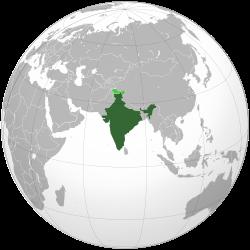
When Minerals Meet Diplomacy: India’s WTO Technology Gambit
India has proposed that advanced economies share more “environmentally sound technologies” with developing nations during the upcoming WTO ministerial discussions.
The argument is straightforward: developing economies face barriers to acquiring and deploying advanced technologies because of export restrictions, strict intellectual-property regimes, and limited access to certain industrial inputs. New Delhi specifically highlighted semiconductors and rare earth materials as examples.
At a plain level, the message is clear. Countries in the Global South want access to advanced technologies so they can move up the value chain in manufacturing and trade. Yet the issue runs deeper than trade fairness.
The Industrial Reality Behind the Headlines
Several points in the report are grounded in fact. Export controls on advanced technologies—especially semiconductors, chipmaking equipment, and certain dual-use materials—have expanded significantly in the past five years. These controls are largely driven by national-security concerns and technological competition.
Rare earth supply chains offer a useful case study. China currently dominates global rare earth separation and refining, as well as magnet manufacturing. Western governments—including the United States, Japan, Australia, and the European Union—are now investing heavily to rebuild midstream capacity, such as solvent extraction, separation, metallization, and magnet alloying.
The key constraint is not the physical availability of rare earth deposits. It is an industrial capability. Separation technology, large-scale processing plants, and magnet manufacturing ecosystems require decades of expertise and billions in capital.
Technology transfer in this context is not simply the sharing of patents. It involves process know-how, operational experience, and entire industrial supply networks.
Where the Narrative Oversimplifies
The recent piece in The Economic Times frames rare earths as “restricted inputs,” implying export controls broadly limit access to the minerals themselves. That framing is incomplete.
Rare earth ores are mined in several regions, including China, the United States, Australia, Myanmar, and parts of Africa. The strategic bottleneck lies primarily in processing and refining capacity—particularly heavy rare earth separation.
Similarly, while export controls exist for certain advanced materials and semiconductor technologies, most rare earth mining and oxide production occurs within commercial markets rather than tightly restricted export regimes.
In short, the constraint is technological capability—not simple resource access.
The Questions the Coverage Doesn’t Ask
The reporting raises important issues but leaves key questions unexplored:
- If technology transfer accelerates, who safeguards intellectual property and the national security risks tied to defense materials?
- Would advanced economies transfer solvent-extraction or magnet manufacturing expertise that currently underpins strategic industries?
- Could expanded technology sharing inadvertently strengthen existing dominant players rather than diversify supply chains?
- And perhaps most critically: is the real bottleneck financing, regulatory permitting, and industrial infrastructure—not access to technology?
These questions matter for investors evaluating the trajectory of the critical minerals economy.
What Investors Should Watch
The emerging geopolitical contest is not primarily about mineral deposits. It is about industrial ecosystems. Rare earth separation plants, metallization capacity, and permanent magnet manufacturing will define the next phase of global competition in critical materials.
India’s WTO proposal highlights a broader demand from emerging economies to participate in those industrial layers. Whether advanced economies choose to share those capabilities—or guard them more closely—may shape the rare-earth supply chain for decades.


0 Comments
No replies yet
Loading new replies...
Moderator
Join the full discussion at the Rare Earth Exchanges Forum →