
Highlights
- Turkey's announced 694 million tons of rare earth ore at Beylikova remains uncertified by international standards, with complex low-grade deposits requiring costly separation of 17 elements mixed with barite, fluorite, and thorium.
- China controls 85-90% of global rare earth separation capacity and over 90% of permanent magnet production, demonstrating that refining and processing—not mining—creates strategic leverage and 10-15x value multipliers.
- Turkey's 1,200-ton pilot plant produces only mixed concentrate, not separated oxides or magnets; scaling to commercial separation capacity by 2027 requires resolving financing, environmental permitting, and technology partnerships.
A recent analysis (opens in a new tab) of Turkey’s Beylikova rare earth project argues that while Ankara promotes the discovery as the world’s second-largest rare earth resource, true strategic value lies not in mining ore but in mastering separation, refining, and magnet production. The central claim is correct: reserves alone do not equal power. For investors, the takeaway is simple—headlines measure tonnage; markets measure processing capability.
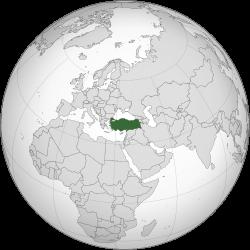
694 Million Tons: Impressive — But What Kind?
Turkey has announced (opens in a new tab) approximately 694 million tons of rare–earth–bearing ore in Eskişehir’s Beylikova district. That figure refers to ore tonnage, not certified rare earth oxide (REO) reserves.
According to the U.S. Geological Survey (USGS) 2025 data, global rare earth reserves stand at just over 90 million metric tons. Turkey does not yet appear in the USGS reserve rankings because internationally recognized reserve certification (e.g., JORC-equivalent standards) is still underway.
Note: JORC-equivalent standards are internationally recognized reporting codes for mineral exploration results, resources, and reserves that follow the CRIRSCO template (opens in a new tab) for transparency and competence. Key equivalents include Canada's NI 43-101 (opens in a new tab) (more prescriptive than JORC) South Africa's SAMREC (opens in a new tab), the UK/Europe’s PERC (opens in a new tab), and the USA's SME Guide (opens in a new tab). These codes ensure consistent, reliable, and audited mineral reporting across global stock exchanges.
Academic assessmentssuggest REO grades between roughly 0.2% and 2%. That range is plausible for polymetallic systems but implies a wide variability in economic recoverability. As Rare Earth Exchanges™ previously detailed in “Beneath Beylikova, Above the Hype,” Beylikova is a complex, low-grade polymetallic deposit intertwined with barite, fluorite, and thorium—each adding cost, permitting risk, and processing complexity.
Ore volume is a starting point. Recoverable, separated oxides are the finish line.
Midstream: Where Strategy Is Forged
As is the case with most of the media reviewed, authors are strongest when highlighting refining as the true bottleneck. China currently accounts for roughly 60–65% of global rare earth mining but dominates approximately 85–90% of separation capacity and high-purity oxide output. In permanent magnet production, China’s share is estimated above 90%.
Separation—the industrial-scale solvent extraction of 17 individual elements—is the capital-intensive core of the value chain. It requires decades of accumulated know-how, disciplined process control, and environmental management. It is not plug-and-play engineering.
Turkey’s reported 1,200-ton pilot plant produces mixed concentrate. That is progress, but it is not the separation of oxide, metal, or magnet production. Plans to scale ore throughput to hundreds of thousands of tons annually by 2027 remain aspirational until midstream separation and downstream refinement are demonstrated at commercial scale.
Mining is geology. Power is chemistry.
Value Multipliers — With Guardrails
The article’s claim that refining generates 10–15 times more value than mining is directionally sound. The global permanent magnet market exceeds $30 billion annually, and integrated downstream products add further value.
However, references to “$100,000–$150,000 from a few kilograms” compress variables such as grade, recovery rate, processing cost, and product qualification. These figures illustrate potential value creation—not guaranteed economics.
And investors should distinguish between theoretical value chain multipliers and realized margins.
National Pride vs. Industrial Reality
Yes we agree that reserves alone do not create strategic leverage. Control of separation, metals, and magnets does.
What is notable is that Turkey’s policy discourse increasingly acknowledges this. Institutions such as NATEN under TENMAK represent early steps toward capability building. Yet financing scale, environmental permitting, and international technology partnerships remain unresolved variables.
The lesson for global markets is consistent with our prior reporting: rare earth ambition is abundant worldwide. Rare earth industrialization is indeed rare. Geology inspires optimism. Separation disciplines it.
Source: Prof. Dr. Etem Karakaya, published via bianet and İklim Masası.


0 Comments
No replies yet
Loading new replies...
Moderator
Join the full discussion at the Rare Earth Exchanges Forum →