
Highlights
- Penn State's Center for Critical Minerals develops technologies to recover rare earths from unconventional sources like:
- Acid mine drainage
- Fly ash
- E-waste
- A pilot facility processes 10,000 gallons of acid mine drainage daily, representing a tangible U.S. initiative for mineral recovery beyond laboratory research.
- The technology is promising, but faces challenges in:
- Scaling up to commercial viability
- Competing with global leaders like China in circular economy mineral strategies
A recent Penn State article by Adam Smeltz reports on the Center for Critical Minerals (C2M (opens in a new tab)), led by Dr. Sarma Pisupati (opens in a new tab): he is spearheading technologies to recover rare earths and other critical minerals from unconventional sources—acid mine drainage, fly ash, and e-waste. As Rare Earth Exchanges (REEx) has reported (opens in a new tab), these are abundant across Pennsylvania and Appalachia, making this a story with both local and national resonance. The pilot facility capable of processing 10,000 gallons of acid mine drainage per day is real, operational, and represents one of the few tangible U.S. initiatives moving beyond the lab bench.
Aspirations vs. Execution
The piece carries the tone of institutional promotion, emphasizing “sustainable,” “scalable,” and “cost-effective” solutions. These are admirable aims, but investors should temper expectations as we always note here at REEx. Pilot-scale success does not guarantee economic feasibility at an industrial scale, and commercial viability has long been the Achilles’ heel of rare earth recovery from secondary sources. The piece omits discussion of capital requirements, cost per kilogram, or potential bottlenecks in separation chemistry.
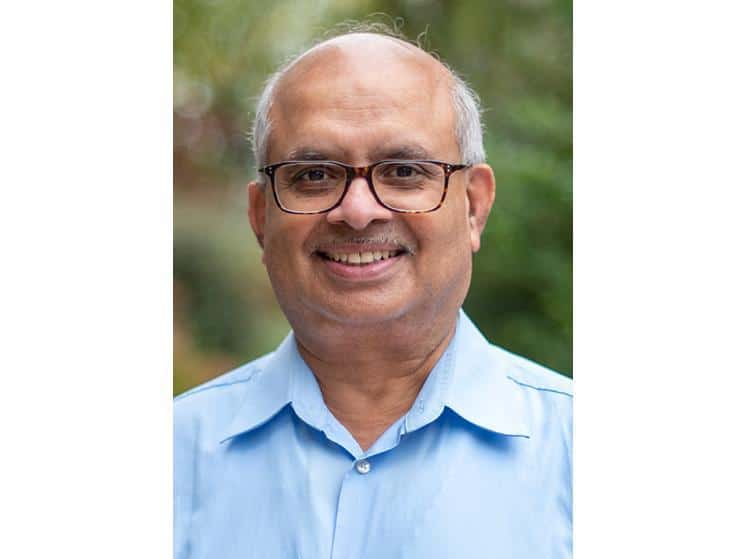
Sarma Pisupati is the director of the Center for Critical Minerals and a professor of energy and mineral engineering and chemical engineering at Penn State
What’s Missing: The Hard Edges
Absent is context on global competition. While Penn State’s work is promising, as REEx has conveyed, China is already experimenting with recycling ionic clays and building circular economy pathways at scale. Nor does the article address permitting, offtake agreements, or the complex interplay between academia and private industry that will determine whether C2M’s innovations make it to market. For savvy investors, these gaps matter more than the press-friendly story of “waste to wealth.”
Our Central PA Connection
At REEx, we take particular interest in this story given our own ties to Central Pennsylvania. Earlier this year, we hosted Dr. Pisupati on our YouTube channel, where he elaborated on the technical and policy challenges of securing domestic supply chains. Readers can revisit that in-depth interview here: Rare Earth Exchanges Interview with Sarma Pisupati (opens in a new tab).
Investor Takeaway
This recent Penn State piece is a snapshot of the university’s push to align academia with the national critical mineral strategy. It is optimistic, perhaps overly so, about the near-term payoff. But we certainly support their effort. It’s an important one. And as part of a proper industrial policy, Penn State’s C2M will be an important participant.
For investment purposes, what matters for the supply chain is whether technologies like these can move from pilot to commercial scale faster than geopolitical shocks expose America’s vulnerabilities.
Citation: Penn State Earth and Mineral Sciences (opens in a new tab), Sept. 10, 2025.
© 2025 Rare Earth Exchanges™ – Accelerating Transparency, Accuracy, and Insight Across the Rare Earth & Critical Minerals Supply Chain.


0 Comments