
Highlights
- Leshan Shenghe Rare Earth Co. hosted university students in a government-organized workplace visit.
- The visit showcased the company's innovation capabilities, global operations, and graduate recruitment pipeline.
- This initiative is part of China's strategic workforce development for critical minerals.
- The event demonstrated tight coordination between Chinese industry, universities, and municipal authorities.
- The goal is to systematically cultivate talent for the rare earth sector.
- The sector is positioned as a stable, policy-backed career path for future professionals.
- This workforce initiative highlights a critical gap: China plans decades ahead in human capital development for strategic minerals.
- In contrast, Western supply chain efforts continue struggling with skills shortages and fragmented industrial policy.
A group of university students from Leshan, Sichuan, visited Leshan Shenghe Rare Earth Co., Ltd. on December 23, 2025, as part of a government-organized “University Students Visit Enterprises” workplace experience program (opens in a new tab). While framed as a routine campus–industry exchange, the event offers a revealing glimpse into how China’s rare earth sector is cultivating future talent and reinforcing its long-term industrial dominance.
According to the report, the visit was organized by the Leshan Human Resources Service Center and brought together faculty and students from multiple local universities. Company executives led the group through Shenghe’s digital exhibition hall, presenting an overview of the company's history, technological innovation, global industrial footprint, and the broad downstream applications of rare earth materials. The presentation emphasized rare earths as a strategic resource underpinning advanced manufacturing, clean energy, electronics, and other high-tech industries—language closely aligned with Beijing’s national industrial policy.
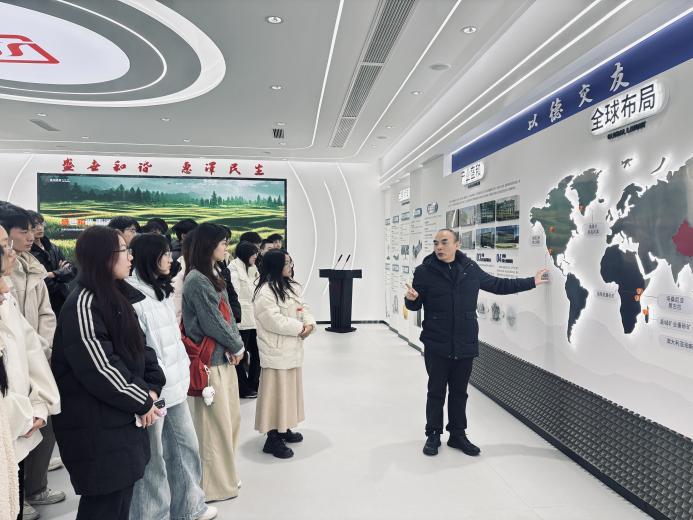
Management highlighted Shenghe’s innovation credentials, international layout, and product applications using data-driven displays designed to make the sector accessible to students. For an American business audience, the key signal is not the tour itself, but the messaging: China’s rare earth processors continue to position themselves as technologically sophisticated, globally integrated, and central to future industrial growth.
The visit then shifted to a formal discussion on recruitment and workforce development. Shenghe outlined its graduate “Trainee” program, internal training systems, and long-term career pathways—underscoring a structured pipeline from university to strategic industry employment. Representatives from local government reinforced policy support for talent placement and employment services, highlighting tight coordination between industry, universities, and municipal authorities.
During a lively Q&A session, students asked about industry trends, job requirements, and career prospects. Company leadership responded with detailed guidance, reinforcing rare earths as a stable, policy-backed career path. The event concluded with a group photo and statements framing Shenghe as a socially responsible local champion committed to cultivating the next generation of professionals.
Why this matters for the West:
While modest in scale, the event illustrates how China systematically integrates education, government, and industry to sustain its rare earth advantage—not just through mines and processing plants, but through human capital.
For U.S. and allied policymakers and investors, it underscores a persistent gap: China is planning decades ahead in workforce development for critical minerals, while Western supply-chain efforts still struggle with skills shortages, permitting delays, and fragmented industrial strategy.
Rare Earth Exchanges™ has called out the need in the United States for more comprehensive critical mineral and rare earth element supply chain industrial policy, and this very much includes workforce development imperatives.
Disclaimer: This news item originates from Chinese media associated with a state-linked enterprise. All claims and interpretations should be independently verified.
©!-- /wp:paragraph -->


0 Comments