
- Altona Rare Earths secured a $1.875M non-dilutive USTDA grant to fund critical metallurgy and NdPr separation studies at its Monte Muambe project in Mozambique, de-risking a key technical hurdle in rare earth development.
- The grant signals U.S. strategic interest in diversifying rare earth supply chains outside China, though the project remains at prefeasibility stage with no construction capital, offtake agreements, or final investment decision yet committed.
- Monte Muambe holds a substantial JORC resource of 13.6Mt at 2.42% TREO with a 25-year mining license, but the $1.875M funding advances studies only—building separation facilities requires hundreds of millions and multi-year timelines.
Altona Rare Earths (opens in a new tab) (LSE: REE) announced that it has signed a US$1.875 million grant agreement with the U.S. Trade and Development Agency (opens in a new tab) (USTDA) for its Monte Muambe rare earth project in Mozambique. Rare Earth Exchanges™ separates meaningful de-risking progress from promotional framing, assessing what this funding actually accomplishes, and evaluating the implications for U.S. rare earth supply chain diversification. Designed for retail and institutional investors, this piece clarifies what changes — and what does not.
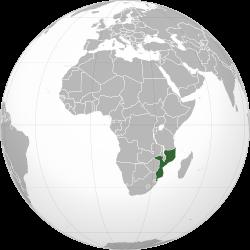
A U.S. Flag in Mozambique — What Was Announced?
Altona Rare Earths reports that its subsidiary has formally executed a USTDA grant agreement worth US$1.875 million to fund metallurgy and process engineering work for the Monte Muambe rare earth project. The signing took place at the U.S. Embassy in Maputo and includes drilling for metallurgical samples, beneficiation and hydrometallurgical testing, NdPr separation studies, environmental assessments, financial modeling, and engagement with potential U.S. off-take partners.
Meaning: The U.S. government is helping pay to study how to process rare earths at Altona’s project in Mozambique. This moves the project closer to potential development but does not yet fund construction.
What’s Substantive — and What’s Narrative
The grant is non-dilutive and targeted at prefeasibility-level metallurgy — a critical technical risk area in rare earth projects. Rare earth deposits often fail at processing complexity, not geology. Funding process engineering and separation testing is genuine de-risking.
Monte Muambe already hosts a JORC resource of 13.6 Mt at 2.42% TREO and holds a 25-year mining license. That is meaningful. However, this remains a prefeasibility-stage asset. No construction capital is committed. No offtake agreements are signed. No final investment decision exists.
Statements about becoming a “major Western source of magnet rare earths” are aspirational at this stage.
Why This Matters for U.S. Supply Chains
USTDA involvement signals strategic alignment. The United States is selectively supporting upstream and midstream projects outside China to diversify NdPr supply. Mozambique offers jurisdictional diversification, though geopolitical and infrastructure risk remain.
Importantly, the funded program includes NdPr oxide separation — the core feedstock for permanent magnets. If successful, this could create optionality for U.S.-aligned magnet supply chains.
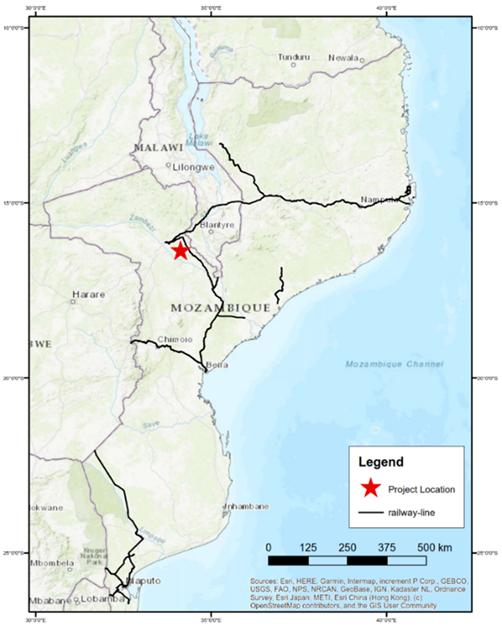
Source: ResearchTree
The Investor Reality Check
$1.875 million advances studies — it does not build plants. Rare earth separation facilities require hundreds of millions in capital and multi-year timelines.
The news is constructive. It is not transformative — yet.
Profile
Altona Rare Earths Plc (LON: REE) is a London Main Market–listed exploration and development company building a diversified portfolio of critical minerals assets across southern Africa, with a strategic focus on rare earth elements, fluorspar, gallium, and copper. The company’s flagship Monte Muambe project in Mozambique hosts a JORC Mineral Resource of 13.6Mt at 2.42% TREO (58% in the indicated category) and is supported by a granted mining license to 2049, with a 2023 scoping study outlining an 18-year open pit operation producing mixed rare earth carbonate and 1,140 tpa of NdPr oxide.
Monte Muambe also includes high-grade fluorspar and a gallium discovery, with plans to fast-track a 50,000 tpa acid-spar operation by 2027 and assess gallium recovery as a by-product. Complementing this is the Sesana Copper-Silver project in Botswana’s Kalahari Copper Belt, offering leveraged exposure to an emerging copper district. With 292.1 million shares in issue and a market cap of approximately £6.54 million at the time of the presentation, Altona positions itself as an agile, growth-focused developer targeting near-term monetization alongside longer-term rare earth value creation.
Major Holders
Based on recent data, the major holders of Altona Rare Earths Plc include significant individual investors and brokerage nominees, with top stakeholders including John Wardle, R S Jennings, SpreadEx Ltd., and Louise Adrian. Other substantial holdings, based on older regulatory filings, have included JIM Nominees Limited (approx. 47%) and Heiko Thomas (approx. 7%).


0 Comments
No replies yet
Loading new replies...
Moderator
Join the full discussion at the Rare Earth Exchanges Forum →