
Highlights
- U.S. sanctions on Venezuelan oil are part of a broader geopolitical strategy to constrain China's access to critical minerals, not just crude barrels.
- Venezuela's Orinoco Mining Arc supplies coltan, gold, iron ore, and bauxite through informal networks and smuggling routes, often reaching Chinese processors.
- Resource geopolitics is interconnected—tightening oil access can trigger mineral supply chain disruptions affecting global manufacturing and technology sectors.
Washington’s renewed pressure on Venezuela is being framed as an oil story. That framing is incomplete. As Rare Earth Exchanges™ has argued, the tightening vise on Venezuelan crude increasingly resembles a broader geopolitical maneuver aimed at constraining China’s access to strategic resources, not just barrels. In today’s interconnected commodity system, oil flows and mineral flows move together.
Table of Contents
The known facts are solid
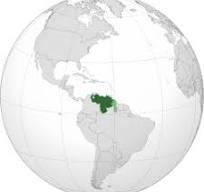
U.S. enforcement has escalated through tariffs, tanker seizures, and license withdrawals. Crude nevertheless continues to reach China via re-labeling, ship-to-ship transfers, and opaque intermediaries—well-documented oil-market techniques. What is less discussed, but more consequential, is how easily the same shadow logistics apply to minerals, where traceability is weaker and verification harder.
Oil the Lever—Minerals Are the Prize
Venezuela’s geological endowment extends well beyond hydrocarbons. Verified, historically exploited minerals include iron ore (Cerro Bolívar and El Pao in the Guayana Shield), bauxite, gold, coal, and nickel. The country is also a known source of coltan (niobium–tantalum ores)—a critical input for capacitors—extracted largely through informal and illicit mining in the south.
On rare earth elements, precision matters. Venezuela does not host large, internationally proven rare earth deposits comparable to China, Australia, or the U.S. What it does have are reported occurrences associated with the Guayana Shield—monazite-bearing sands, carbonatitic and granitic indications, and thorium-associated minerals. These have been cited in government statements and investigative reporting, but they remain underexplored and unverified at commercial scale. Treat them as a geological possibility, not a bankable reserve.
Since 2016, the Orinoco Mining Arc (opens in a new tab) has functioned less as an industrial development zone and more as a resource backstop for the Maduro regime, feeding informal networks tied to criminal groups and foreign buyers.
Investigations cited by El País (opens in a new tab) and Venezuelan watchdogs suggest substantial smuggling—often routed through neighboring countries before ending up with Chinese processors, the global choke point for separation and refining. Volumes are uncertain; the mechanism is credible.
Where Reporting Is Strong—and Where It Leans
What’s solid: Venezuela’s mining sector is chaotic, under-regulated, and deeply entwined with illicit trade; China dominates global processing for many critical minerals; sanctions push flows underground rather than stopping them.
Where caution is warranted: reserve claims and export volumes for rare earths rely on opaque sources in hostile verification environments. Investors should read these figures as directional signals, not audited facts.
Why Investors Should Pay Attention
Resource geopolitics is no longer siloed. Pressure on oil can provoke responses in minerals. China has already used gallium, germanium, and tungsten as statecraft tools. If energy access tightens, retaliation may surface in midstream mineral chokepoints—the quiet infrastructure of modern industry.
Venezuela is not the objective. It is the pressure valve. Tighten it, and stress propagates—from tankers to smelters to potentially critical mineral refineries and magnet factories.
© 2025 Rare Earth Exchanges™ – Accelerating Transparency, Accuracy, and Insight Across the Rare Earth & Critical Minerals Supply Chain.


0 Comments