
- The Manhattan Institute argues America can beat China on rare earths through market forces alone, but this underestimates the core engineering constraint: competitiveness is determined by midstream chemistry-separation, metallization, and qualification—not ideology.
- The real bottleneck is the investment trap: solvent extraction plants require massive capital, face decade-long permitting timelines, and are exposed to violent price cycles that China can manipulate, making private investment nearly impossible without strategic support.
- The solution isn't choosing between free markets or state capitalism—it's combining capital discipline with strategic architecture through permitting reform, bankable offtake agreements, and qualification pipelines that address chemistry, scale, and time constraints.
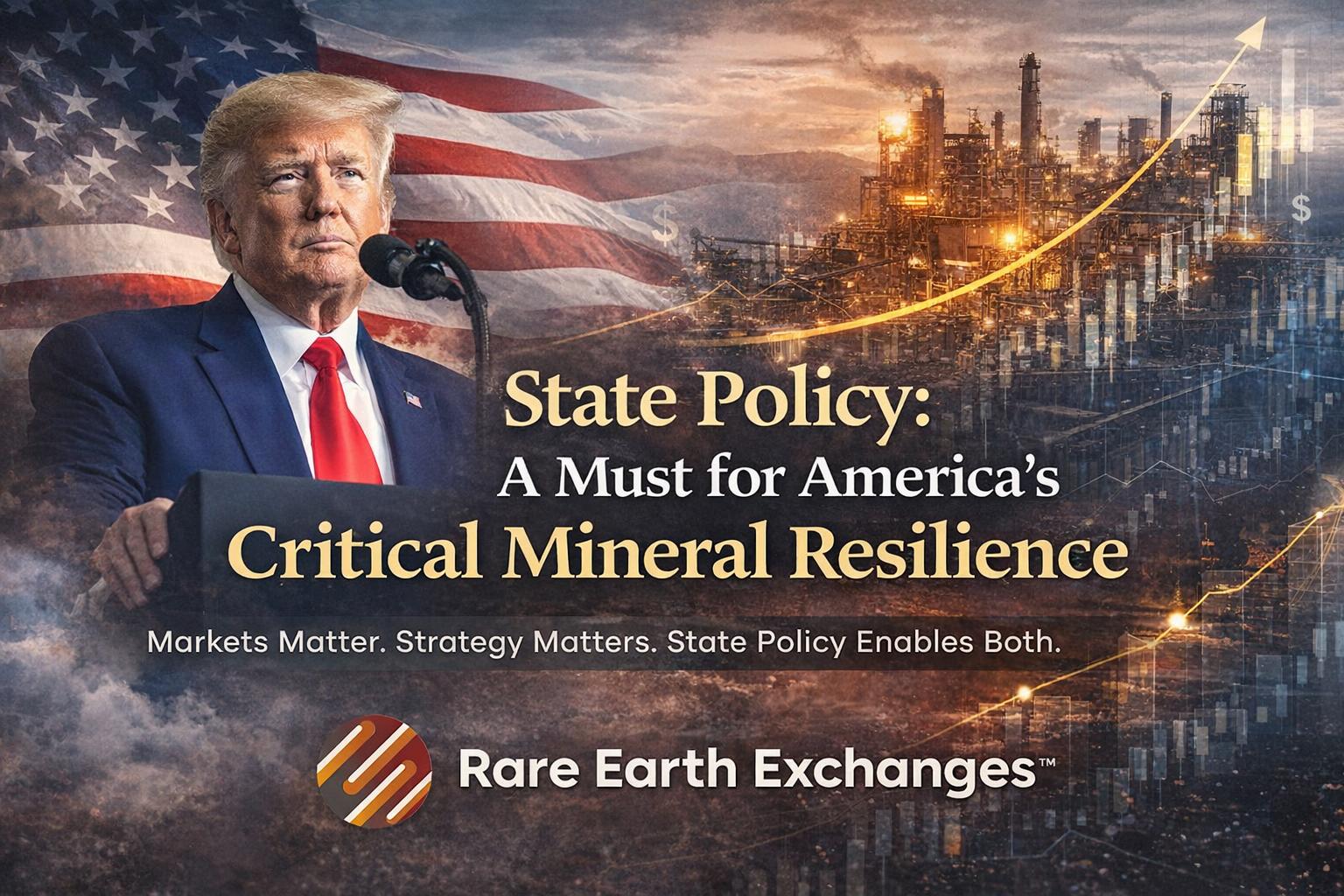
The Manhattan Institute argues (opens in a new tab) America can beat China on rare earths without copying Beijing’s state-directed playbook—lean on market dynamism, private capital, and competitive innovation instead of state capitalism. That instinct is attractive and partly correct: China’s dominance is real, U.S. dependency is a strategic risk, and sloppy industrial policy can create expensive failures as this media has chronicled. But the essay underestimates the core engineering constraint: rare earth competitiveness is determined less by ideology and more by midstream chemistry—separation, metallization, qualification, and permitting. If the U.S. treats rare earths like a normal commodity market, it risks learning the same lesson twice. Is that what we really want?
Who Is the Manhattan Institute—and Why That Matters
The Manhattan Institute for Policy Research (opens in a new tab) is a New York–based 501(c)(3) think tank founded in 1978 and widely described as conservative and free-market oriented, known for championing market-led reforms and skepticism toward subsidies and mandates.
That worldview shapes Shawn Regan’s framing: “don’t imitate China” becomes not just a policy preference, but an ideological north star. And certainly based on our societal norms, more and values there is a lot of sense.
What Regan Gets Right
- China dominates mining, refining, and magnet production; export controls are a real strategic signal. 100%
- “Throw money at it” industrial policy can destroy returns and credibility. 100%.
- Supply chain diversification across allies is necessary—but insufficient. 100%
What the Piece Misses: The Chemical Chokepoint
Rare earth control does not hinge on ore bodies. It hinges on separation and metallization—and the U.S. faces an investment trap: solvent extraction plants are costly, slow to permit, and exposed to violent price cycles. Industrial-scale solvent extraction remains the only proven route for large-volume separation; you can’t “market innovate” your way around that reality on a political timetable.
A tough question, Regan doesn’t answer:
What private investor funds a decade-long, high-permitting-risk chemical complex when China can move prices and margins overnight?
The Quiet Battlefield: Magnet Qualification
Mining and refining still aren’t the finish line. Magnet supply is won in qualification cycles measured in years, especially for defense. Sales cycles can be brutally long for new players. Who underwrites qualification risk? Who guarantees demand? Who absorbs the cost of failure?
REEx Takeaway
The choice isn’t laissez-faire versus state capitalism. That’s an “either-or” false dilemma. It’s capital discipline plus strategic architecture: permitting reform, bankable offtake, resilient midstream buildout, and qualification pipelines. In that way, while we do not believe President Trump’s administration has gone far enough into industrial policy, his administration is directionally correct. Not the other way around.
Free markets can energize competition — but market forces alone do not build solvent extraction plants on geopolitical timelines or absorb decade-long price volatility.
And in parallel, chemistry, scale, and time decide.


2 Comments
2 replies
Loading new replies...
New member
Active member
Join the full discussion at the Rare Earth Exchanges Forum →