
Highlights
- Yttrium is a critical rare earth element essential for jet engines, semiconductors, and clean energy.
- As of January 2026, severe supply constraints exist due to China's export controls, which collapsed U.S. imports and caused European prices to surge dramatically.
- China dominates over 90% of global yttrium production and processing, primarily from ion-adsorption clay deposits.
- The U.S. relies entirely on imports for yttrium, with minimal production elsewhere, exposing fragile supply chains for defense and technology applications.
- New yttrium sources in Australia, the U.S., South Africa, and the Nordics show promise but are not expected to materially impact supply until the late 2020s.
- This situation leaves a critical 3-year gap, necessitating strategic stockpiling, recycling innovation, and accelerated processing capacity development.
Yttrium (Y, atomic number 39) is a silvery metal few people recognize by name, yet it underpins some of the most advanced technologies in modern life. From jet engines and missile guidance systems to semiconductors and clean-energy infrastructure, yttrium plays a role that is both essential and hard to replace. As of January 2026, it is also one of the most supply-constrained critical minerals in the world.
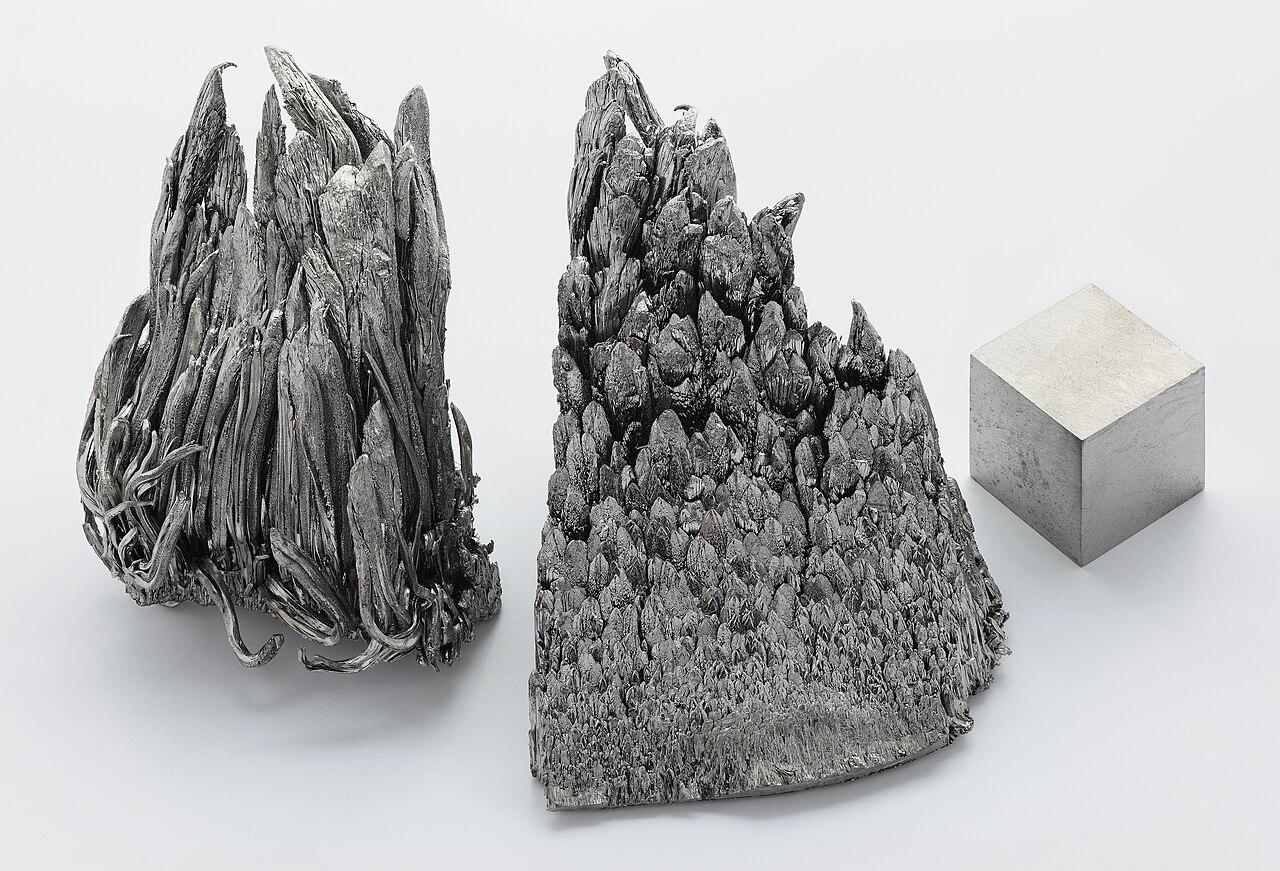
Table of Contents
What Is Yttrium — and Is It a Rare Earth?
Yes. Yttrium is classified as a rare earth element, grouped with the 15 lanthanides along with scandium. Chemically, yttrium behaves like the “heavy” rare earths, even though it sits slightly apart on the periodic table. Despite the name, yttrium is not geologically rare—it is more abundant in Earth’s crust than silver—but it is economically rare because it is difficult to extract and refine.
Yttrium is almost never mined on its own. Instead, it is produced as a byproduct of heavy rare earth mining, typically recovered as yttrium oxide (Y₂O₃), also known as yttria.
Where Is Yttrium Mined Today?
The global yttrium supply is overwhelmingly concentrated in China, with a secondary contribution from Myanmar. Most yttrium comes from ion-adsorption clay deposits in southern China—geologically unusual ores that are rich in yttrium and other heavy rare earths such as dysprosium and terbium.
Outside of China and Myanmar, production is minimal:
- Small byproduct volumes from monazite sands in India and Brazil
- Pilot-scale or early-stage output in Australia
- No meaningful production in the United States
The U.S. currently relies on imports for 100% of its yttrium supply, and until recently, more than 90% of that material originated in China.
Why Yttrium Is So Important
Yttrium earns its “critical mineral” status because it enables technologies that cannot easily function without it.
Defense & Aerospace
- Essential to thermal barrier coatings for jet engines and military aircraft (yttria-stabilized zirconia)
- Core component of high-power lasers (e.g., YAG lasers) used in targeting, range-finding, and missile defense
- Used in radar, microwave filters, and secure communications
Semiconductors & Electronics
- Yttrium oxide is used as a protective ceramic coating in semiconductor fabrication equipment, resisting corrosive plasmas
- Critical in high-frequency electronics, microwave components, and specialized optical devices
- Semiconductor manufacturers have ranked yttrium shortages among their most severe materials risks
Clean Energy & Industrial Systems
- Key material in gas turbines for power generation
- Used in solid oxide fuel cells and oxygen sensors
- Improves high-temperature ceramics, superconductors, and specialty alloys
In many of these applications, substitutes either do not exist or result in worse performance, shorter lifetimes, or higher costs.
Who Dominates Processing?
China not only mines most of the world’s yttrium—it also dominates processing and separation, which is the true choke point. Rare earth refining is chemically complex, environmentally sensitive, and capital-intensive. Over decades, China built a vertically integrated system that includes mining, separation, metalmaking, and downstream manufacturing.
Today, most Chinese yttrium production is consolidated under large, state-directed rare earth groups. Outside China, commercial-scale heavy rare earth separation remains extremely limited, though this is beginning to change.
Promising Deposits Outside China
Several non-Chinese sources show real potential but are not yet fully online:
- Australia: Ionic-clay and heavy rare earth projects with unusually high yttriumcontent
- South Africa: Recovery of yttrium and other rare earths from historic mine tailings
- United States (Texas): Large polymetallic deposits containing yttrium alongside lithium and heavy rare earths
- Nordics (Sweden, Norway): Newly identified rare earth resources that include yttrium
These deposits demonstrate that geology is not the problem; time, permitting, capital, and processing capacity are.
So to summarize promising non-Chinese yttrium sources from Japan's significant deep-sea rare earth deposits near Minami Torishima to Western Australia's North Stanmore project (Victory Metals) to Kazakhstan's new large find in the Karaganda region to the established players like Australia's Mount Weld (Lynas) and the US's Mountain Pass (MP Materials) involving heavies, with efforts in India and Greenland (Tanbreez) also showing potential for future supply diversification.
Why Is There a Shortage in January 2026?
The current shortage traces back to China’s 2025 export controls, which included yttrium among several restricted rare earths. While Chinese domestic prices remained relatively stable, exports slowed sharply, licenses became harder to obtain, and overseas buyers were effectively cut off.
The result:
- Exports to the U.S. collapsed
- European spot prices surged dramatically, in some cases by orders of magnitude
compared with early 2025
- Manufacturers began hoarding inventory
- Aerospace, semiconductor, and energy firms flagged yttrium as a potential production bottleneck
This was not a demand shock—it was a policy-driven supply shock, exposing how little buffer exists outside China. A key point Rare Earth Exchanges™ has been declaring since this platform’s launch in October 2024.
What Can Be Done About It?
The yttrium shortage has triggered a rapid response across governments and industry:
- Build Processing Capacity Outside China
New separation facilities in the U.S., Europe, and Australia are under development, including projects capable of handling heavy rare earths like yttrium. - Accelerate Non-Chinese Mining Projects
Governments are fast-tracking permits, offering financing support, and treating rare earth projects as strategic infrastructure. - Recycling and Secondary Recovery
Historically negligible, yttrium recycling is gaining interest due to high prices—particularly from industrial waste streams and end-of-life electronics. - Strategic Stockpiling
Defense agencies and manufacturers are reconsidering “just-in-time” supply models for critical minerals. - Efficiency, Not Substitution
True substitutes are rare, so innovation is focused on using less yttrium per unit, not eliminating it.
The Bigger Picture
Yttrium’s story mirrors a broader truth about critical minerals: modern technology depends on obscure materials with fragile supply chains. The world is not running out of yttrium in the ground—but it is running short on secure, diversified access.
As of early 2026, yttrium remains tight, expensive, and geopolitically sensitive. But the crisis has forced long-overdue action. New supply chains are forming, processing capacity is expanding, and policymakers now understand that rare earth security is industrial security. Even under accelerated timelines, most non-Chinese yttrium projects will not materially impact supply until the late 2020s. So a big question given today’s date is January 18, 2026, where does supply come from say in the next three years?
Yttrium may never be famous—but it is indispensable. And ensuring its availability will shape defense readiness, technological leadership, and clean-energy deployment for the rest of this decade.


0 Comments