
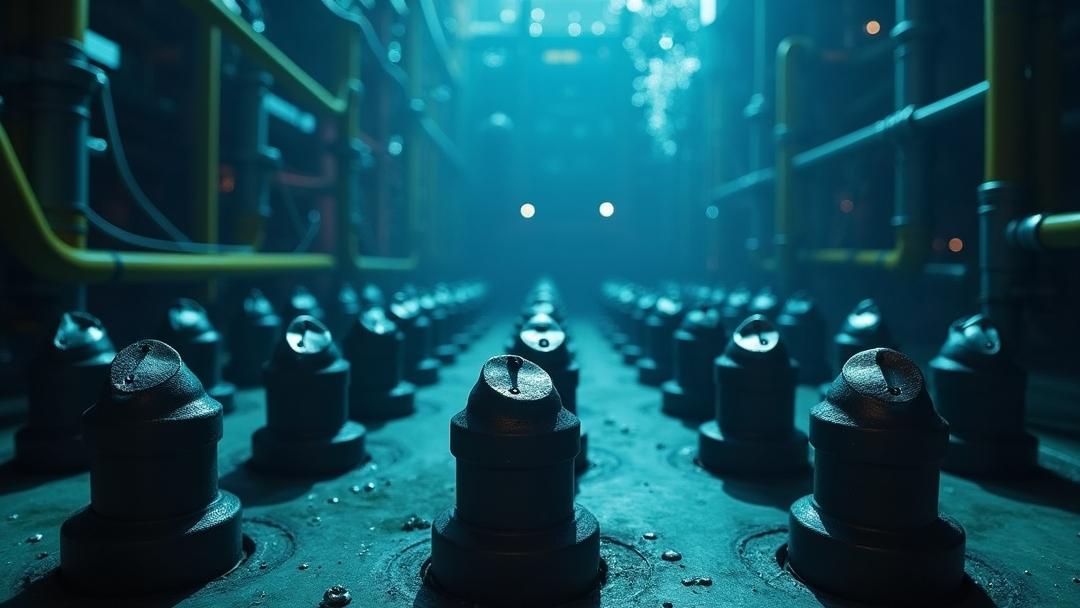
Before nuclear reactor control rods, early reactor power regulation relied more heavily on geometry changes, moderator adjustments, or soluble absorbers, (opens in a new tab) which could be slower or less precisely localized in the core. Modern rods introduced a fast, repeatable, and physically direct way to adjust the neutron population where fission is happening, improving routine load-following and emergency shutdown reliability. Rare earths matter because several lanthanides have exceptionally high neutron-capture cross sections (notably gadolinium and samarium), making them valuable as neutron absorbers in reactor cores and as burnable absorber additives. This article will explain what control rods do, how insertion and withdrawal changes reactivity and power, where rods sit in the core, what materials are used and why, and how different reactor types implement shutdown and control.
Table of Contents
How did nuclear reactor control rods change reactor operations—and why do rare earths matter?
Before nuclear reactor control rods became standard, early reactor power regulation relied more heavily on geometry changes, moderator adjustments, or soluble absorbers. These methods could be slower or less precisely localized in the core. The Chicago Pile-1, humanity's first controlled nuclear reactor, used cadmium sheets that could be inserted manually. Later designs evolved into the modern control rod system we know today.
Modern control rods introduced a fast, repeatable, and physically direct way to adjust the neutron population exactly where fission is happening. This improved routine load-following and emergency shutdown reliability. Instead of waiting for chemical mixing or large-scale geometry changes, operators could now insert or withdraw rods in seconds to minutes, giving them precise control over reactor power.
Rare earths matter in this story because several lanthanides have exceptionally high neutron-capture cross sections. Gadolinium and samarium are particularly valuable as neutron absorbers in reactor cores and as burnable absorber additives. While the control rods themselves often use materials like boron carbide or silver-indium-cadmium, rare earths appear throughout the broader control system ecosystem. They show up in high-performance magnets, specialty alloys, sensors, and manufacturing tools used in rod drive and monitoring hardware.
Rare Earth Role
Which elements are used and why
Gadolinium and samarium are the most relevant rare earths in nuclear reactor operations. These elements are strong neutron absorbers and are widely used as "burnable poisons" mixed directly into fuel rather than in the control rods themselves. Gadolinium oxide (Gd₂O₃) mixed into fuel pellets helps manage long-term reactivity without requiring deep rod insertion.
The physics basis is straightforward. Certain isotopes of these elements have large thermal neutron capture cross sections. When they capture neutrons, those neutrons can't cause further fissions, which reduces reactivity. Gadolinium-157, for example, has a thermal neutron capture cross section of about 254,000 barns (opens in a new tab), making it one of the strongest neutron absorbers available.
Dysprosium and erbium can appear in specialized absorber concepts and fuel additives. These elements capture neutrons effectively and can be engineered for different depletion behaviors over the fuel cycle. While less common than gadolinium in commercial reactors, they're discussed in nuclear engineering literature as candidate materials for specific applications.
Rare earths also enter the control system indirectly through permanent magnets. Neodymium-iron-boron (Nd-Fe-B) magnets with dysprosium or terbium additions for high-temperature stability appear in position sensors and inspection tools. Samarium-cobalt (Sm-Co) magnets provide even higher thermal stability for demanding applications near hot reactor components.
How it works
When gadolinium or samarium compounds are present in the reactor core, they capture neutrons that would otherwise sustain the chain reaction. In fuel pellets containing gadolinium oxide, the neutron absorption happens right where the fuel is fissioning. As the reactor operates, these burnable absorbers gradually "burn out" by capturing neutrons and transforming into isotopes with lower absorption cross sections.
This creates a self-regulating effect. Early in the fuel cycle when there's excess reactivity from fresh fuel, the burnable absorbers suppress it. As the fuel depletes and reactivity naturally drops, the absorbers also deplete, releasing their suppressive effect. This flattens the power distribution over the fuel cycle and reduces how much control rod movement is needed for routine power adjustments.
The rare earth magnets in sensors and actuators work differently. These provide stable magnetic fields for position indication systems that track exactly where each control rod sits in the core. Dysprosium or terbium additions to these magnets maintain their magnetic properties even at high temperatures near the reactor vessel. This temperature stability ensures accurate position feedback, which is critical for safe reactor operation.
Some inspection and maintenance equipment also relies on samarium-cobalt magnets because they maintain their properties under radiation exposure better than standard magnets. While these aren't part of the control rods themselves, they're essential for verifying that control systems are working properly.
Journey from Mine to Product
Supply chain steps
The journey begins at rare earth mines, which produce mixed concentrates containing multiple rare earth elements together. Major sources include bastnäsite and monazite ores. These mixed concentrates must be chemically processed through complex separation steps to produce individual rare earth oxides like neodymium oxide, samarium oxide, and gadolinium oxide.
For nuclear fuel applications, gadolinium oxide goes directly to fuel fabrication facilities. There it's mixed with uranium dioxide powder in carefully controlled proportions before the mixture is pressed into pellets and sintered at high temperatures. The final fuel pellets contain a uniform distribution of gadolinium that will provide predictable neutron absorption throughout the fuel's life.
For magnet applications, the separated oxides undergo additional processing. They're converted to metals through electrolysis or metallothermic reduction, then alloyed with other elements. Neodymium is combined with iron and boron to create Nd-Fe-B alloy, while samarium is alloyed with cobalt for Sm-Co magnets. These alloys are then manufactured into magnets through powder metallurgy, sintering, and precision machining.
The finished magnets and ceramic components go to equipment manufacturers who integrate them into sensors, actuators, and inspection tools. Final assembly involves extensive qualification testing and documentation to meet nuclear-grade quality assurance requirements. Every component must have documented specifications and verification steps traced back through the supply chain.
Typical chokepoints
Separation is the major bottleneck in rare earth supply chains. Individual rare earth elements require complex solvent extraction circuits with hundreds of stages to achieve the purity needed for nuclear and magnet applications. Heavy rare earths like dysprosium and terbium are particularly challenging because they're less abundant and harder to separate than light rare earths.
China currently dominates rare earth separation capacity, processing about 85% of global rare earth concentrates into separated products. This concentration creates supply risk for industries needing these materials. Even when rare earth ores are mined elsewhere, they often must be sent to China for separation due to limited processing capacity in other countries.
Midstream manufacturing presents additional bottlenecks. High-specification sintering, powder handling, and precision machining for nuclear-grade components require specialized facilities and expertise. The qualification cycles for safety-related nuclear applications can take years, which narrows the supplier base and lengthens lead times. Even when rare earths are only in supporting hardware, nuclear quality assurance requirements limit how quickly new suppliers can enter the market.
Statistics & Societal Impact
Quantitative snapshot
The global nuclear fleet includes approximately 440 operable power reactors with a combined capacity of about 390 gigawatts electric. Each of these reactors contains control rod assemblies and most use some form of burnable absorber in their fuel, creating a substantial installed base for these technologies.
Control rod materials vary by reactor type. Pressurized water reactors typically use boron carbide (B4C) or silver-indium-cadmium (Ag-In-Cd) alloys as their primary neutron absorbers. Boiling water reactors often use boron carbide in stainless steel tubes. CANDU reactors use stainless steel or Inconel without additional absorbers, relying on the displacement of heavy water moderator for reactivity control.
Rare earths appear more commonly as burnable absorbers in fuel than in the control rods themselves. Modern PWR fuel assemblies often contain gadolinium oxide mixed into selected fuel pellets, typically at concentrations of 2-10% by weight. A single fuel assembly might contain several kilograms of gadolinium oxide distributed among specific fuel rods.
China produces about 70% of global rare earth mine output and controls an even larger share of separation and magnet manufacturing capacity. This concentration affects all rare earth users, though nuclear applications represent a small fraction of total demand compared to electric vehicles, wind turbines, and consumer electronics.
Downstream effects
Better neutron absorber management through control rods and burnable absorbers supports stable reactor operation and improved load-following capability. Reactors can adjust power output to match electricity demand while maintaining safe operating margins. This flexibility helps nuclear plants provide reliable baseload power and support grid stability.
The distinction between routine reactivity control and safety shutdown is important. During normal operation, control rods make small adjustments to maintain desired power levels and shape the neutron flux distribution in the core. For safety shutdown or "scram," the rods rapidly insert to add large negative reactivity, bringing the reactor subcritical within seconds.
This dual function—routine control and emergency shutdown—makes control rods a fundamental safety system. Combined with burnable absorbers that reduce the need for rod movement, modern reactivity control enables longer fuel cycles and better fuel utilization. The societal benefit is dependable low-carbon electricity with high capacity factors, typically above 90% for well-run nuclear plants.
Innovators & History
Key breakthroughs
Early reactor control evolved from simple cadmium sheets in experimental piles to sophisticated rod assemblies with redundant drive mechanisms. The development progressed through several key phases as commercial power reactors adopted robust, scram-capable systems as a core safety function.
The introduction of burnable absorbers marked a major advance in reactivity management. General Electric and Westinghouse pioneered the use of gadolinium-bearing fuel in the 1980s, allowing longer fuel cycles without excessive control rod insertion. This reduced power peaking and improved fuel economy while maintaining safety margins.
Industry-wide safety expectations evolved through operating experience and regulatory oversight. Organizations like the Nuclear Regulatory Commission and international bodies established standards requiring independent shutdown paths, reliable insertion under fault conditions, and verified rod worth measurements. These institutional developments were as important as the technical innovations in establishing modern control rod reliability.
From lab to product
The transition from laboratory measurements to commercial products required extensive materials testing and qualification. Scientists first measured neutron cross sections for various absorber materials, identifying which elements and isotopes would work best. Materials engineers then tested how these absorbers behaved under irradiation, checking for swelling, gas generation, and mechanical property changes.
The key challenge was maintaining stable geometry and properties for years in the harsh reactor environment. Absorber materials had to withstand high neutron flux, elevated temperatures, and mechanical stresses without degrading. This led to specific design choices like using boron carbide in sealed stainless steel tubes and developing cladding materials compatible with different absorber compounds.
Commercialization also required reliable drive mechanisms and position indication systems that could operate for decades with minimal maintenance. This is where rare earth magnets found their niche in sensors and inspection equipment, providing stable performance in high-radiation environments where other materials might degrade.
Why It Matters Now
Current drivers
Nuclear plants worldwide are pursuing license extensions, power uprates, and modernization programs that put renewed focus on control systems and shutdown reliability. Many reactors originally licensed for 40 years are now operating or planning to operate for 60 or even 80 years. This extended operation requires careful management of control rod and absorber material aging.
Advanced reactor designs under development often feature innovative control approaches. Some small modular reactor concepts use control drums or sliding reflectors instead of traditional inserted rods. Others integrate burnable absorbers more extensively to minimize control rod movement. These innovations still rely on the same fundamental physics of neutron absorption but implement it in new ways.
Rare earth market dynamics affect nuclear applications because the same elements needed for burnable absorbers and industrial magnets are in high demand from electric vehicles and wind turbines. While nuclear uses represent a small fraction of total rare earth consumption, the strict quality requirements and long qualification times make nuclear users particularly sensitive to supply disruptions.
Security & policy context
Processing concentration creates procurement risks for rare earth-containing components. Even though China's rare earth export policies haven't specifically targeted nuclear applications, the potential for supply restrictions concerns policymakers and industry planners. The vulnerability extends beyond direct materials to the specialized magnets and sensors used in support equipment.
Western governments are responding with initiatives to develop domestic rare earth processing capacity and diversify supply chains. The U.S. Department of Energy and European Union have funded projects to establish separation facilities outside China. Recycling programs for rare earth magnets are also expanding, though nuclear-grade materials face additional challenges due to qualification requirements and quality control needs.
The key insight for educators and policymakers is that supply risk often centers on midstream processing rather than raw material availability. Rare earth ores exist in many countries, but the complex separation and purification steps remain concentrated in a few facilities worldwide.
Future Outlook
Materials & design trends
Control system evolution will likely continue combining traditional rod-based control with optimized burnable absorber strategies. Future fuel designs may use graded gadolinium concentrations or novel absorber materials to achieve better power shaping with less rod movement during normal operation. The goal is minimizing control intrusion while preserving strong shutdown capability.
Rare earth magnet technology is advancing to reduce heavy rare earth content without sacrificing performance. Grain boundary diffusion processes allow manufacturers to concentrate dysprosium or terbium exactly where needed in the magnet structure, reducing overall consumption. New magnet recycling techniques are also emerging to recover rare earths from end-of-life products, though nuclear applications will likely require virgin materials due to purity requirements.
Digital control systems and advanced sensors are changing how control rods are monitored and positioned. Modern plants are upgrading from analog to digital instrumentation, enabling more precise control and better diagnostic capabilities. These systems often incorporate rare earth magnets in their sensors but use them more efficiently than older designs.
5–10 year scenario
Demand for rare earths will likely be driven primarily by the clean energy transition and electrification rather than nuclear applications. Electric vehicle motors and wind turbine generators will consume the bulk of neodymium and dysprosium production. This high-volume demand could affect availability and pricing for specialized nuclear uses, even though nuclear consumption is relatively small.
The critical bottleneck to watch is qualified processing and component manufacturing capacity rather than total ore supply. New separation facilities in the U.S., Australia, and Europe may come online within five years, but scaling to commercial production and achieving nuclear-grade quality will take time. Materials traceability an
Conclusion
Nuclear reactor control rods represent a critical intersection of materials science, nuclear physics, and engineering reliability. While the primary absorber materials in most commercial control rods are not rare earth-based, rare earth elements play important supporting roles through burnable absorbers like gadolinium in fuel and through high-performance magnets in industrial equipment. As nuclear fleets pursue life extensions and new reactor designs emerge, the ability to source and qualify these materials reliably becomes increasingly important. Understanding both the direct neutron absorption role and indirect industrial applications helps stakeholders navigate supply chain risks while maintaining the safety and operational flexibility that modern reactor control systems provide.
FAQs
What are nuclear reactor control rods, and what do they do?
Nuclear reactor control rods are movable neutron-absorbing components inserted into or withdrawn from the reactor core to change reactivity. By absorbing neutrons that would otherwise cause further fissions, they regulate reactor power during normal operation and provide a fast means of shutting the reactor down when required.
What happens step-by-step when control rods are inserted or withdrawn?
Withdrawing rods removes neutron absorption from the core region they occupy, increasing reactivity and allowing the neutron population—and thus power—to rise toward a new steady level if managed correctly. Inserting rods adds neutron absorption, decreasing reactivity so the neutron population falls and power drops; full or rapid insertion is used for shutdown (scram) to drive the reactor subcritical.
Can control rods stop the reaction instantly?
They can stop the self-sustaining fission chain reaction very quickly by inserting strong neutron absorbers that drive the reactor subcritical, but instant depends on the design and time scales being discussed. Power from fission falls rapidly after shutdown, yet decay heat from fission products continues and must be removed by cooling systems even when the chain reaction is stopped.
Why not keep control rods fully inserted all the time?
Fully inserted rods would keep the reactor deeply subcritical, which prevents sustained power generation and can create undesirable power-shape effects if the reactor is operating near criticality using other methods. In routine operation, plants aim for controlled, efficient neutron economy using a combination of rod position, fuel design, and soluble or burnable absorbers.
What if control rods fail to insert during a scram?
Reactors are designed with redundancy and diverse shutdown features so that loss of a single rod or mechanism does not eliminate shutdown capability. Designs typically include multiple independent rod groups, fail-safe insertion features such as gravity or spring-assisted insertion, and additional reactivity control methods such as soluble boron in PWRs to ensure the reactor can be brought subcritical under credible fault conditions.
