
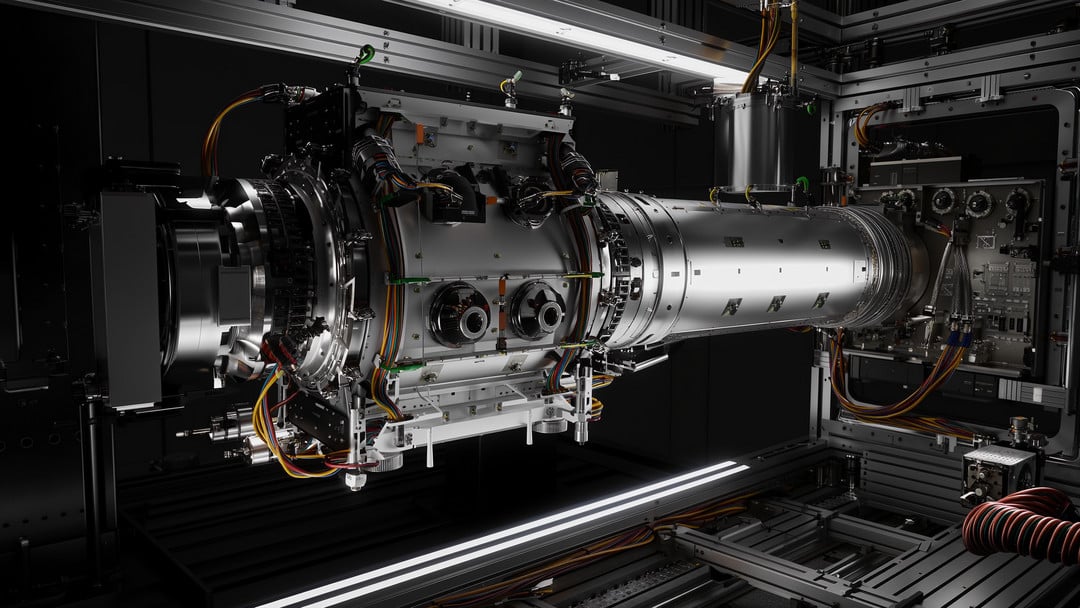
Early spacecraft relied heavily on storable chemical propellants and simple cold-gas jets for short, high-thrust maneuvers, which limited total delta-v and forced larger propellant tanks that reduced payload flexibility. As electric propulsion matured and power systems improved, missions shifted toward lower-thrust, high-efficiency orbit raising and stationkeeping, improving lifetime and enabling smaller satellites to perform tasks previously reserved for larger platforms. Rare earths matter because many of the enabling subsystems for modern propulsion are materials-limited: high-coercivity permanent magnets for Hall thrusters and motor drives, radiation-tolerant optics and coatings for sensors and laser metrology, phosphors for displays and indicators, and catalysts and alloying additions for valves, heaters, and high-temperature hardware. This article explains what spacecraft propulsion systems are used for in flight, which rare earth elements appear in propulsion-related hardware, how those materials translate into performance, where supply-chain chokepoints sit, and what 2025-2026 market and policy signals imply for adoption and risk.
Table of Contents
How Did Spacecraft Propulsion Systems Change Space Missions — and Why Do Rare Earths Matter?
For decades, spacecraft relied on straightforward chemical rockets and cold-gas jets. These systems delivered high thrust for brief, powerful burns — enough to shift an orbit or escape Earth's gravity. But they came with a cost. Storable chemical propellants are heavy, and the tanks needed to carry them ate into the mass budget that could have gone to instruments, antennas, or other payload.
That picture started shifting as electric propulsion matured. Instead of burning fuel in a combustion chamber, electric thrusters use electromagnetic fields to accelerate tiny amounts of propellant to very high speeds. The thrust is low — sometimes measured in millinewtons — but the efficiency is dramatically higher. Over weeks and months of continuous firing, an electric thruster can deliver the same total change in velocity as a chemical system while using a fraction of the propellant mass.
By 2025, electric propulsion had moved from a specialty option to a mainstream choice for geostationary satellites, large low-Earth-orbit constellations, and even deep-space missions. Smaller satellites began doing jobs that once required much bigger platforms, thanks in part to compact, efficient propulsion hardware.
So where do rare earths fit in? The answer is materials. Many of the components that make modern propulsion systems work — the magnets inside Hall-effect thrusters, the motors that open and close propellant valves, the sensors that verify performance during ground testing — depend on rare earth elements for their performance. Without high-strength permanent magnets built from elements like neodymium and samarium, these components would be larger, heavier, and less capable.
This article explains what spacecraft propulsion systems actually do during a mission, which rare earth elements appear in propulsion-related hardware, how those materials affect performance, where the supply chain gets tight, and what 2025–2026 trends mean for the industry.
Rare Earth Role in Spacecraft Propulsion Systems
Which Elements Are Used and Why
Several rare earth elements play distinct roles in propulsion hardware. Understanding which ones matter — and why — starts with knowing what each element brings to the table.
Neodymium and praseodymium are the backbone of NdFeB permanent magnets, the most powerful commercial permanent magnets available today. In spacecraft propulsion, NdFeB magnets show up in the magnet circuits of Hall-effect thrusters, where they shape the magnetic field that traps electrons and accelerates ionized propellant. They also appear in compact brushless motors used to drive propellant valves, gimbals, and feed-system pumps. Their value comes from high remanence — the strength of the magnetic field they retain — and high energy product, which means more magnetic performance per gram. Manufacturer datasheets from companies like VACUUMSCHMELZE and Arnold Magnetic Technologies document these properties across a range of commercial grades.
Dysprosium and terbium are heavy rare earth elements added in small amounts to NdFeB magnets. Their job is to raise coercivity — the magnet's resistance to losing its magnetism when exposed to heat or opposing fields. Near a thruster's discharge chamber or close to power electronics, temperatures can climb high enough to partially demagnetize a standard NdFeB magnet. Dy and Tb additions push the safe operating temperature higher, protecting performance over a multi-year mission. This tradeoff is well documented in the Journal of Magnetism and Magnetic Materials and in international magnet testing standards.
Samarium pairs with cobalt to form SmCo magnets, an older but still important magnet family. SmCo magnets tolerate higher temperatures and have better radiation resistance than most NdFeB grades, making them attractive for the hottest or most radiation-exposed positions in a propulsion assembly. The tradeoff is that SmCo magnets are more brittle and typically more expensive per unit of energy product. Aerospace component references and supplier datasheets from Arnold and VACUUMSCHMELZE compare the two families in detail.
Yttrium, europium, and terbium also appear in phosphors and specialized optical materials. These show up in displays, indicators, and certain optical coatings used in propulsion test and diagnostic equipment rather than in the thruster itself. Their role is indirect but important: reliable ground testing depends on spectrally stable sensors and calibration tools, and rare-earth-based optical materials help deliver that stability.
How It Works
The connection between rare earths and thruster performance is most direct inside a Hall-effect thruster. The thruster's magnet circuit — built from NdFeB or SmCo magnets containing neodymium, praseodymium, and sometimes dysprosium or terbium — creates a radial magnetic field across the discharge channel. This field traps electrons in a swirling Hall current, which ionizes the xenon or krypton propellant. The ions are then accelerated out the back of the thruster by an electric field. Stronger, more uniform magnetic fields improve electron confinement, which raises ionization efficiency and lets the thruster extract more thrust per watt of electrical power. NASA technical reports and application notes from manufacturers like Safran Spacecraft Propulsion describe this relationship in accessible terms.
In valves and actuators, NdFeB magnets inside brushless DC motors provide high torque density. That means a smaller, lighter motor can open and close a propellant valve with the same force as a larger motor built with weaker magnets. For a spacecraft where every gram counts, this matters. Smaller valve actuators also simplify packaging and reduce the mass of wiring harnesses. Aerospace motor design references and space-qualified motor vendor datasheets support these sizing relationships.
Temperature is a persistent challenge. Near the discharge channel of a Hall thruster, or next to power electronics under load, local temperatures can exceed the safe limits of standard NdFeB magnets. Designers respond by selecting Dy- or Tb-enhanced NdFeB grades with higher coercivity, or by switching to SmCo magnets entirely. This choice is driven by thermal models specific to each thruster design, and the tradeoffs are documented in NASA and ESA propulsion (opens in a new tab)testing literature.
On the ground, rare-earth-containing optical materials and coatings help test engineers image thruster plumes, calibrate laser metrology systems, and verify performance during qualification campaigns. More reliable test data means fewer surprises after launch. Space propulsion test facility publications describe these diagnostic setups and the optical components they rely on.
Journey from Mine to Product
Supply Chain Steps
The path from raw ore to a magnet inside a flight thruster is long and complex. It starts at a mine, where rare earth ores — typically bastnasite, monazite, or ion-adsorption clays — are extracted and upgraded into mineral concentrates. These concentrates then go through chemical separation, a multi-stage solvent extraction process that isolates individual rare earth oxides such as neodymium oxide or dysprosium oxide. The U.S. Geological Survey and the International Energy Agency both publish detailed summaries of this processing chain.
Once separated, the oxides are reduced to metals and blended into master alloys. For NdFeB magnets, the alloy is melted and rapidly cooled through strip casting, then milled into a fine powder. The powder is aligned in a magnetic field, pressed, and sintered at high temperature to form a dense, hard block. After sintering, the magnets are heat-treated to optimize their magnetic properties, then machined to precise dimensions, coated to resist corrosion, and finally magnetized.
The finished magnets are integrated into thruster magnet circuits, motor assemblies, or sensor housings. From there, the propulsion components go through acceptance testing — vibration, thermal vacuum cycling, and contamination control — following workmanship standards defined by agencies like ESA and NASA. Only after passing these tests does a magnet-containing component become flight-qualified hardware.
Typical Chokepoints
The separation step is one of the most frequently cited bottlenecks. Solvent extraction plants require specialized infrastructure, generate tightly regulated waste streams, and are geographically concentrated. According to USGS and IEA critical-minerals reporting, this concentration creates vulnerability. The problem is worse for heavy rare earths like dysprosium and terbium, which come from fewer primary sources and have even more limited refining capacity worldwide.
Magnet manufacturing introduces its own chokepoints. Achieving consistent coercivity requires precise control of oxygen content during powder handling, high-quality sintering furnaces, and reliable coating processes to prevent corrosion in humid or chemically active environments. For aerospace applications, lot traceability and tight materials specifications add another layer of difficulty. Specialty optical materials used in test and qualification equipment can also face long lead times, especially when export controls restrict the flow of precursor materials.
Statistics and Societal Impact
Quantitative Snapshot
The number of active satellites continues to climb. According to the Union of Concerned Scientists Satellite Database, over 10,000 operational satellites were in orbit by early 2026, with launch cadence remaining high due to constellation deployments and replenishment missions. BryceTech's smallsat market reports indicate that small and medium spacecraft account for a growing share of these launches. Each satellite that uses electric propulsion or precision valve actuators contributes to aggregate demand for magnet-based propulsion components.
The global spacecraft propulsion market has been sized in the range of several billion U.S. dollars as of 2025–2026, according to estimates from research firms such as Euroconsult and Northern Sky Research. These figures span chemical propulsion, electric propulsion, and emerging in-space mobility services. Electric propulsion's share has been growing steadily as more operators adopt all-electric or hybrid satellite platforms.
On the materials side, USGS Mineral Commodity Summaries and IEA critical materials outlooks for 2025–2026 describe a global NdFeB magnet market measured in tens of thousands of metric tons annually, driven primarily by electric vehicles, wind turbines, and industrial motors. Aerospace-grade magnets represent a tiny fraction of that tonnage. But their strategic sensitivity is disproportionately high because propulsion hardware demands the tightest specifications: controlled grain structure, verified coercivity at elevated temperatures, and full lot traceability.
Estimating the actual magnet mass per thruster or motor requires caution. Published NASA test reports and manufacturer datasheets sometimes list component-level masses for specific thruster models, but values vary widely by power class and design architecture. A small Hall thruster for a CubeSat might contain only a few tens of grams of magnet material, while a high-power thruster for a large satellite could use significantly more. The key point is not tonnage — it is that the magnets are performance-critical and difficult to substitute on short notice.
Downstream Effects
Efficient propulsion directly improves mission lifetime. A satellite that uses less propellant for orbit raising has more left over for years of stationkeeping, which extends revenue-generating service for a communications operator or adds years of climate data collection for a science mission. These gains affect real services: broadband connectivity, weather forecasting accuracy, and disaster-response imaging.
Reliability matters just as much. A stuck propellant valve during orbit raising or a degraded thruster during a deorbit burn can end a mission prematurely. Stable magnets and compact, well-tested actuators reduce the probability of these failures. ESA telecom program notes and NASA electric propulsion technology overviews discuss how component reliability feeds into mission assurance — and ultimately into the societal services that satellites provide.
Innovators and History
Key Breakthroughs
The rare earth magnet story begins in the 1960s and 1970s, when researchers developed samarium-cobalt magnets. SmCo offered magnetic energy products far beyond anything available from ferrite or alnico magnets, and it opened up new possibilities for compact motors and magnetic circuits. In the 1980s, teams in Japan and the United States independently developed neodymium-iron-boron magnets, which offered even higher energy products at lower raw material cost. IEEE publications and the Journal of Applied Physics document this history in detail. For spacecraft designers, the practical consequence was transformative: motors and magnetic assemblies could be made smaller and lighter while delivering the same or better performance.
Hall thrusters and ion engines had been studied since the 1960s, but it took decades of engineering maturation before they became mainstream flight hardware. Soviet-heritage Hall thrusters flew on numerous spacecraft starting in the 1970s. NASA's NSTAR ion engine powered the Deep Space 1 mission in 1998, and the agency's NEXT thruster program pushed ion engine performance further. ESA's SMART-1 mission demonstrated Hall thruster technology for lunar orbit insertion. In all of these systems, the magnetic circuit — built from rare earth permanent magnets (opens in a new tab) — was central to thruster function. NASA and ESA mission retrospectives consistently highlight magnetic field quality as a key performance driver.
Standardization of environmental testing also played a quieter but essential role. As agencies codified requirements for thermal-vacuum cycling, vibration qualification, and contamination control, it became possible to manufacture precision propulsion components repeatably. These institutional milestones, reflected in NASA and ESA standards documentation, are not tied to a single inventor but were critical to making rare-earth-dependent propulsion hardware reliable enough for flight.
From Lab to Product
Translating laboratory thrusters into producible flight units required solving manufacturing problems as much as physics problems. Magnet assembly, alignment, bonding, and thermal management all had to be made repeatable and compatible with space qualification requirements. Technology transfer programs played an important role. NASA's SBIR and STTR programs funded small businesses to mature propulsion component manufacturing. ESA's ARTES and General Support Technology Programme supported similar transitions in Europe. These pathways helped move magnet-intensive propulsion hardware from research demonstrations to supplier product lines.
Component suppliers for magnets, motors, and power processing units industrialized production by tightening materials specifications and implementing full lot traceability. For heavy-REE-doped magnets and high-temperature assemblies, this discipline is especially important because small variations in composition or processing can shift coercivity enough to affect demagnetization margins. In space hardware, manufacturability is often a bigger barrier than the underlying physics.
Why It Matters Now
Current Drivers
Several trends converge in 2025–2026 to make rare earths in spacecraft propulsion more strategically relevant than ever. Satellite production rates remain high, driven by constellation replenishment and new deployments. All-electric and hybrid propulsion architectures are now standard for many geostationary platforms and are increasingly adopted for large LEO constellation satellites. Beyond Earth orbit, growing interest in cislunar logistics — servicing, refueling, and infrastructure deployment near the Moon — is creating demand for propulsion systems optimized for high total impulse and long mission duration. ESA exploration roadmaps and NASA cislunar architecture discussions describe these emerging mission profiles.
The adoption of "green" propellants — alternatives to traditional hydrazine that are safer to handle on the ground — is another driver. The rare earth connection is not in the propellant chemistry itself but in the hardware refresh it triggers. New propellants can require redesigned valves, heaters, sensors, and control electronics, and those redesigned components may incorporate updated magnet-based actuators and motors. NASA and ESA green propellant demonstration programs document these qualification efforts.
Security and Policy Context
The concentration of rare earth separation and magnet manufacturing capacity remains a well-documented concern. USGS, IEA, and multiple government critical-minerals strategies published in 2025 and 2026 highlight the risk that a supply disruption could create schedule delays for spacecraft programs that depend on long-lead magnet components. This is not a theoretical risk — lead times for specialty aerospace-grade magnets can stretch to many months, and qualification of a new supplier can take years.
Onshoring and friend-shoring initiatives in the United States, European Union, Japan, and Australia aim to diversify the supply base for both separated rare earth materials and finished magnets. Recycling pilots focused on manufacturing scrap from magnet production are also gaining attention. For spacecraft program managers, the practical implication is a risk-management challenge: securing materials early, qualifying backup suppliers, and designing thermal margins that reduce the need for the scarcest heavy rare earth additions.
Future Outlook
Materials and Design Trends
Magnet engineers are working to reduce the amount of dysprosium and terbium needed in high-performance NdFeB magnets. One promising technique is grain-boundary diffusion, which concentrates heavy rare earths at the surfaces of individual magnet grains rather than distributing them throughout the bulk. This approach maintains high coercivity while using less Dy or Tb per kilogram of magnet. Improved microstructure control during sintering is another avenue. The IEA's critical materials analysis and peer-reviewed research in magnet processing journals describe these trends as part of a broader push to decouple magnet performance from heavy-REE dependence.
Thruster and mechanism designers are also contributing. By improving thermal management — better heat straps, more effective radiators, and higher-efficiency power processing units that generate less waste heat — engineers can keep magnets cooler during operation. A magnet that runs at a lower temperature needs less coercivity margin, which means less Dy or Tb. Some design concepts move permanent magnets farther from heat sources or use electromagnetic alternatives for part of the field shaping. These are not single-solution breakthroughs but incremental improvements that collectively reduce materials risk.
Recycling high-grade magnet alloys from manufacturing scrap is more practical than recovering magnets from deorbited spacecraft, which are rarely retrieved. Industry recycling pilots discussed in 2025–2026 EU critical raw materials updates and IEA circularity notes focus on recovering rare earth content from offcuts, grinding swarf, and rejected parts during magnet production. For aerospace, this could help secure a secondary supply of tightly specified alloy material.
Five-to-Ten-Year Scenario
Demand for electric-propulsion-capable spacecraft is likely to continue growing through the late 2020s and into the 2030s. LEO constellation operators will need to replenish satellites as first-generation spacecraft reach end of life. GEO operators face pressure to extend mission durations or adopt life-extension services, both of which depend on reliable propulsion. Cislunar and deep-space logistics demonstrations will add a new demand layer, though the timing and scale remain uncertain. Regulatory deorbit requirements, evolving launch costs, and advances in solar array and battery technology all introduce uncertainty into demand projections.
The most likely bottlenecks over this period include heavy-REE availability for high-temperature magnet grades, limited qualification capacity for new magnet suppliers entering the aerospace market, and long lead times for space-grade components that must meet stringent reliability standards. Mitigation strategies center on multi-sourcing critical materials, designing thermal margins that reduce dependence on the scarcest elements, and making early materials purchases well ahead of integration milestones. In space programs, where a late material substitution can trigger months of requalification testing, proactive supply chain management is not optional — it is a schedule survival strategy.
Glossary
NdFeB (Neodymium-Iron-Boron): A family of rare earth permanent magnets offering the highest energy product of any commercial magnet type. In spacecraft propulsion, NdFeB magnets are used in Hall thruster magnet circuits and compact brushless motors. Their performance is limited by temperature — at high temperatures, they can lose magnetism unless enhanced with heavy rare earth additions.
SmCo (Samarium-Cobalt): An older rare earth permanent magnet family with higher operating temperature limits and better radiation tolerance than most NdFeB grades. SmCo magnets are more brittle and typically more costly but are preferred in the hottest or most radiation-exposed positions within propulsion assemblies.
Coercivity: A measure of a magnet's resistance to demagnetization. Higher coercivity means the magnet can tolerate stronger opposing fields and higher temperatures without losing its magnetic strength. Selecting a magnet grade with adequate coercivity margin is essential for components that operate near thruster discharge chambers or power electronics.
Remanence: The strength of the magnetic field that a permanent magnet retains after being magnetized. Higher remanence translates to a stronger field in a given volume, which matters for thruster efficiency and motor torque density.
Grain-Boundary Diffusion: A processing technique that introduces heavy rare earth elements like dysprosium or terbium along the boundaries between individual grains in a sintered NdFeB magnet. This raises coercivity where it matters most while using less heavy-REE material than mixing it throughout the entire magnet volume.
Sintering: A high-temperature manufacturing process that compresses and heats fine magnet powder into a dense, solid block. Sintering conditions directly affect the magnet's strength, porosity, and consistency — all critical for aerospace applications where every part must meet tight specifications.
Power Processing Unit (PPU): The electronic subsystem that converts spacecraft bus power into the specific voltages and currents needed by an electric thruster. PPU efficiency matters because any power lost as waste heat raises the temperature of nearby components, including magnets, and adds to the thermal management burden.
Total Impulse: The cumulative thrust delivered over the entire operating life of a propulsion system, expressed in newton-seconds. Total impulse determines how much velocity change a thruster can provide for stationkeeping, orbit raising, or deep-space cruise before its propellant is exhausted.
Impulse Bit: The smallest discrete thrust pulse a propulsion system can deliver. A small, precise impulse bit is important for fine attitude control and stationkeeping maneuvers, where overshooting the desired correction wastes propellant and can disturb pointing accuracy.
FAQs
Do spacecraft propulsion systems always use rare earth elements?
Many do indirectly because magnets and motors appear in propulsion-related mechanisms, but not every thruster type depends on rare earths in the same way. Cold-gas and many chemical systems can operate with minimal REE dependence, while electric propulsion and compact actuators more often rely on high-performance permanent magnets.
Which propulsion types are most dependent on rare-earth magnets?
Hall-effect thrusters and many high-torque, compact brushless motors used in valves and mechanisms are common users of NdFeB or SmCo magnet families. The dependence is strongest where designers need high magnetic fields or torque density under strict mass and volume limits.
Why are dysprosium and terbium singled out so often in magnet supply discussions?
Dysprosium and terbium are heavy rare earths used to improve coercivity and high-temperature stability in NdFeB magnets, which can be critical near hot propulsion components. They tend to be less abundant and have more constrained refining capacity than light rare earth elements, increasing supply risk sensitivity.
Are green propellants a rare-earth story?
Usually not in the propellant chemistry itself, but green propellant adoption can drive changes in feed systems, valves, heaters, sensors, and control electronics where REE-enabled magnets and specialized materials may appear. The main rare-earth linkage is through hardware modernization and qualification cycles rather than the propellant ingredient list.
How can spacecraft teams reduce rare-earth supply risk without redesigning the whole propulsion system?
Programs often mitigate through early procurement of long-lead magnet-based components, qualifying multiple suppliers, and designing thermal environments that keep magnets within safe temperature margins so fewer heavy-REE additions are required. These approaches preserve configuration control and reduce the likelihood of late substitutions that trigger re-qualification.
Conclusion
Rare earth elements are deeply embedded in the propulsion systems that define modern spacecraft capability, from the permanent magnets shaping plasma in Hall thrusters to the compact motors controlling propellant flow in valves and gimbals. While spacecraft represent a small fraction of global rare-earth tonnage, the performance demands are extreme and substitution options are limited, making supply-chain resilience a strategic priority. As satellite production rates climb, electric propulsion adoption broadens, and cislunar missions move from concept to hardware, the intersection of magnet materials, thermal design, and qualification rigor will increasingly determine which programs stay on schedule and which face costly delays. Proactive materials sourcing, multi-supplier qualification, and continued investment in reduced-heavy-REE magnet technologies offer the most practical paths to managing this risk while preserving the performance gains that rare-earth-enabled propulsion delivers.
