
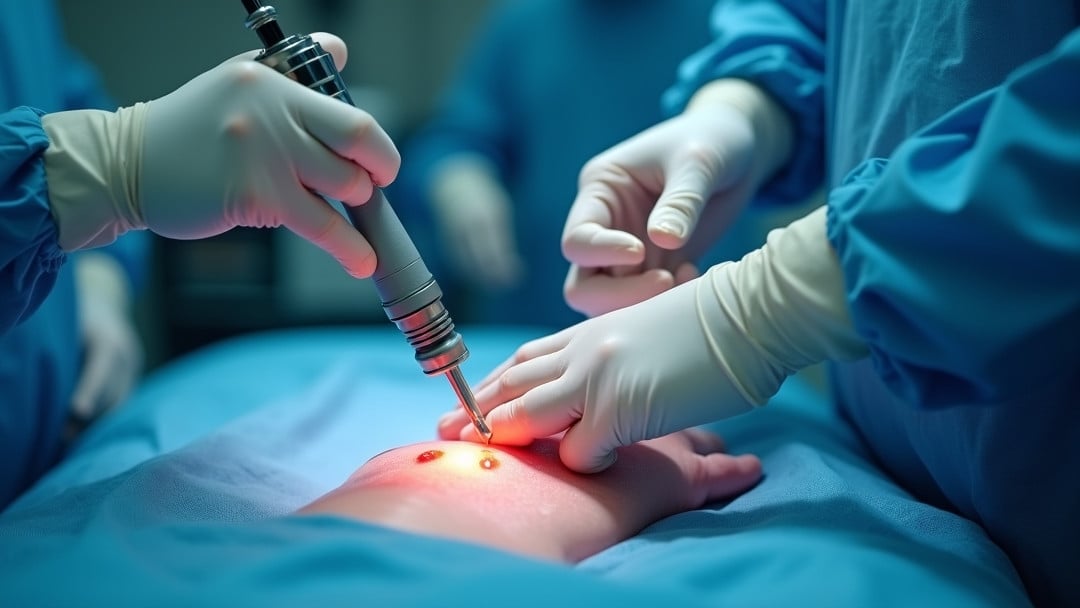
Before widespread surgical laser adoption, many soft-tissue workflows relied on steel instruments and electrosurgery, which can trade cutting speed for bleeding control and can increase collateral thermal effects depending on settings and technique. Surgical lasers changed this by adding wavelength-selective tissue interaction, enabling controlled ablation, incision, and coagulation with predictable spot sizes and power delivery, and by supporting minimally invasive fiber delivery in certain specialties. Rare earth elements matter because they sit inside key subsystems that make modern surgical lasers compact, stable, and serviceable, including high-field magnets for motors and scanners, doped laser gain media for specific emissions, optical coatings and glass chemistries for beam shaping, and specialty alloys for thermal robustness. This article explains which rare earths show up in typical systems, how they improve performance under heat and duty-cycle constraints, what the mine-to-device supply chain looks like, and what 2025–2026 policy and capacity shifts mean for availability and risk.
How Did Surgical Lasers Change Operating-Room Cutting and Coagulation — and Why Do Rare Earths Matter?
Before surgical lasers became common, most soft-tissue work depended on steel scalpels and electrosurgery units. Those tools get the job done, but they often force trade-offs. A scalpel cuts cleanly yet offers limited bleeding control. Electrosurgery can seal blood vessels during a cut, but the electrical current can spread heat into surrounding tissue, especially if settings or technique are not well matched to the case.
Surgical lasers changed the equation by adding wavelength-selective tissue interaction. Each laser wavelength is absorbed differently by water, hemoglobin, and melanin. That selectivity gives surgeons a way to ablate, incise, or coagulate tissue with more predictable spot sizes and power delivery. In many specialties, fiber-delivered laser energy also opened the door to minimally invasive approaches that were difficult or impossible with traditional instruments.
So where do rare earth elements fit? They sit inside the subsystems that make modern surgical lasers compact, stable, and field-serviceable. Rare earths show up as dopants in the gain media that generate specific laser wavelengths. They appear in high-strength magnets that drive motors and galvanometer scanners. They contribute to optical coatings and specialty glass formulations used in beam-shaping optics. And they strengthen alloys that help systems handle heat in tight enclosures.
This article explains which rare earths appear in typical surgical laser systems, how they improve performance under real clinical duty cycles, what the mine-to-device supply chain looks like, and what 2025–2026 policy and capacity shifts mean for availability and procurement risk.
Rare Earth Role in Surgical Lasers
Which Elements Are Used and Why
Several rare earth elements play distinct roles across the major subsystems of a surgical laser.
Neodymium (Nd) and ytterbium (Yb) are the workhorses of solid-state laser gain media. Nd:YAG lasers emit near-infrared light at 1.064 micrometers, a wavelength widely used in general surgery, urology, and ophthalmology. Yb-doped fibers and crystals serve as efficient pump sources or direct emitters in newer fiber-laser architectures. Their electronic transition structures support high wall-plug efficiency, which matters when you need stable output over long procedures. Educational reviews published by Optica (formerly OSA) and technical proceedings from SPIE provide detailed background on these dopant roles.
Erbium (Er) and holmium (Ho) produce mid-infrared wavelengths that are strongly absorbed by water. Er:YAG operates at 2.94 micrometers, making it effective for shallow, precise ablation in dermatology and dentistry. Ho:YAG emits near 2.1 micrometers and is widely used in urology for lithotripsy and soft-tissue procedures. Clinical technology reviews in Lasers in Surgery and Medicine describe how these water-targeted wavelengths achieve efficient tissue removal with a relatively narrow thermal damage zone.
Dysprosium (Dy), terbium (Tb), and samarium (Sm) are less visible but equally important. Dy and Tb are added to NdFeB magnet alloys to boost coercivity — the magnet's resistance to demagnetization at elevated temperatures. Sm enables samarium-cobalt (SmCo) magnets, which maintain magnetic strength at temperatures that would degrade standard NdFeB. The U.S. Department of Energy and ASM International materials handbooks document these temperature-stability functions in detail.
Yttrium (Y), lanthanum (La), and cerium (Ce) appear in specialty optical glass formulations and polishing compounds. They contribute to low-scatter, high-damage-threshold optics and coatings that maintain beam quality under high power density. Glass manufacturers' technical literature and materials science references describe these roles.
How It Works
Understanding how rare earths contribute to laser performance is easier when you follow the beam from generation to tissue.
In the beam generation subsystem, a rare-earth-doped gain medium — such as an Nd:YAG crystal or an Er:YAG rod — produces stimulated emission at a defined wavelength. That wavelength determines how the beam interacts with tissue chromophores like water or hemoglobin. The result is more controllable cutting and ablation compared to broadband thermal tools, assuming proper settings and technique.
In the beam delivery subsystem, optical components made with rare-earth-influenced glass formulations and coatings reduce scatter and raise damage thresholds. This means tighter spot quality and longer component life, even at high power densities seen in surgical applications.
In the motion and control subsystem, NdFeB or SmCo magnets drive the motors and galvanometer scanners that position the beam. Higher torque density from rare-earth magnets translates into smoother scanning and more repeatable energy deposition, which matters during pattern-scanned procedures in dermatology or ophthalmology.
Thermal constraints tie all of this together. Compact surgical laser housings trap heat. Without coercivity enhancements from Dy or Tb, NdFeB magnets can lose field strength at elevated internal temperatures, causing calibration drift or reduced motor torque. Engineers select Dy/Tb-enhanced NdFeB or SmCo magnets based on the thermal environment of each subsystem. Department of Energy critical materials briefs and magnet manufacturer specifications document these trade-offs.
Journey from Mine to Product
Supply Chain Steps
The path from raw ore to a functioning surgical laser module is long and highly specialized.
Rare earth mining produces mixed concentrates containing multiple elements. These concentrates must go through chemical separation — often solvent extraction — to isolate individual rare earth oxides. This separation step largely determines the purity and cost of downstream inputs, especially for laser-grade and magnet-grade materials.
Once separated, the oxides branch into different manufacturing streams. For magnets, oxides are reduced to metals and alloyed into NdFeB or SmCo compositions, then formed into sintered magnet shapes. For photonics, oxides feed into specialty chemical pathways to produce doped crystals, optical fibers, and coating precursors. For optics, rare-earth-containing glass batches are melted, formed, and polished.
These components then flow into subsystem assembly — power supplies, cooling loops, beam delivery modules, control electronics — before integration into finished surgical platforms. Final steps include output calibration, optical safety interlock verification, QA burn-in testing, and compliance documentation aligned to ISO 13485 quality management system requirements for medical devices.
Typical Chokepoints
Several points in this chain are prone to bottlenecks.
Separation and high-purity conversion are frequent constraints. Medical and photonics components often require tighter impurity specifications than bulk industrial applications, so not all separation capacity is interchangeable. The International Energy Agency's critical minerals updates have highlighted this distinction.
Heavy rare earth availability can limit high-temperature magnet designs. Dy and Tb come disproportionately from a small number of deposits, and competition from electric vehicle motor production has intensified demand. Meanwhile, specialized steps like magnet sintering, crystal growth, fiber preform fabrication, and high-durability optical coating depend on capital-intensive equipment with limited global capacity.
Midstream concentration risk can amplify disruptions. If oxide-to-metal conversion or alloying capacity is interrupted, delays can cascade into motors, scanners, and thermal-management assemblies downstream. The U.S. Geological Survey and OECD supply chain risk reports published in 2025 and 2026 have specifically flagged this cascade effect for medical device manufacturers.
Statistics and Societal Impact
Quantitative Snapshot
The global surgical laser market continues to grow as procedure volumes increase and platforms migrate to ambulatory settings. According to estimates published by Frost and Sullivan in their 2025 medical laser market tracker, the sector was valued in the range of 3 to 4 billion USD with a projected compound annual growth rate in the mid-single digits through 2028, segmented across CO₂, diode, Nd:YAG, Ho:YAG, Er:YAG, and fiber-based architectures.
Annual shipment data from major medical laser OEM earnings reports filed in late 2025 and early 2026 suggest solid-state platforms — particularly Ho:YAG for urology and Er:YAG for dermatology and dentistry — are among the faster-growing segments by unit volume, while fiber-laser architectures are gaining traction in applications that benefit from flexible delivery.
Rare-earth magnet content per motorized subsystem typically ranges from a few grams in small galvanometer scanners to tens of grams in larger drive motors, based on magnet supplier datasheets and teardown-oriented engineering estimates. Total REE mass per surgical laser system is difficult to state precisely because it varies with platform architecture, but bounded estimates from component-level analysis suggest a range on the order of tens to low hundreds of grams across all subsystems, with significant uncertainty depending on the number of motorized axes and the type of gain medium.
Service-life indicators published in AAMI HTM benchmarking summaries and manufacturer maintenance documentation suggest mean time between service events for key optical and mechanical modules is commonly measured in thousands of operating hours, though actual uptime depends heavily on duty cycle, environment, and adherence to preventive maintenance schedules.
Downstream Effects
In clinical workflows, wavelength-appropriate laser selection can support targeted ablation and coagulation with reduced intraoperative bleeding in selected procedures. However, outcomes such as healing time, scar quality, and complication rates depend strongly on indication, parameter settings, and operator training. Systematic reviews published in Lasers in Surgery and Medicine emphasize that laser type alone does not predict outcomes — technique and patient selection are equally important.
For facility operations, compact solid-state platforms can simplify consumable inventories compared to some legacy gas-laser architectures. The trade-off is increased dependence on calibrated optics, active cooling systems, and serviceable modules whose availability is influenced by the rare earth supply chain. AAMI HTM guidance documents note that maintenance planning for solid-state laser platforms should account for lead times on replacement scanners, motors, and optical assemblies.
At the health-system level, smaller and more reliable laser platforms have helped enable procedure migration to ambulatory surgery centers for appropriate cases. Industry surveys from ambulatory care benchmarking organizations published in 2025 indicate measurable gains in room utilization and case throughput when facilities adopt platforms designed for fast setup and turnover.
Innovators and History
Key Breakthroughs
The story of rare earths in surgical lasers tracks several parallel developments.
Rare-earth-doped solid-state lasers — most notably Nd:YAG — established the first truly durable, serviceable surgical laser platforms. By pairing an efficient gain medium with a robust optical cavity, these systems could deliver repeatable output over thousands of hours without the gas replenishment cycles required by early CO₂ lasers. Optica historical reviews and IEEE photonics retrospectives credit mid-20th-century materials science advances with making high-quality Nd:YAG crystals commercially viable.
The commercialization of NdFeB permanent magnets in the early 1980s was a separate but convergent breakthrough. These magnets, along with SmCo compositions for high-temperature roles, enabled the compact high-torque motors and galvanometer scanners that modern medical devices rely on. ASM International and U.S. Department of Energy materials histories document this milestone.
Advances in mid-infrared laser sources — Er:YAG and Ho:YAG — expanded the menu of tissue interactions available to surgeons. Er:YAG's strong water absorption made it influential in dermatologic resurfacing and dental hard-tissue work. Ho:YAG became a mainstay in urologic lithotripsy and soft-tissue ablation. Peer-reviewed clinical reviews trace these adoptions through the 1990s and 2000s.
The standardization of laser safety practice through the ANSI Z136 series and the alignment of medical laser equipment with IEC 60601-2-22 safety expectations helped formalize hazard classification, protective eyewear requirements, and training protocols that supported broader institutional adoption.
From Lab to Product
Translational progress in surgical lasers generally followed a predictable pattern. Lab demonstrations first proved stable emission and beam quality from a new gain medium. Materials scientists then worked to make that gain medium manufacturable with predictable yield. Engineers packaged the laser source with footswitches, safety interlocks, aiming beams, cooling systems, and serviceable modules suited to clinical environments.
Early commercialization favored architectures that minimized alignment sensitivity. A system that could be recalibrated in the field without specialized optical tooling reduced both clinical variability and service burden. SPIE and Optica industry papers describe how this design philosophy shaped the surgical laser platforms that are now in widespread use.
Why It Matters Now
Current Drivers
Several forces are converging to make rare earth supply relevant to surgical laser stakeholders in 2025 and 2026.
Procedure growth in minimally invasive and office-based settings is increasing demand for compact laser platforms with predictable tissue effects and fast room turnover. Specialty society reports and ambulatory care benchmarking publications released in 2025 document continued migration of laser-based procedures from hospital ORs to ambulatory surgery centers and even office-based suites.
On the engineering side, higher-efficiency pump diodes, improved thermal management, and modular service-friendly designs are reducing system downtime. But these advances still depend on rare-earth-enabled magnets and photonics materials for compactness and output stability. IEEE photonics roadmaps and OEM technical briefs published through early 2026 confirm that no broadly viable non-REE substitute has emerged for the magnet and gain-medium roles discussed above.
Infection control and staff exposure concerns are also shaping adoption. Smoke plume management has received increased scrutiny, with AORN guidance and NIOSH summaries on surgical smoke emphasizing the need for effective evacuation systems. Laser platforms that integrate smoke evacuation or facilitate its use are increasingly preferred in procurement evaluations.
Security and Policy Context
Rare earth processing concentration remains a strategic concern. Mining capacity alone does not guarantee downstream capability in separation, metal-making, and magnet manufacturing. The International Energy Agency's 2025 critical minerals report and U.S. Geological Survey analyses both note that midstream processing remains heavily concentrated geographically.
Policy actions in 2025 and 2026 — including incentives for domestic midstream processing in the United States and the European Union, procurement resilience programs, and tightened export controls by major producing nations — are affecting lead times and pricing for Dy, Tb, and magnet-grade Nd/Pr inputs. Government policy releases and OECD trade analyses provide current tracking of these developments.
Recycling pilots for rare earth magnets are expanding, particularly for consumer electronics and industrial motors. However, medical-device qualification and traceability requirements slow closed-loop adoption in the surgical equipment sector. European Commission circular-economy studies and peer-reviewed materials recovery research suggest that medical-grade recycled inputs remain several years from routine commercial availability.
Future Outlook
Materials and Design Trends
Magnet engineers are working to reduce dependence on heavy rare earths without sacrificing thermal stability. Grain-boundary diffusion techniques can concentrate Dy or Tb at grain surfaces rather than dispersing them throughout the magnet volume, achieving high coercivity with less material. Selective placement of SmCo magnets only in the hottest subsystem zones is another strategy. Department of Energy critical materials updates and magnet industry technical papers describe both approaches as increasingly mature.
On the photonics side, trends include more efficient pump schemes that reduce waste heat, improved coatings that raise damage thresholds and extend service intervals, and design-for-service module architectures that reduce alignment complexity and shorten repair cycles. IEEE and Optica roadmaps point to these as active areas of OEM investment.
Recycling scale-up is most likely to focus first on high-volume magnet streams from electronics and industrial motors. Medical-device magnet recovery will require careful contamination control and full traceability documentation to satisfy regulatory expectations, which adds cost and complexity. European Commission critical raw materials updates and recycling industry analyses published in 2025 suggest this gap will narrow but not close within the next two to three years.
Five-to-Ten-Year Scenario
Demand for rare-earth magnets will remain competitive across the automotive, aerospace, energy, and medical sectors. For surgical laser manufacturers and their customers, supply resilience is more likely to come from dual-sourcing strategies, buffer inventories for critical modules, and qualification of alternative magnet grades than from wholesale material substitution.
Bottlenecks may shift over time from raw oxide availability to specialized manufacturing capacity — high-quality magnet sintering, precision optical coating, crystal growth, and fiber preform fabrication. Mitigation will likely center on regionalized midstream investments and longer-term service agreements that lock in component availability.
Risk planning for procurement and biomedical engineering teams should assume continued policy volatility, uneven permitting timelines for new mining and processing projects, and variable recycling yields. Scenario planning frameworks published by the International Energy Agency and national geological surveys in 2025 and 2026 provide useful starting points for stress-testing supply assumptions.
The following considerations can help guide organizational planning:
- Identify which rare-earth-dependent modules in your installed base have the longest replacement lead times
- Evaluate whether OEM service agreements include supply-disruption provisions
- Track midstream capacity announcements in magnet, crystal, and coating manufacturing
These steps will not eliminate rare earth risk, but they can improve visibility and shorten response times when disruptions occur.
Glossary
NdFeB — Neodymium-iron-boron, the most common family of rare-earth permanent magnets. These magnets offer high energy density but can lose performance at elevated temperatures without coercivity enhancements. Used in motors and scanners inside surgical laser systems.
SmCo — Samarium-cobalt, a rare-earth permanent magnet family with superior high-temperature stability and corrosion resistance compared to NdFeB. Selected for subsystems where heat exposure would degrade standard magnets.
Coercivity — A magnet's resistance to demagnetization by heat or opposing magnetic fields. Dy and Tb additions or advanced microstructural techniques increase coercivity, which is important in compact medical device housings that trap heat.
Gain medium — The doped crystal, ceramic, or fiber in which stimulated emission occurs, producing the laser beam. Nd, Er, Ho, and Yb are the rare earth dopants most commonly used in surgical laser gain media.
Optical coating — Thin-film layers applied to lenses, mirrors, and windows to control reflectivity, transmission, and damage thresholds in the beam path. Rare-earth-containing glass chemistries can improve coating durability under high power density.
Sintering — A manufacturing process in which powdered magnet material is compacted and heated to form a dense solid. Sintering conditions strongly influence final magnet strength and grain structure.
Grain-boundary diffusion — A technique that introduces Dy or Tb at the boundaries between magnet grains rather than throughout the bulk, achieving high coercivity with less heavy rare earth material.
Chromophore — A molecular structure in tissue that absorbs light at specific wavelengths. Water, hemoglobin, and melanin are the primary chromophores relevant to surgical laser wavelength selection.
FAQs
Are rare earths used in every type of surgical laser?
Rare earths are common in many solid-state architectures because Nd, Er, Ho, and Yb dopants enable specific laser emissions, and rare-earth magnets are widely used in motors, scanners, and actuators across platforms. Some laser categories can rely more heavily on non-REE components for the light source itself but still use REE-containing magnets or specialty optical materials elsewhere in the system, so designs with no rare earths at all are uncommon in modern compact surgical lasers.
Which rare earths are most critical for performance stability?
Dy and Tb can be critical when high coercivity is needed to prevent demagnetization of NdFeB magnets at elevated temperatures, while Sm is important when SmCo magnets are chosen for high-temperature tolerance. On the photonics side, Nd, Er, Ho, and Yb are performance-critical when they define the emitted wavelength and efficiency of the gain medium, as reflected in photonics engineering references from Optica and IEEE.
Do rare earth constraints affect service and downtime risk?
They can, because disruptions in oxide separation, metal-making, or magnet alloying can delay replacement parts for motors, scanners, and certain calibrated modules, extending repair timelines. Facilities often experience this indirectly through longer lead times and fewer interchangeable alternatives, a risk pattern discussed in 2025–2026 critical minerals and supply chain assessments from the International Energy Agency and U.S. Geological Survey.
How do rare-earth magnets relate to precision in clinical use?
High-energy-density magnets enable compact motors and galvanometer scanners that can move optics or steer beams with repeatable dynamics, supporting consistent energy placement when scanning is part of the delivery method. Precision in outcomes still depends on the full chain including beam quality, calibration, handpiece design, and operator technique, so magnets are an enabling component rather than a sole determinant.
What is the most realistic path to reducing rare-earth dependency in surgical lasers?
The most realistic near-term approaches are material efficiency and design changes such as reducing Dy and Tb through grain-boundary diffusion, optimizing magnet geometry, and placing higher-temperature magnets only where needed, rather than wholesale substitution. Recycling can contribute over time, but medical qualification, traceability, and contamination control requirements mean adoption may lag behind consumer and industrial sectors, consistent with circular-economy findings from the European Commission and materials recovery research literature.
Conclusion
Rare earth elements are deeply embedded in the subsystems that make modern surgical lasers compact, stable, and clinically effective. From neodymium and erbium in gain media to dysprosium and terbium in high-coercivity magnets, these materials enable the wavelength-selective tissue interaction and precision motion control that distinguish laser surgery from conventional approaches. As demand grows across minimally invasive and ambulatory settings, supply chain resilience becomes a strategic priority. The most realistic path forward combines material efficiency improvements such as grain-boundary diffusion, dual-sourcing strategies, buffer inventories for critical modules, and gradual integration of recycled inputs once medical qualification and traceability requirements can be met. Stakeholders across clinical, engineering, and procurement functions should monitor 2025–2026 policy developments and midstream capacity investments to anticipate lead-time shifts and maintain operational continuity.
