
Highlights
- Shenyang University of Technology launched a 'Five-Zone Collaborative Innovation System' integrating academia, industry, and government to accelerate rare earth permanent magnet motor development under China's industrial strategy.
- SUT achieved major technical milestones including:
- China's first 3 MW vertical grinding permanent-magnet motor
- 6 MW high-speed motor
- Magnetic suspension energy-storage motor
- The university's achievements earned international recognition.
- Technologies deployed by Huawei, CRRC, and Northern Rare Earth Group signal China's tightening research-to-industry pipeline.
- The model is positioned as a national template for advanced manufacturing dominance.
China’s Shenyang University of Technology (opens in a new tab) (SUT) has introduced a “Five-Zone Collaborative Innovation System” to drive breakthroughs in rare earth permanent magnet motor development—a move framed as part of Beijing’s “Quality Power Nation” industrial strategy. The model coordinates five functional “zones”: a regulatory support hub, a technical innovation source, a pilot testing base, a commercialization platform, and a talent training camp. According to the Liaoning Provincial Market Supervision Bureau, the approach is being promoted nationally as a model for integrating academia, industry, and government oversight.
Table of Contents
SUT’s initiative targets long-standing bottlenecks in the rare earth magnet motor sector, including precision manufacturing and workforce shortages. The university operates China’s first third-party testing platform dedicated to rare earth magnet motors, offering full life-cycle quality and safety verification—a potential strategic benchmark in China’s bid to secure dominance in the electric motor supply chain.
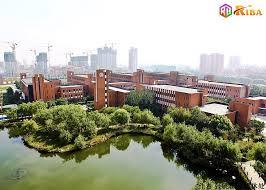
Shenyang University of Technology
Technical Milestones
Over the past five years, SUT teams have developed:
- A high-speed, ultra-precision silicon nitride full-ceramic bearing system for CNC spindle motors.
- China’s first flywheel-based magnetic suspension energy-storage motor.
- The first domestic 3 MW vertical grinding permanent-magnet motor.
- A record-setting 6 MW high-speed permanent-magnet motor.
- A green traction motor for rail transit applications.
These projects have earned five provincial-ministerial first prizes and two Geneva International Invention Gold Medals—showcasing significant technical self-reliance in a field dominated by Western and Japanese engineering firms.
Industrial Impact
The university’s technologies have already been adopted by leading Chinese enterprises, including Huawei, CRRC, and Northern Rare Earth Group, with applications spanning electric vehicles, magnetic-levitation pipelines, and next-generation energy storage systems. Pilot programs have reportedly shortened commercialization timelines and boosted competitiveness for industrial partners—an indicator of China’s tightening feedback loop between research and industrial deployment.
Talent Pipeline
SUT has also launched an integrated “industry-academia-research-application” training model, including the new Ren Yuan Motor Laboratory Class, which has attracted top-tier university and enterprise interest.
Strategic Outlook
As China accelerates into emerging sectors such as new energy, robotics, and the “low-altitude economy,” SUT’s “Five-Zone” model could become a template for advanced equipment manufacturing and clean-energy innovation. If replicated nationwide, it may further consolidate China’s leadership in rare-earth magnets and motors—a strategic space where Western supply chains remain fragile.
This report originates from a state-owned entity’s publication and should be independently verified before forming business or investment conclusions.
©!-- /wp:paragraph -->


0 Comments
Discuss this article