
Highlights
- China National Research Institute of Nonferrous Metals hosted 120+ researchers to explore AI-accelerated advanced materials development.
- Professor Wang Chenchong presented methods combining knowledge graphs, multimodal alloy design, and interpretable AI to overcome small-data limitations in metallurgy.
- AI-driven materials design is being applied to high-temperature alloys, advanced steels, aluminum alloys, and additive-manufacturing materials with defense and aerospace implications.
- China's institutional investment in computational materials science signals a strategic push that extends the technology race well beyond semiconductors.
- For rare earth and critical minerals investors, AI-shortened innovation cycles could reshape magnet performance, lightweight alloys, and turbine technologies.
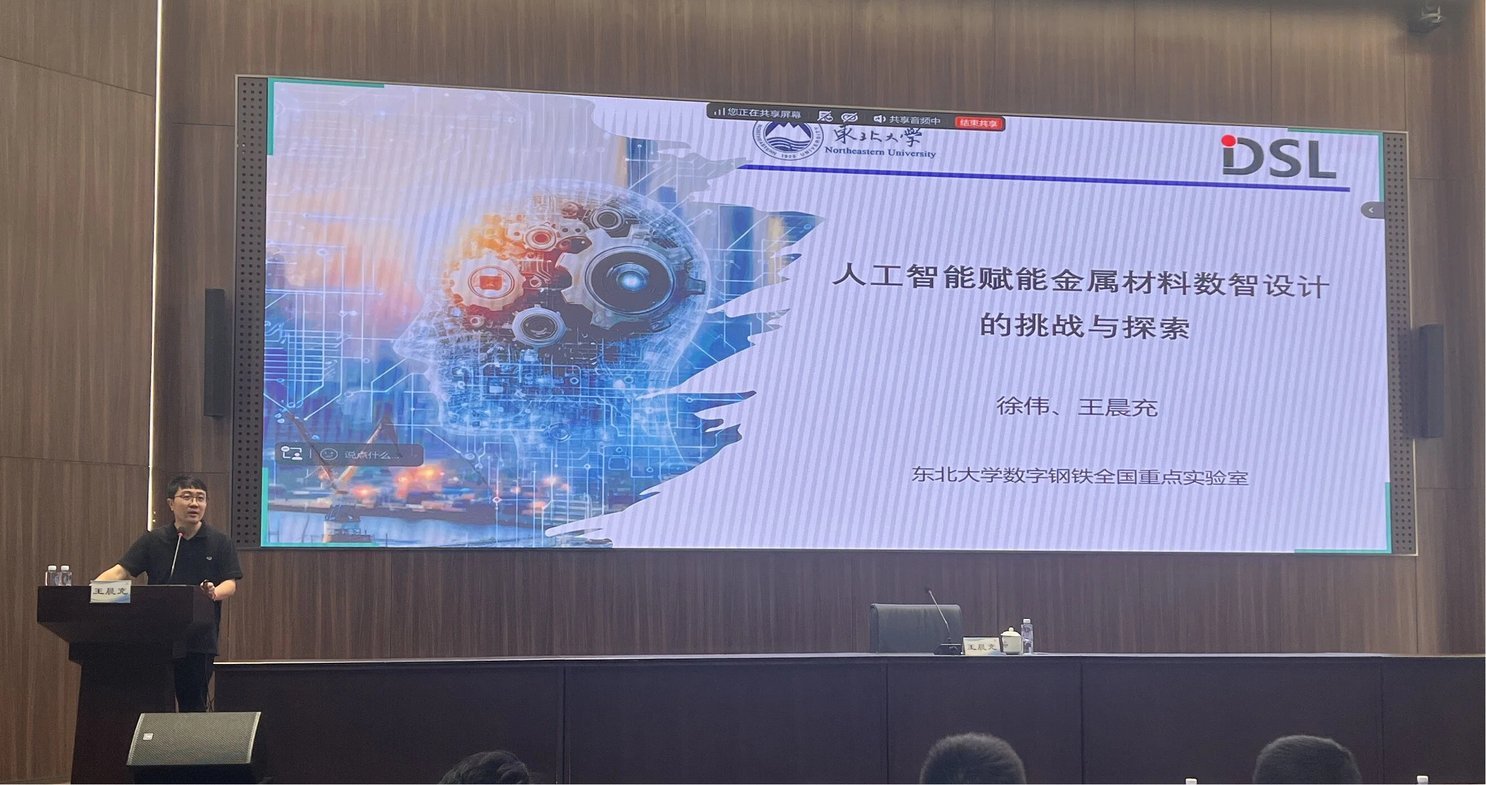
One of China's leading nonferrous metals research institutes is highlighting a growing strategic priority: using artificial intelligence to accelerate the discovery and development of advanced materials. On June 23 the China National Research Institute of Nonferrous Metals (CNRI) hosted the third lecture in its AI-enabled materials research series, bringing together more than 120 researchers, graduate students, laboratory leaders, and technical specialists. The featured speaker was Professor Wang Chenchong of Northeastern University (opens in a new tab), a specialist in materials genome engineering and AI-assisted alloy design.
While the event did not announce a new commercial technology or scientific breakthrough, it provided a window into how Chinese researchers are approaching one of the most important challenges in industrial AI.
Solving the "Small Data" Challenge
Unlike consumer internet applications that can train on billions of data points, advanced materials research often relies on limited experimental datasets generated through costly laboratory work. Professor Wang argued that future AI systems must move beyond opaque "black box" models and become more interpretable. His team's approach seeks to teach AI the underlying scientific mechanisms governing materials behavior rather than simply feeding it large volumes of data.
The work combines multimodal alloy design, knowledge graphs, integrated computing, and intelligent materials design systems to better understand relationships among composition, processing methods, and material performance.
The approach is particularly relevant for metallurgy, where limited datasets and complex physical interactions have historically constrained AI adoption.
Why This Matters
The lecture highlights a broader trend within China's industrial research ecosystem: the integration of artificial intelligence directly into materials science and manufacturing innovation. The technologies discussed are being applied to high-temperature alloys, advanced steels, aluminum alloys, and additive-manufacturing materials. These materials underpin industries ranging from aerospace and defense to energy systems, electric vehicles, robotics, and industrial equipment.
For rare earth and critical minerals investors, the implications are noteworthy. Advanced materials design increasingly influences magnet performance, lightweight alloys, turbine technologies, aircraft engines, and next-generation manufacturing systems. AI-driven development could shorten innovation cycles while reducing research costs.
The Signal for the West
The larger story is institutional commitment. Like America in many facets of AI, China continues investing in the convergence of artificial intelligence, computational materials science, advanced manufacturing, and workforce development. If successful, these efforts could strengthen China's competitive position in aerospace materials, defense technologies, advanced magnets, energy systems, and other strategic industries. Importantly, the technology race extends well beyond semiconductors and large language models. Advanced materials may become one of the next major battlegrounds in global industrial competition.
Key Players
- Professor Wang Chenchong — Professor and Doctoral Supervisor, Northeastern University; specialist in materials genome engineering, AI-assisted alloy design, and computational materials science.
- China National Research Institute of Nonferrous Metals (CNRI) — State-affiliated research institute focused on nonferrous metals, advanced materials, metallurgy, and industrial technology development.
- Northeastern University (China) — Major engineering and materials science university supporting research in metallurgy, manufacturing, and artificial intelligence applications.
- Ansteel Group — One of China's largest steel producers; identified as a user of Wang's alloy-design systems.
- Inner Mongolia First Machinery Group — Major defense and heavy-equipment manufacturer applying AI-assisted materials design technologies.
- Beijing Institute of Aeronautical Materials (BIAM), AECC — Leading aerospace materials research institute supporting China's aircraft engine and aviation programs.
Source Disclaimer: This report is based on information published by a Chinese state-affiliated research institution. The original announcement describes an academic lecture and reflects the perspectives of the hosting organization. Statements regarding technological capabilities, implementation, and future impact should be independently verified through peer-reviewed research, technical publications, and additional sources.
Register today: REEx Marketplace™ (opens in a new tab)


0 Comments
No replies yet
Loading new replies...
Moderator
Join the full discussion at the Rare Earth Exchanges Forum →