
Highlights
- U.S.-linked mining investments totaling $24.2 billion are advancing in Chile, including cobalt and rare earth projects backed by U.S. Export-Import Bank financing.
- Chilean Cobalt Corp's La Cobaltera Project aims to produce up to 5,000 tonnes of cobalt concentrate annually over a 15-year mine life.
- Upstream mining gains mean little without competitive Western capacity in rare earth separation, refining, alloys, and magnet manufacturing.
- China continues to dominate the higher-value midstream stages of the rare earth supply chain, preserving its strategic leverage despite friend-shoring efforts.
- Chile offers political stability and mineral diversity, but the defining bottleneck remains processing infrastructure, not geology.
The United States is expanding its mining presence in Chile as Washington seeks to diversify critical mineral supply chains beyond China. According to BNAmericas, U.S.-linked mining investments totaling roughly $24.2 billion are advancing across Chile, while companies such as Chilean Cobalt Corp (opens in a new tab) (CCC) pursue cobalt and rare earth projects supported by U.S. financing. Rare Earth Exchanges® views this as another important step in America's friend-shoring strategy—but geology alone will not secure supply chains. The real strategic contest remains in the midstream, where China continues to dominate rare earth separation, refining, metals, alloys, and magnet manufacturing.
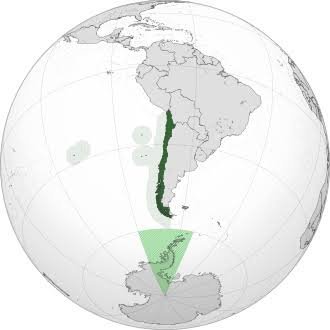
America Looks to Chile—But Rocks Alone Won't Win the Rare Earth Race
Supply chains are built one investment at a time. The United States is quietly strengthening its mining position in Chile as Washington works to diversify critical mineral sourcing away from China. According to BNAmericas, American mining companies—including Freeport-McMoRan (NYSE: FCX), Albemarle (NYSE: ALB), and Newmont (NYSE: NEM)—are backing approximately $24.2 billion in mining expansion projects while both governments deepen cooperation on critical minerals and rare earths.
Chile's Strategic Appeal Runs Deeper Than Copper
Chile remains the world's leading copper producer and one of its largest lithium suppliers, making it indispensable to the global energy transition. Increasingly, policymakers also see the country as a politically stable partner for developing future supplies of cobalt and potentially rare earth elements—resources central to defense technologies, batteries, and advanced manufacturing.
Among the emerging projects is Chilean Cobalt Corp (CCC)'s proposed La Cobaltera Project, designed to produce 3,000-5,000 tonnes of cobalt concentrate and 20,000-25,000 tonnes of copper concentrate annually over an estimated 15-year mine life. BNAmericas also reports that CCC secured a $317 million financing commitment from the U.S. Export-Import Bank to support multiple Chilean projects, including the prospective NeoRe ion-adsorption rare earth project.
The Mine Is Only the Beginning
This is where the investment story becomes more nuanced. Finding and developing mineral resources is only the first chapter. Rare earth concentrates—even from attractive ion-adsorption deposits—must still move through separation, oxide production, metal making, alloy manufacturing, magnet fabrication, qualification, and ultimately integration into industrial and defense supply chains. Those higher-value stages remain overwhelmingly concentrated in China. The same challenge exists for cobalt. Producing concentrate does not automatically create an independent Western battery supply chain if refining capacity remains limited.
The REEx Perspective
BNAmericas correctly identifies an important geopolitical shift: Washington is expanding critical mineral partnerships across the Americas while reducing strategic dependence on China. The emerging U.S.-Chile consultation mechanism on critical minerals reinforces that long-term direction. What the story leaves largely unexplored is the industry's principal bottleneck. Mines generate optionality; midstream processing creates strategic leverage.
For investors, that distinction is critical. Chile may become an increasingly important upstream partner, but until the United States and its allies build competitive separation, refining, metals, alloy, and magnet capacity, China will continue to hold the commanding position in the rare earth value chain. That remains the defining investment theme of Great Powers Era 2.0.
Source: BNAmericas. Analysis and commentary by Rare Earth Exchanges®.


0 Comments
No replies yet
Loading new replies...
Moderator
Join the full discussion at the Rare Earth Exchanges Forum →