
Highlights
- Beijing is integrating its global Chinese diaspora into national modernization, framing overseas communities as strategic assets in geopolitical competition.
- The whole-of-government directive spans foreign affairs, education, state-owned enterprises, finance, and universities—signaling far more than cultural outreach.
- China's critical-minerals dominance relies on refining, talent, and industrial networks that overseas diaspora engagement could further reinforce.
- No specific programs were announced, but the political signal is clear: human networks are treated as instruments of national power alongside mines and factories.
- Western governments and businesses face growing implications for technology partnerships, talent recruitment, and supply chain dependencies as Beijing strengthens these global ties.
Chinese President Xi Jinping has elevated overseas Chinese affairs—known as qiaowu—as a long-term strategic priority, calling for stronger engagement with Chinese communities abroad to support national modernization, economic development, international cooperation, and Beijing’s reunification objectives. The directive fits squarely within the Great Powers Era 2.0™, in which competition is no longer confined to military strength or formal diplomacy. Talent, capital, technology, industrial networks, data, supply chains, and cultural influence are increasingly treated as instruments of national power. For Western governments and businesses, the announcement has implications extending well beyond cultural outreach—including technology partnerships, investment flows, talent recruitment, advanced manufacturing, and critical-mineral supply chains.
A Global Network Becomes National Infrastructure
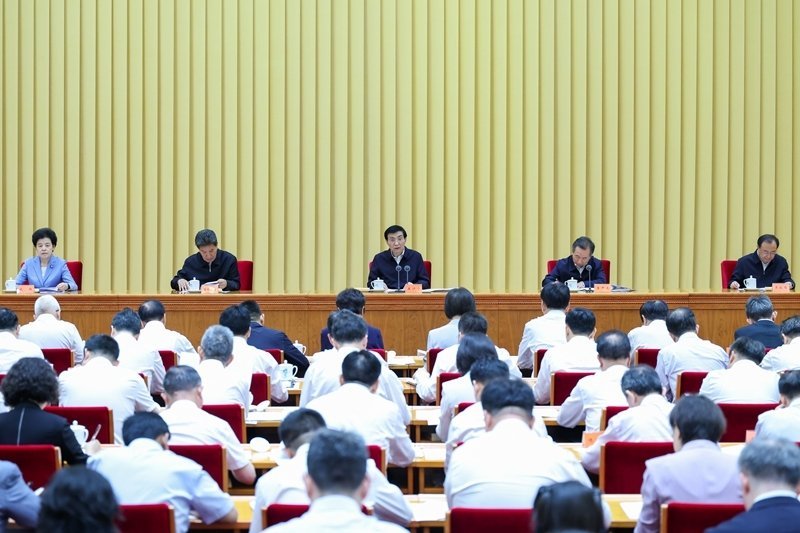
Addressing China’s National Conference on Overseas Chinese Affairs, Xi praised overseas Chinese communities and returned emigrants for contributing to China’s economic development, cultural influence, and international relationships. He directed Party and state institutions to better “unite the hearts and strengths” of overseas Chinese and encourage greater participation in modernization, foreign cooperation, cultural diplomacy, and national reunification. Senior Communist Party official Wang Huning described overseas Chinese affairs as a long-term strategic undertaking of the Party and state—language that moves the subject far beyond ordinary consular or cultural engagement.
Talent, Capital and Technology in the Great Powers Era 2.0
No specific program, regulation, or funding package was announced. The significance is organizational and political: Beijing is signaling that global Chinese talent, entrepreneurs, researchers, investors, and commercial networks form part of its broader national-development architecture. The participation of agencies overseeing foreign affairs, education, state-owned enterprises, finance, universities, and overseas missions underscores a whole-of-government approach. In the Great Powers Era 2.0, human networks can be as strategically valuable as mines, factories, ports, patents, and military assets. They can help channel expertise, capital, market access, and commercial relationships toward national priorities.
The Critical-Minerals Connection
The announcement does not mention rare earths directly. Yet it aligns with the ecosystem supporting China’s dominance in critical materials. China’s power does not rest simply on mineral deposits. It rests on refining, separation, metallurgy, magnet manufacturing, engineering talent, state finance, technology acquisition, and integrated downstream industries.
Overseas business and research networks can reinforce those advantages by supporting investment, collaboration, recruitment, and market intelligence across rare earths, batteries, semiconductors, robotics, clean energy, and advanced manufacturing.
A Signal, Not Yet a Breakthrough
No measurable commercial outcome was disclosed. The business significance lies in the directive itself: Beijing continues integrating diaspora engagement into its modernization and geopolitical strategy. As the United States and Europe attempt to reduce strategic dependence on China, Beijing is strengthening the international networks that helped build its industrial scale. That is a defining feature of the Great Powers Era 2.0—economic relationships, technical expertise, and supply chains increasingly serve geopolitical objectives.
Source Disclaimer: This report is based on information published by Xinhua News Agency, the official state news agency of the People’s Republic of China. The article reflects official Chinese government messaging and policy priorities. Material claims and implications should be independently verified before being relied upon for investment, commercial,


0 Comments
No replies yet
Loading new replies...
Moderator
Join the full discussion at the Rare Earth Exchanges Forum →