
Highlights
- South Dakota School of Mines secured a $3.1 million ARPA-E grant under the ROCKS program to develop AI-driven rare earth exploration technology.
- The RAPID-REE project combines surface and subsurface sensing with machine learning to create high-resolution 3D maps of underground mineral deposits.
- Partners include the University of Oklahoma, New Mexico Tech, and Dakota Gold Corp., which will provide field access at its Richmond Hill property.
- The initiative aims to slash the years or decades typically needed to identify and evaluate prospective rare earth deposits in the U.S.
- Rare Earth Exchanges warns that exploration advances alone won't reduce China dependence without parallel investment in separation, refining, and magnet manufacturing.
The U.S. Department of Energy is investing in the front end of the rare earth supply chain. The South Dakota School of Mines and Technology has secured a $3.1 million ARPA-E grant to develop advanced technologies capable of locating rare earth elements and other critical minerals faster and with greater precision. The project is one of just 13 selected under ARPA-E's ROCKS program, part of a broader $72 million federal initiative to strengthen America's critical mineral capabilities.
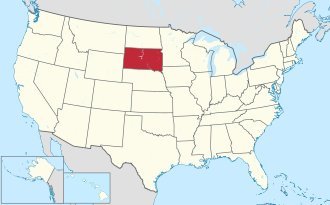
The RAPID-REE project will combine advanced surface and subsurface sensing technologies with artificial intelligence and machine learning to generate high-resolution 3D maps of underground mineral systems. The goal is to dramatically reduce the years—or even decades—typically required to identify and evaluate prospective rare earth deposits.
South Dakota Mines will lead the effort alongside the University of Oklahoma and New Mexico Tech, while Dakota Gold Corp. will provide access to its Richmond Hill property for field validation.
Rare Earth Exchanges® views this investment as strategically important. Better exploration technology could lower the cost and uncertainty of identifying domestic rare earth resources. However, discovering deposits is only the first step. As REEx has repeatedly emphasized, the United States' greatest vulnerability remains downstream—in separation, refining, metal production, alloying, and magnet manufacturing. Improved geological intelligence is valuable, but without parallel expansion of midstream processing capacity, new discoveries alone will not meaningfully reduce America's dependence on China for critical rare earth supply chains.
Source: KOTA News, Aug. 1, 2026 (Mary Francis Witte).


0 Comments
No replies yet
Loading new replies...
Moderator
Join the full discussion at the Rare Earth Exchanges Forum →