
Highlights
- China and Iran have launched bilateral scientific workshops on rare earth exploration and processing, raising strategic concerns given China's export controls on REE technologies.
- Iran's Bafq iron-oxide-apatite belt hosts documented REE potential, with lab studies recovering 84–86% of Ce, La, Nd and Y—but no commercial reserves have been declared.
- Iran's critical mineral profile extends beyond rare earths, including USGS-ranked top-ten production of strontium, barite, fluorspar, molybdenum, and rhenium-bearing molybdenite.
- Known Iranian REE deposits lean heavily toward light rare earths like Ce, La, and Nd—not the scarce heavy rare earths Dy and Tb most critical to defense and clean energy.
- China appears to be cheaply optioning geological knowledge in Iran before committing capital, while Western nations have yet to seriously assess the country's mineral potential.
A US$4,200 scientific workshop can be geopolitically louder than a billion-dollar mine announcement. China's National Natural Science Foundation and the Iran National Science Foundation have selected (opens in a new tab) “exploration and processing of rare earth elements” for bilateral scientific workshops. The funding is tiny; the subject is not. China has prohibited exports of key rare-earth extraction, separation, metal/alloy, and permanent-magnet technologies, making any processing-focused cooperation with Iran strategically sensitive. Nothing disclosed, however, proves prohibited technology is being transferred.
REEx Insight | Follow the Geology, Not the Drama
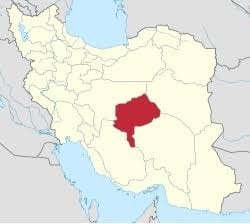
REEx's deep dive finds something important: Iran really does have documented rare-earth geology—but public evidence does not support calling it a new rare-earth superpower. The strongest target may be central Iran's Bafq iron metallogenic belt, home to large iron-oxide-apatite deposits including Chadormalu, Choghart, and Esfordi. Peer-reviewed research finds REEs concentrated particularly in apatite, generally favoring light rare earths over heavies.
Esfordi (opens in a new tab) is especially intriguing. Researchers tested an existing phosphate concentrate containing 1.2% total REEs, 82% of which were cerium, lanthanum, and neodymium. Laboratory processing recovered roughly 84–86% of Ce, La, Nd, and Y and produced a 22.4%-REE mixed concentrate. But investors should underline concentrate and laboratory: this is not a declared commercial REE reserve or operating separation business. Thorium also had to be removed during processing.
Iran’s Critical-Mineral Cabinet Is Bigger
Northwest Iran's Tarom iron-oxide-apatite district has reported REE concentrations reaching 1% inside apatite crystals—not 1% bulk ore. Badamlu bauxite contains 29–2,138 ppm REEs, averaging 747 ppm and heavily dominated by cerium. Iran also matters beyond rare earths. USGS ranks it first globally in strontium production, fifth in barite and iron ore, ninth in molybdenum, and tenth in fluorspar and lead. Barite, fluorspar, and lead are on America's 2025 critical-minerals list. Sarcheshmeh's giant Cu-Mo system also contains rhenium-bearing molybdenite; research measured late-stage samples as high as 1,273 ppm rhenium, another U.S.-listed critical mineral. That establishes geological potential, not recoverable reserves.
The Real China Question
Why would Beijing care? Our inference is that China may be cheaply optioning geological knowledge: identify mineralogy, processing routes, and potential by-products before committing serious capital.
But the known Iranian REE evidence leans heavily toward Ce-La-Nd-rich light rare earths, not an obvious treasure chest of scarce Dy/Tb heavies. And Iran's spectacular 2023 claim of an 8.5-million-tonne lithium “reserve” became a cautionary tale: the figure referred to lithium-bearing ore/clay, not 8.5 million tonnes of contained lithium metal.
REEx assessment: The SCMP story deserves attention—but not panic. The geology is real. The economics are unproven. The strategic significance is that China is apparently looking before the West has seriously looked at all.
Sources
South China Morning Post, Ling Xin, Aug. 12, 2026, article supplied for review; NSFC/INSF cooperation documentation. Ore Geology Reviews — Bafq and Tarom REE geology. Hydrometallurgy — Esfordi REE recovery study. U.S. Geological Survey — Iran mineral production and 2025 Critical Minerals List. China Ministry of Commerce / official export-control documentation.


0 Comments
No replies yet
Loading new replies...
Moderator
Join the full discussion at the Rare Earth Exchanges Forum →