
Highlights
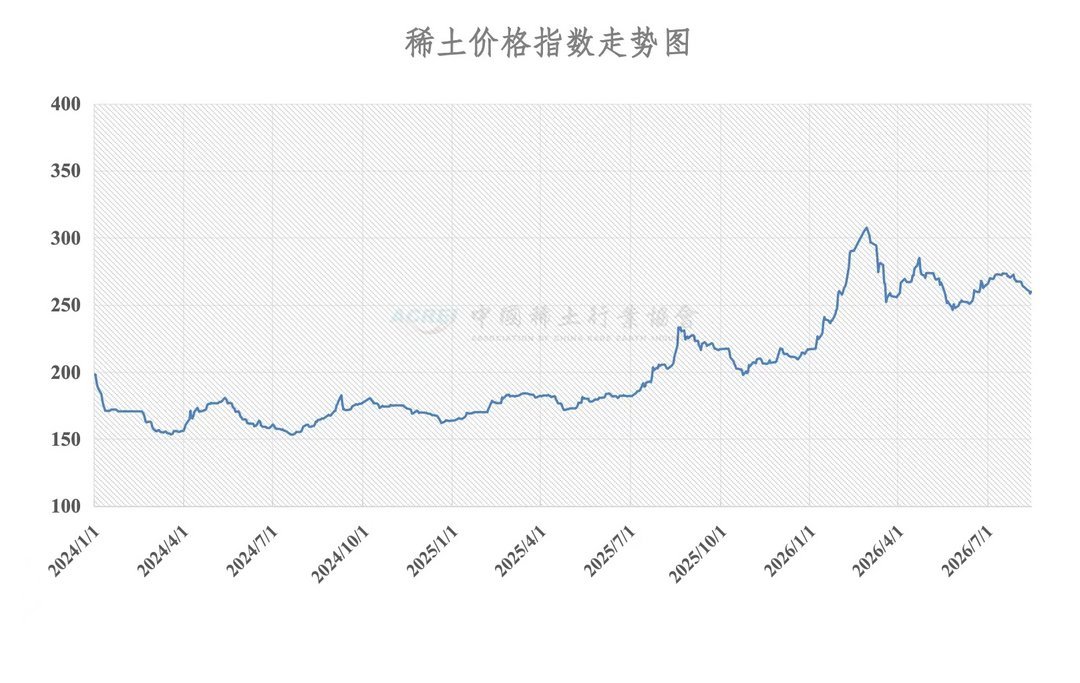
- China's Rare Earth Price Index reached 259.8 on August 14, with NdPr oxide at $107–110/kg, dysprosium at $205–211/kg, and terbium at $989–998/kg
- Yttrium oxide lists at just $8.67–9.27/kg in China, but outside China availability—not price—has become the dominant market condition
- Ex-China heavy rare earth prices can far exceed Chinese benchmarks: Serra Verde reports $575/kg dysprosium and $2,050/kg terbium contractual floors
- Chinese rare earth prices reflect state-directed policy, production controls, and export licensing—not transparent Western-style market discovery
- Published price floors for MP Materials and Serra Verde are company-specific contractual protections, not universal or executable spot prices
China's Rare Earth Industry Association reported its Rare Earth Price Index at 259.8 on August 14, with the index remaining well above its 2010 baseline of 100. The accompanying price sheet shows NdPr oxide at ¥712.1–732.1/kg ($106.82–109.82), dysprosium oxide at ¥1,365–1,405 ($204.75–210.75), and terbium oxide at ¥6,590–6,650 ($988.50–997.50), using ¥1 = $0.15.
Yet these seemingly precise numbers conceal an increasingly fragmented global market.
REEx Insight — There Is No Single Rare-Earth Price
Rare Earth Exchanges® cautions investors and buyers against treating Chinese or Western rare-earth quotations like gold or copper. China's prices emerge within a hybrid state-capitalist system shaped by production controls, state-owned enterprises, export licensing, industrial policy, national-security priorities, and Communist Party direction. They are useful domestic reference points, but not pure Western-style market discovery.
Ex-China pricing is hardly transparent either. Transactions are thin, bilateral, highly confidential, and dependent on purity, provenance, qualification, volume, and delivery. Pricing-agency assessments can therefore be valuable snapshots—but should not be confused with liquid, executable spot prices.
Yttrium — When Availability Becomes the Price
| Product | China ¥/kg | China US$/kg | Ex-China context |
|---|---|---|---|
| NdPr oxide — Light | 712–732 | $107–110 | MP has a project-specific $110/kg floor |
| Dysprosium oxide — Heavy | 1,365–1,405 | $205–211 | Serra Verde: $575/kg contractual floor; can go higher ex-China |
| Terbium oxide — Heavy | 6,590–6,650 | $989–998 | Serra Verde: $2,050/kg contractual floor; can go higher ex-China |
| Yttrium oxide — Heavy | 57.8–61.8 | $8.67–9.27 | No reliable broad spot price; scarcity can dominate |
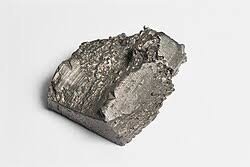
The yttrium line deserves special attention. A Chinese domestic reference around $9/kg does not mean a Western buyer can obtain qualified yttrium at $9/kg. Outside China, yttrium has become exceptionally illiquid; transaction economics can vary enormously by purity, form, quantity, qualification, origin, and whether export approval and physical inventory exist.
In other words, the relevant question can shift from “What does yttrium cost?” to “Can you actually get it?”
Yttrium
Price Floors Are Not Market Prices
Washington's $110/kg NdPr floor for MP Materials is a 10-year company-specific price-protection arrangement—not a universal American floor. Likewise, Serra Verde's reported $575/kg dysprosium and $2,050/kg terbium floors are specific long-term contractual protections, not industry-wide spot prices. For heavy rare earths, scarcity is increasingly the defining market condition. Buyers should treat every published quotation as a reference requiring verification, not a guaranteed executable price.
Source Disclaimer: The China pricing originates from the China Rare Earth Industry Association, which states that its figures are collected from industry enterprises for reference and are not investment advice. CREIA is an industry association, not state-owned-enterprise media; nevertheless, Chinese rare-earth pricing operates within a heavily state-directed policy environment. All Chinese and ex-China prices should be independently verified before investment, procurement, or contracting decisions.


0 Comments
No replies yet
Loading new replies...
Moderator
Join the full discussion at the Rare Earth Exchanges Forum →