
Highlights
- China Northern Rare Earth and Tsinghua University have established a Baotou municipal-level academician workstation focused on biological metallurgy and high-purity rare earth separation.
- The program has progressed beyond lab research to demonstration lines, including a 10-tonne-per-year tailings line and tonne-scale rare-earth waste recovery, with 1,000-tonne-scale validation discussed.
- China Northern Rare Earth approved roughly RMB779 million in 2026 for a major innovation platform, signaling a broad technology push beyond conventional solvent extraction.
- If bio-processing proves economically viable, China could gain lower-cost, cleaner next-generation capacity layered onto already depreciated infrastructure and captive downstream customers.
- Western nations risk financing yesterday's separation technology while China experiments with biological systems that could replace or augment conventional hydrometallurgy.
China Northern Rare Earth (SSE: 600111) has elevated its collaboration with Tsinghua University (opens in a new tab) into a Baotou municipal-level academician workstation focused on biological metallurgy and high-purity rare earth separation. Led academically by Chinese Academy of Sciences academician Zhang Hongjie (opens in a new tab), the program targets Bayan Obo resources and greener separation technologies. This is not yet commercial-scale processing, but earlier work has already progressed beyond laboratory research into demonstration lines—making the initiative worth watching closely.

REEx Insight: China Is Trying to Move the Technology Frontier While the West Builds Yesterday's Factory
This is the real strategic story. REEx has documented China's advantage as more than installed solvent-extraction capacity. It is a learning ecosystem: mines, separators, reagent chemistry, metallization, magnets, universities, and state-backed industrial companies continuously improving one another. Northern Rare Earth alone produced roughly 95,000 tonnes of rare earth oxides in 2025.
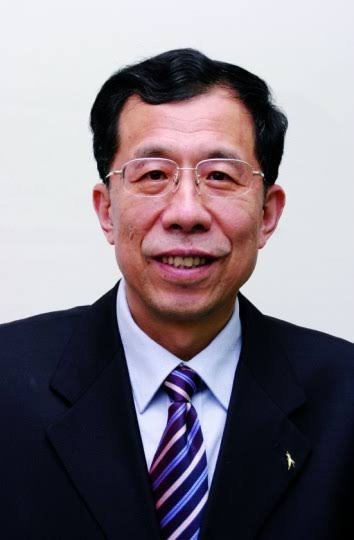
Zhang Hongjie, Chinese Academy of Sciences
Now put bio-metallurgy beside that scale. Earlier Chinese reporting says the collaboration has already established a 10-tonne-per-year tailings demonstration line and a tonne-scale rare-earth waste line, with Zhang's team discussing 1,000-tonne-scale validation. Another Chinese industry source describes demonstration of biological recovery from magnet-production waste and rare-earth slag.
The potential is significant. Engineered microorganisms and biologically derived systems could conceivably improve selective leaching, enrichment, and separation while reducing aggressive reagents, energy intensity, and waste. But no independently verified industrial recovery rates, unit costs, throughput economics, or purity performance have been disclosed here. That distinction is critical.
Western companies are spending billions recreating conventional hydrometallurgy and solvent extraction. China Northern Rare Earth is effectively using an enormous operating industrial system as a potential technology-transfer runway from laboratory → pilot → demonstration → commercial plant. If bio-processing ultimately works economically, China's advantage would not merely be more capacity. It could become lower-cost, cleaner next-generation capacity layered onto already depreciated infrastructure, trained operators, and captive downstream customers. That is a considerably harder moat to cross.
Bayan Obo Becomes an Industrial Laboratory
The workstation will focus on Bayan Obo mineral resources, biological metallurgy, high-purity separation, and new biological-manufacturing pathways. It also fits a broader technology push: Northern Rare Earth approved approximately RMB779 million (USD$115.9 million) in 2026 for a major innovation platform at the Baotou Rare Earth Research Institute.
REEx has recently documented the company's parallel push toward higher-value materials and full-chain expansion.
The Western warning is straightforward: catching China is a moving target. While America and Europe finance today's separation technology, China is already experimenting with what may replace or augment it.
REEx Connect
| Organization | Key Person / Role |
|---|---|
| China Northern Rare Earth (SSE: 600111) | Liu Peixun — Chairman |
| Tsinghua University | Zhang Hongjie — Academician/Professor |
| Chinese Academy of Sciences | Zhang Hongjie — Academician |
| Baotou Rare Earth Research Institute | R&D and industrialization platform |
| Bayan Obo | Target resource and industrial ecosystem |
Source disclaimer: The underlying announcement and much of the reporting on this program originate from Chinese state-owned or state-affiliated media and institutions. Claims concerning technological leadership, environmental advantages, and future industrial performance require independent verification. The available evidence demonstrates pilot/demonstration activity—not commercially proven bio-metallurgical rare earth separation at industrial scale.


0 Comments
No replies yet
Loading new replies...
Moderator
Join the full discussion at the Rare Earth Exchanges Forum →