
Highlights
- Viridis Mining delivered 5 kg of mixed rare earth carbonate to CIT SENAI ITR in Minas Gerais, Latin America's first rare-earth permanent magnet factory.
- The batch will pass through Brazilian separation, alloy-making, and magnet-testing facilities, validating a domestic mine-to-magnet industrial chain.
- Viridis holds a 493-million-tonne Colossus Mineral Resource and plans to target U.S. and European customers rather than China.
- Meteoric Resources delivered 20 kg into the same MagBras ecosystem earlier in 2026, suggesting a Brazilian rare-earth industrial cluster is forming.
- CIT SENAI ITR has projected capacity of up to 100 tonnes annually of sintered NdFeB magnets, representing real but pre-commercial infrastructure.
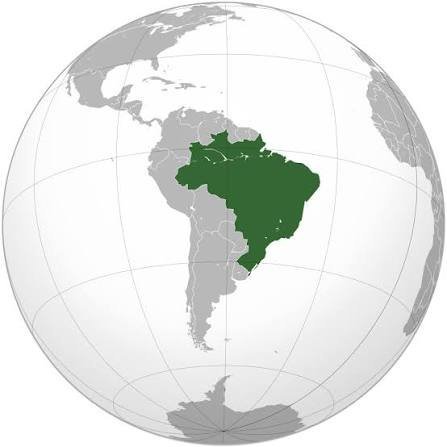
Brazil has plenty of rare earths; the harder trick is turning them into magnets without sending the material through China. Viridis Mining & Minerals has delivered 5 kilograms of mixed rare earth carbonate (MREC) produced from Brazilian material to CIT SENAI ITR (Centro de Inovação e Tecnologia SENAI para Ímãs Permanentes de Terras Raras (opens in a new tab)) in Minas Gerais. This is Latin America's first rare-earth permanent magnet factory and innovation center. The batch will travel through Brazilian separation, alloy-making, and magnet-testing facilities—an unusually important demonstration because it connects several of the industrial steps Brazil must master to build a domestic NdFeB magnet supply chain. FIEMG (opens in a new tab) independently confirmed the August 26 delivery.
REEx Insight: Five Kilograms Testing a Billion-Dollar Question
The 5 kilograms are almost irrelevant. The route they are taking is what matters. Viridis has demonstrated pilot-scale extraction and carbonate production. CETEM must next separate that mixed carbonate into usable rare-earth oxides; IPT must convert appropriate material downstream toward alloy; and CIT SENAI ITR closes the loop toward magnet fabrication and qualification. That sequence attacks the real Western bottleneck: mine → separation → metal/alloy → magnet, rather than celebrating another mineral resource.
But investors should distinguish industrial-chain validation from commercial integration. Viridis' CPTR (Centro de Pesquisa e Tecnologia de Terras Raras) is a demonstration facility, while MagBras itself is an R$73.3 million industrial-demonstration initiative. CIT SENAI's facility has projected capacity of up to 100 tonnes annually of sintered NdFeB magnets—meaning Brazil is building genuine technical infrastructure, but not yet a globally material magnet industry.
From Volcano to Magnet
The upstream scale is considerably larger. Viridis reports a 493-million-tonne Colossus Mineral Resource averaging 2,508 ppm TREO, including 329 Mt Measured and Indicated. That is a mineral resource—not 493 Mt of rare-earth oxides—an important distinction investors should preserve.
Viridis also says it intends to direct future Colossus output toward U.S. and European customers rather than China. If Brazil can industrialize the intervening processing steps, that strategy becomes far more consequential.
The competitive context matters too: Meteoric delivered 20 kg of Brazilian rare-earth carbonate into the same MagBras ecosystem earlier in 2026. Viridis therefore isn't alone; something potentially more valuable is emerging—a Brazilian rare-earth industrial cluster.
REEx Connect
| Organization | Role |
|---|---|
| Viridis Mining & Minerals | Colossus developer; MREC production |
| CIT SENAI ITR / FIEMG | Magnet pilot manufacturing |
| CETEM | Rare-earth separation |
| IPT-USP | Downstream alloy development |
| MagBras | Brazilian mine-to-magnet industrial program |


0 Comments
No replies yet
Loading new replies...
Moderator
Join the full discussion at the Rare Earth Exchanges Forum →