
Highlights
- Changjiang Li Autonomous County is building clean energy, green computing, and advanced materials as three industrial pillars through 2030.
- The Chenguang Rare Earth New Materials project, acquired by Shenghe Resources, anchors a shift from primary to higher-value rare earth processing.
- Nuclear Units 3 and 4 are set for operation, with Units 5 and 6 under construction, alongside 6.2 GW of planned offshore wind capacity.
- Officials expect clean energy to exceed 60% of Hainan's electricity consumption by end of China's 15th Five-Year Plan in 2030.
- REEx analysts warn the West risks losing the industrial competition if mines, power, processing, and customers develop on separate timelines.
Changjiang Li Autonomous County in Hainan (opens in a new tab) is positioning clean energy, green computing and advanced materials as three pillars of its 2026–2030 industrial strategy, according to a September 9 report from China News Service. Changjiang, home to Hainan's only nuclear-power base, plans to bring Changjiang Nuclear Units 3 and 4 into operation, accelerate construction starts for Units 5 and 6, and advance 6.2 gigawatts of planned offshore wind capacity. By the end of China's 15th Five-Year Plan in 2030, officials expect Changjiang's clean-energy generation to represent more than 60% of Hainan's electricity consumption.
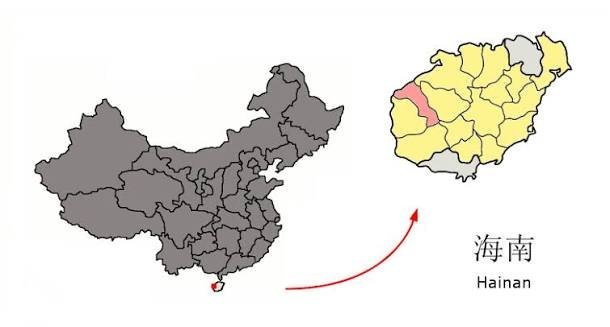
For rare earths, the key development is the Chenguang Rare Earth New Materials (acquired by Shenghe Resources Holding Company (opens in a new tab)) project, which local officials identify as an anchor for moving resource industries from primary processing toward deeper processing and higher-value manufacturing.
REEx Insight — The Industrial Advantage May Be the Architecture Around the Factory
The deeper story is not simply another Chinese rare-earth project. Changjiang is designing energy, digital infrastructure, materials manufacturing and recycling as parts of the same industrial system.
That distinction matters. Rare-earth separation, metallization and advanced-materials manufacturing require reliable power, infrastructure, skilled operators, suppliers and customers. Changjiang proposes to surround new industry with abundant nuclear and offshore-wind generation while leveraging Hainan Free Trade Port policies for equipment imports, international communications and cross-border business.
The most revealing concept may actually come from computing. Officials want to explore direct connections between the Linglong One small modular reactor and computing centers, alongside direct green-power connections from offshore wind. The article does not say Chenguang will receive direct nuclear or wind power, so that connection should not be implied. But the broader planning philosophy is clear: produce energy locally, consume more of it locally and use it to attract higher-value industry.
For REEx, this is another example of China's industrial orchestration advantage. A mine, separator or materials plant does not have to develop in isolation when government, energy infrastructure, industrial policy, recycling and downstream development can be advanced together.
That is an important Great Powers Era 2.0™ lesson for the United States and Europe. The West can finance individual critical-mineral projects yet still lose the industrial competition if mines, power, processing, metals, magnets and customers arrive on different clocks. The strategic unit is increasingly the ecosystem—not the individual project.
From Dig-and-Ship to Make-and-Use
Changjiang also plans to modernize mining and cement operations through equipment upgrades, digitalization, automation and cleaner production while increasing recycling of tailings, waste rock, industrial solid waste and end-of-life vehicles.
Led by the Chenguang project, the county intends to develop advanced inorganic nonmetallic materials, new-energy materials and recycled-resource materials. One caution is important: the report provides no Chenguang capacity, investment amount, timetable, product slate or confirmation of separation, metallization, alloy or magnet production. Its global rare-earth significance therefore cannot yet be quantified.
Source Disclaimer: This news item is translated and interpreted from reporting by China News Service, a Chinese state-run news organization. Government targets, project descriptions and forecasts reflect the source's account and should be independently verified.


0 Comments
No replies yet
Loading new replies...
Moderator
Join the full discussion at the Rare Earth Exchanges Forum →