
Highlights
- A U.S. Chamber/AmCham Brazil study models $20.5B in critical-mineral investment and a deeper-integration scenario adding $12.4B GDP and 446,000 jobs by 2050.
- China held roughly 85% of global rare-earth refining in 2025, meaning Brazil's geology does not automatically translate into a Brazilian supply chain.
- Serra Verde produces mixed rare-earth carbonate with Nd, Pr, Dy, and Tb, but Phase I output is locked into a 15-year U.S.-backed offtake starting Q4 2026.
- The real strategic contest is control of the processing steps—separation, metallization, alloying, and magnet manufacturing—not mining alone.
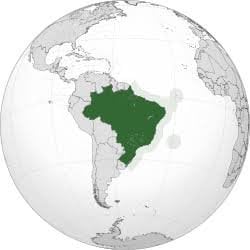
Brazil has the geology. Now comes the Great Powers Era 2.0™ question: who captures everything after the mine? A U.S. Chamber of Commerce/AmCham Brazil study (opens in a new tab) models US$20.5 billion of critical-mineral investment and estimates its deeper-integration scenario could generate BRL63.4 billion (about US$12.4 billion) more GDP and 446,000 additional jobs through 2050 than an extraction-oriented scenario.
REEx Insight — The Battle Is for the Middle
The report correctly diagnoses Brazil's weakness: world-class resources, insufficient downstream value capture. But investors should not mistake modeled outcomes for forecasts. Its higher-growth scenario simultaneously assumes greater domestic processing and foreign-capital participation rising from roughly 4% to 15%. The model therefore does not isolate how much of the BRL63.4 billion comes from downstream industrialization alone.
More importantly, Brazilian mining does not automatically create a Brazilian rare-earth supply chain.
China still held roughly 85% of global rare-earth refining in 2025, according to IEA data reported by Reuters. The strategic contest therefore lies in separation → metals → alloys → magnets.
Brazil's $2.39 Billion Test
The study identifies US$2.39 billion in Brazilian rare-earth investment through 2030. Serra Verde already produces mixed rare-earth carbonate containing Nd, Pr, Dy, and Tb, but its Phase I output is committed under a 15-year U.S.-backed offtake, with deliveries expected to begin in Q4 2026. That crystallizes Great Powers Era 2.0™: Brazil is becoming strategically important, but its minerals are simultaneously being pulled into competing industrial ecosystems. The winner will not merely mine Brazil's rare earths. It will control where Brazilian feedstock is separated, metallized, alloyed, and converted into magnets.


0 Comments
No replies yet
Loading new replies...
Moderator
Join the full discussion at the Rare Earth Exchanges Forum →