
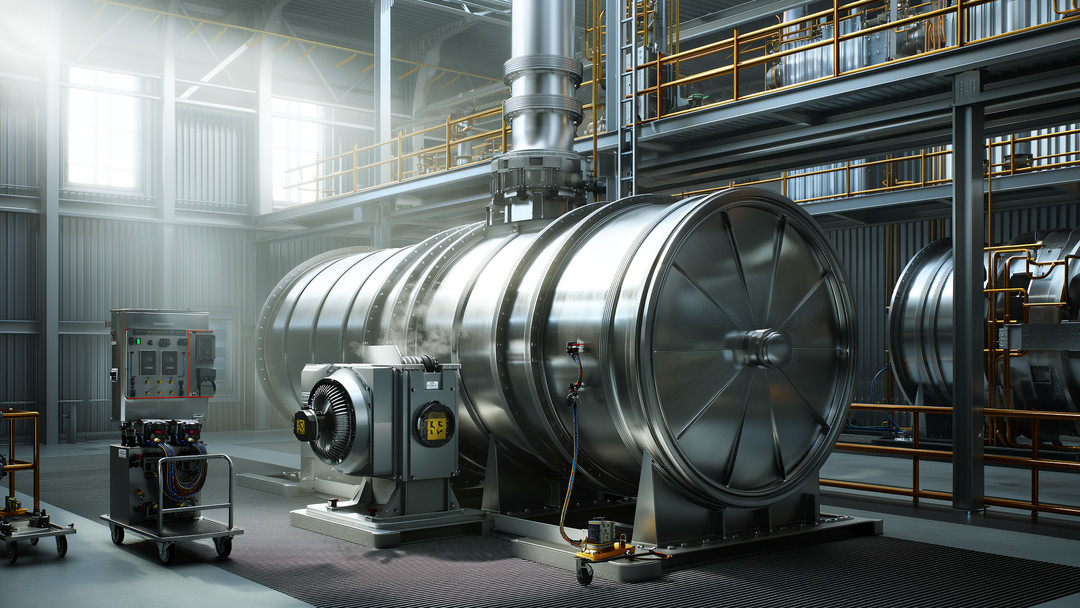
Early geothermal plants relied on relatively simple steam expansion hardware and conservative materials choices, which limited efficiency and uptime when brine chemistry, non-condensable gases, and particulate carryover were harsh. Modern geothermal turbines broaden what resources are usable by improving sealing, corrosion and erosion resistance, control precision, and generator power density, which together raise availability and reduce unplanned maintenance. Rare earth elements matter primarily because they enable compact, efficient generators and high-temperature sensors and electronics used around turbine-generator trains and balance-of-plant controls. At a high level, REEs show up in permanent magnets, specialized ceramics and optics for sensing, phosphors for condition monitoring indicators, catalysts for emissions abatement where applicable, and alloying additions that improve high-temperature stability in select components. This article maps where geothermal turbines sit in flash and binary plants, which turbine types align with different resource temperatures and fluids, and what reliability constraints dominate real projects. It also connects the REE supply chain to procurement risk, names 2025 to 2026 market and deployment signals, and closes with a practical selection checklist and FAQs engineers typically ask.
Table of Contents
How Did Geothermal Turbines Change Geothermal Power Plants — and Why Do Rare Earths Matter?
Early geothermal power plants used relatively simple steam expansion hardware. Material choices were conservative, and engineers designed around worst-case assumptions for brine chemistry, non-condensable gases (NCGs), and particulate carryover. Those constraints limited how much energy could be extracted from a given well and how long a plant could run before something wore out or scaled up.
Modern geothermal turbines changed the equation. Better sealing systems keep aggressive fluids from reaching bearings and auxiliary components. Corrosion- and erosion-resistant coatings let turbines handle wet steam impurities that would have sidelined earlier machines. Tighter control precision — enabled by faster actuators and better sensors — allows plants to track wellfield swings and grid events without tripping offline. And higher generator power density means smaller, lighter packages that fit on modular skids.
So where do rare earth elements (REEs) fit in? They show up primarily in the components surrounding the turbine expander rather than in the turbine blades themselves. Permanent magnets containing neodymium and praseodymium enable compact, efficient generators and high-reliability actuator motors. Specialized ceramics and phosphors support harsh-environment sensing and condition monitoring. In some configurations, REE-based catalysts and alloying additions improve emissions abatement and high-temperature stability.
This article maps where geothermal turbines sit in flash and binary plant cycles, explains which turbine types align with different resource temperatures and fluids, and identifies the reliability constraints that dominate real projects. It also connects the REE supply chain to procurement risk, highlights 2025–2026 market and deployment signals, and provides a practical selection checklist.
Rare Earth Role in Geothermal Turbines
Which Elements Are Used and Why
The rare earth elements most relevant to geothermal turbine systems fall into a few functional groups, each serving a distinct engineering purpose.
Neodymium (Nd) and praseodymium (Pr) are the core light REEs in high-energy permanent magnets. NdFeB (neodymium-iron-boron) magnets deliver high magnetic remanence in a compact volume, which matters for generator rotors and for servo motors driving valves and control systems. When you need a lot of magnetic force in a small space, Nd and Pr are the starting point. Arnold Magnetic Technologies technical notes and IEC rotating machine guidance provide detailed context on why remanence and compactness drive these selections.
Dysprosium (Dy) and terbium (Tb) are heavy REEs added in small amounts to NdFeB magnets to improve coercivity — the magnet's resistance to demagnetization at elevated temperatures. This is critical when generator or actuator thermal margins are tight, as they often are near turbine casings where ambient temperatures can climb well above standard industrial ranges.
Samarium (Sm) is the basis for SmCo (samarium-cobalt) magnets, which trade some peak energy product for superior temperature tolerance and corrosion resistance. SmCo can be the better choice for downhole-adjacent instrumentation or installations with high ambient heat. Manufacturer application notes from VACUUMSCHMELZE (VAC) and NIST magnet property summaries document these trade-offs.
Yttrium (Y), europium (Eu), and terbium (Tb) appear in phosphors used in indicator lighting and certain sensor or inspection tools. These phosphors provide stable emission spectra and long service life even in harsh industrial environments, as described in U.S. Department of Energy lighting and phosphor materials overviews.
Lanthanum (La) and cerium (Ce) show up in polishing powders for optical components used in vibration and position sensing, and in some catalyst formulations tied to emissions control equipment. USGS rare earths chapters and SAE industrial catalyst references provide background on these applications.
How It Works
The connection between rare earths and turbine system performance runs through three main pathways.
In the generator, permanent magnets made from Nd, Pr, Dy, and Tb produce higher flux density and coercivity in a smaller rotor. For a given MVA rating, a permanent-magnet or hybrid generator can be physically smaller than a conventional wound-rotor design. That size reduction matters for modular skid layouts in binary ORC packages, where footprint and weight directly affect shipping, installation, and maintainability.
In actuation and controls, SmCo or NdFeB magnets in servo motors deliver stable torque output under heat and vibration. This translates into tighter, faster control of turbine inlet valves and condenser vacuum systems. When wellfield conditions swing — a common reality in geothermal — faster valve response helps maintain stable operation and avoid trips.
In sensing and protection, REE-enabled phosphors and optical materials provide stable signal output in environments with high temperature, humidity, and chemical exposure. More reliable vibration and position monitoring means earlier detection of imbalance or seal degradation, which feeds directly into maintenance planning and availability.
One important design note: higher temperatures and vibration near turbine casings can push magnet selection toward SmCo or Dy/Tb-modified NdFeB grades because coercivity drops with rising temperature and demagnetization risk increases. General magnet derating curves from IEC and industry application notes, rather than vendor-specific claims, are the appropriate basis for evaluating these margins.
Journey from Mine to Product
Supply Chain Steps
Rare earth elements begin their journey as ore extracted from hard-rock or clay deposits. Mining and beneficiation produce mixed rare-earth concentrates, which then undergo chemical separation — typically solvent extraction or ion exchange — to isolate individual REE oxides. These oxides are converted into metals, then into functional alloys like NdFeB or SmCo.
Magnet manufacturing follows a multi-step sequence: powder production, pressing (either in a magnetic field for alignment or isostatically), sintering at high temperature, precision machining to final dimensions, surface coating for corrosion protection, and finally magnetization. The finished magnets are assembled into generator rotors, coupling assemblies, or actuator motors.
Phosphors and optical materials follow separate but analogous refining and formulation paths before being integrated into sensors, indicators, and inspection equipment.
The completed turbine-generator packages and skids then go through balancing, mechanical run tests, electrical tests, and QA documentation cycles aligned with purchaser specifications and practices informed by IEC and API standards.
Typical Chokepoints
Separation capacity is frequently the dominant bottleneck. Producing magnet-grade NdPr oxide — and especially heavy REEs like Dy and Tb — requires complex, capital-intensive refining with long qualification cycles. According to the International Energy Agency's critical minerals reporting and USGS Mineral Commodity Summaries for 2025–2026, midstream refining remains concentrated in a small number of countries, creating structural supply risk.
Alloying and sintering capacity for high-coercivity magnet grades can also be constrained. Tooling, intellectual property, and deep process know-how are not quickly replicated. Coating quality is critical for long service in geothermal environments, where humidity, H₂S, and chloride exposure can attack unprotected magnet surfaces.
Heavy-REE availability is structurally tighter than light-REE availability. This imbalance can show up as lead-time volatility for the specific magnet grades needed in high-temperature actuators and generators — an important consideration for procurement planning.
Statistics and Societal Impact
Quantitative Snapshot
Global geothermal power capacity continues to grow, though more slowly than wind or solar. According to the International Renewable Energy Agency's 2025 statistics, installed geothermal capacity worldwide exceeded 16 GW, with annual additions in the range of several hundred MW. The International Energy Agency's 2026 geothermal outlook projects continued growth driven by firm clean capacity needs and EGS pilot programs.
Translating capacity additions into hardware demand: each 10–50 MW flash plant typically involves one to several turbine-generator trains, while binary ORC deployments increasingly use multiple smaller modules in the 1–10 MW class. Analysts such as Wood Mackenzie and S&P Global Commodity Insights have sized the annual newbuild geothermal turbine and ORC module market in the low single-digit billions of dollars globally for 2025–2026, though scope definitions vary between firms regarding aftermarket inclusion.
Permanent-magnet mass in industrial generators and actuators varies widely by architecture. Manufacturer technical documentation and NIST materials property references indicate that a permanent-magnet generator for an industrial application in the single-digit MW range might use tens to low hundreds of kilograms of NdFeB magnet material. Magnets in auxiliary actuators and sensors add smaller but non-trivial quantities. It is important to separate "magnets in the generator" from "magnets in auxiliaries" to avoid overattributing REE content to any single subsystem.
Lead-time and pricing volatility for NdPr oxide and Dy/Tb feedstocks remain elevated. USGS and IEA critical minerals updates for 2025–2026 flag these as ongoing risk indicators for any procurement program relying on permanent-magnet components.
Downstream Effects
Improved control fidelity and monitoring — enabled in part by REE-containing actuators and sensors — can reduce forced outage risk. In geothermal plants, scaling events and chemistry excursions can change operating conditions quickly. Faster, more precise control response helps maintain stable output. Public fleet reliability data presented at Geothermal Rising conferences show that plants with modern control and monitoring systems tend to achieve higher availability factors, though results depend heavily on resource chemistry and operator practice.
Higher power density in generators and actuators supports more modular, skid-mounted binary unit designs. Tighter layouts lower installation complexity and improve maintainability, especially in remote fields where crane access and craft labor are constrained. Any cost-per-kW or LCOE implications should be evaluated with clear boundary conditions — resource temperature, cooling method, parasitic loads, and site logistics all affect the bottom line.
Innovators and History
Key Breakthroughs
The development of NdFeB permanent magnets in the early 1980s was a landmark. Independently discovered by teams led by Masato Sagawa at Sumitomo Special Metals and by John Croat at General Motors Research Laboratories, these magnets offered dramatically higher energy product than previous ferrite or AlNiCo materials. IEEE and Materials Research Society retrospectives document how this breakthrough cascaded through motor and generator design over the following decades, eventually influencing the compact industrial actuators and some generator architectures found in modern turbine packages.
In parallel, advances in corrosion- and erosion-resistant coatings transformed what geothermal turbines could tolerate. Improved sealing architectures allowed turbines to handle wet steam impurities, brine carryover, and H₂S/CO₂ environments at higher availability. The evolution of API and ASME industry practices for geothermal service, documented in OEM technical papers presented at conferences such as Geothermal Rising, reflects decades of field learning.
The growth of modular binary ORC packages — accelerated by distributed geothermal and waste-heat-to-power experience — shifted procurement toward repeatable, factory-tested assemblies. IEA geothermal technology briefs from 2025–2026 and public OEM documentation describe how standardized skid designs reduce field construction risk and compress schedules.
From Lab to Product
Translating REE materials science into deployable hardware was not straightforward. Scalable powder processing, sintering control, coating reliability, and consistent magnet grade qualification all had to mature before permanent-magnet generators and actuators could meet industrial reliability expectations. Early field failures from corrosion or demagnetization drove improvements in both manufacturing QA and in-service condition monitoring practices. Today, vibration trending, temperature monitoring, and periodic flux checks help detect issues before they propagate into turbine downtime.
Why It Matters Now
Current Drivers
Geothermal activity in 2025–2026 is being pulled forward by several converging forces. Grid operators increasingly value firm, dispatchable clean generation — power that runs regardless of weather. According to IEA policy and market commentary and U.S. Department of Energy Geothermal Technologies Office updates, enhanced geothermal system (opens in a new tab)s (EGS) and closed-loop concepts are attracting serious investment because they can broaden resource access beyond conventional hydrothermal reservoirs.
Modular skid-mounted binary units are gaining traction because they shorten field construction schedules and standardize factory testing. In regions with tight craft labor availability and complex permitting windows, modularization is a practical advantage. This trend shifts turbine selection toward packaged expanders with integrated controls and repeatable spares strategies — exactly the kind of hardware where compact permanent-magnet generators, fast actuators, and reliable sensors provide measurable value.
Security and Policy Context
REE processing and magnet supply concentration remains a strategic procurement risk. The IEA Critical Minerals Market Review for 2025–2026 and USGS reporting document that midstream refining and magnet manufacturing capacity (opens in a new tab) is unevenly distributed globally. This does not mean every turbine project faces a single point of failure — many geothermal turbine-generator trains use conventional wound-rotor generators that contain no permanent magnets — but projects specifying permanent-magnet or hybrid generators, high-performance actuators, or advanced sensing systems do carry exposure.
Onshoring and "friend-shoring" initiatives, magnet recycling pilots, and evolving trade controls can affect lead times and qualification paths for magnet-containing subsystems. For utilities requiring long-term service agreements, this is best treated as a risk-management issue. Practical mitigations include maintaining documentation of magnet grades and sources, qualifying alternate suppliers, and building lifecycle spares into service contracts.
Future Outlook
Materials and Design Trends
Magnet designers are working to reduce Dy and Tb intensity without sacrificing demagnetization margins. Grain-boundary diffusion processes allow heavy REEs to be concentrated where they matter most — at grain surfaces — rather than distributed uniformly through the magnet volume. Improved microstructure control and smarter thermal design that keeps magnets cooler during operation further reduce heavy-REE demand. DOE critical materials R&D updates and peer-reviewed proceedings from magnet conferences document steady progress on these fronts.
Recycling and "magnet-to-magnet" pathways are expanding at the pilot and early commercial scale. However, qualification for high-reliability industrial applications depends on impurity control and repeatable coercivity, which takes time to prove in operating equipment. Substitution with ferrite magnets is feasible for some auxiliary motors, but compact, high-power-density actuators and generators in modular binary packages are harder to serve with lower-energy magnet materials.
Five- to Ten-Year Scenario
If EGS pilots scale successfully and modular binary deployments continue growing, demand for packaged turbine-generator trains and standardized control hardware could rise materially. This would increase exposure to magnet and power-electronics supply chains even for projects where the turbine expander itself uses no REE-containing materials.
The IEA and DOE geothermal outlooks frame multiple scenarios. In a slower deployment path, current supply chains likely keep pace with incremental demand. In a faster deployment scenario driven by successful EGS commercialization, bottlenecks could emerge in qualified magnet supply, power electronics manufacturing, and long-lead forgings for rotating equipment.
Practical mitigations include:
- Qualifying alternate generator architectures (wound-rotor vs. permanent-magnet) during early project engineering
- Dual-sourcing magnet-containing subsystems and maintaining approved vendor lists
- Tying spares stocking and lifecycle parts commitments to service agreements at contract award
These strategies reflect procurement realities observed in 2025–2026 industrial supply chains, as reported in utility procurement filings, OEM earnings calls, and industry association briefings.
Glossary
NdFeB — Neodymium-iron-boron, the most widely used high-energy permanent magnet material. Relevant to geothermal systems because it enables compact generators and actuators.
SmCo — Samarium-cobalt, a permanent magnet material with higher temperature tolerance and corrosion resistance than NdFeB. Used where thermal margins are tight or chemical exposure is a concern.
Coercivity — A magnet's resistance to losing its magnetization under heat or opposing magnetic fields. Higher coercivity means less risk of demagnetization during turbine operation.
Remanence — The magnetic flux density a magnet retains after being magnetized. Higher remanence means a stronger magnet for a given size, enabling smaller rotors and actuators.
Grain-boundary diffusion — A manufacturing process that concentrates heavy rare earths like Dy at magnet grain surfaces rather than throughout the bulk, reducing total heavy-REE use while preserving coercivity.
Phosphor — A material that absorbs energy and re-emits it as visible or near-visible light. REE-based phosphors provide stable signals in sensors and indicators used for turbine condition monitoring.
Non-condensable gases (NCGs) — Gases such as CO₂ and H₂S that arrive with geothermal steam but do not condense in the turbine or condenser. They reduce cycle efficiency and must be extracted, and their concentration is a key turbine selection parameter.
FAQs
Are geothermal turbines the same as geothermal heat pumps?
No, geothermal turbines are rotating expanders used to convert thermal energy into mechanical shaft power that drives a generator in a power plant, while geothermal heat pumps move heat for building heating and cooling and do not generate electricity. The two operate at very different temperature levels, use entirely different equipment, and serve different project objectives. Geothermal turbines work with high-temperature resources typically above 100 degrees Celsius to produce electricity, whereas heat pumps leverage shallow ground temperatures for space conditioning.
Where do rare earths show up most often in geothermal turbine systems?
They most commonly appear in permanent magnets used in certain generators, actuator motors, and some sensors and indicators, rather than in the turbine blades themselves. Many geothermal turbine-generator trains use conventional electromagnetic generators with wound rotors, so REE relevance varies by architecture and by the balance-of-plant hardware selected. When permanent-magnet generators or high-performance servo actuators are specified, Nd, Pr, Dy, and Tb become relevant procurement considerations.
What operating conditions drive turbine selection in geothermal projects?
Resource temperature and pressure, working fluid type such as steam versus organic fluid, brine chemistry including silica scaling and chlorides, non-condensable gas content including CO2 and H2S, and carryover risk are primary drivers because they affect materials, sealing, corrosion and erosion resistance, and condenser performance. Cooling constraints and parasitic loads can also dominate net output, especially for binary plants where air-cooled condensers in hot climates significantly reduce available power.
How do projects evaluate performance without overpromising efficiency?
Projects typically define guaranteed conditions including inlet temperature and pressure, flow rate, NCG percentage, and cooling water or air temperature, and evaluate guarantees on net power, heat rate, and availability under those conditions, with correction curves for off-design operation. Acceptance testing and performance codes must match the plant configuration and measurement uncertainty, generally following ASME performance test code concepts to ensure that demonstrated performance is repeatable and verifiable.
What documentation is usually needed in an RFQ for geothermal turbines?
RFQs commonly request process conditions and ranges, piping and instrumentation diagrams, fluid composition and contaminants, expected transients, grid requirements, required codes and standards, and site constraints like seismic and ambient conditions, along with requested factory tests and field commissioning support. Lifecycle expectations including spares provisioning, maintenance intervals, and service response times are typically evaluated alongside technical compliance to ensure the selected turbine-generator package meets both performance and long-term operability requirements.
Conclusion
Geothermal turbines have evolved from conservative steam expanders into sophisticated rotating machines that unlock a wider range of geothermal resources through improved sealing, corrosion resistance, and control precision. Rare earth elements play a supporting but strategically important role in enabling compact generators, reliable actuators, and robust sensing systems that collectively raise plant availability and reduce unplanned maintenance. As 2025 to 2026 deployment activity accelerates driven by firm clean capacity needs, enhanced geothermal system pilots, and modular binary packages, procurement teams must account for REE supply chain concentration, lead-time volatility, and qualification requirements alongside traditional turbine performance guarantees. By understanding the full chain from mine to magnet to generator rotor, engineers and project developers can make informed decisions about turbine architecture, spares strategies, and supply risk mitigation. A practical approach combines clear RFQ documentation, defined performance guarantee conditions, dual-sourcing where feasible, and lifecycle maintenance planning to ensure geothermal turbine systems deliver reliable, long-term power generation.
