
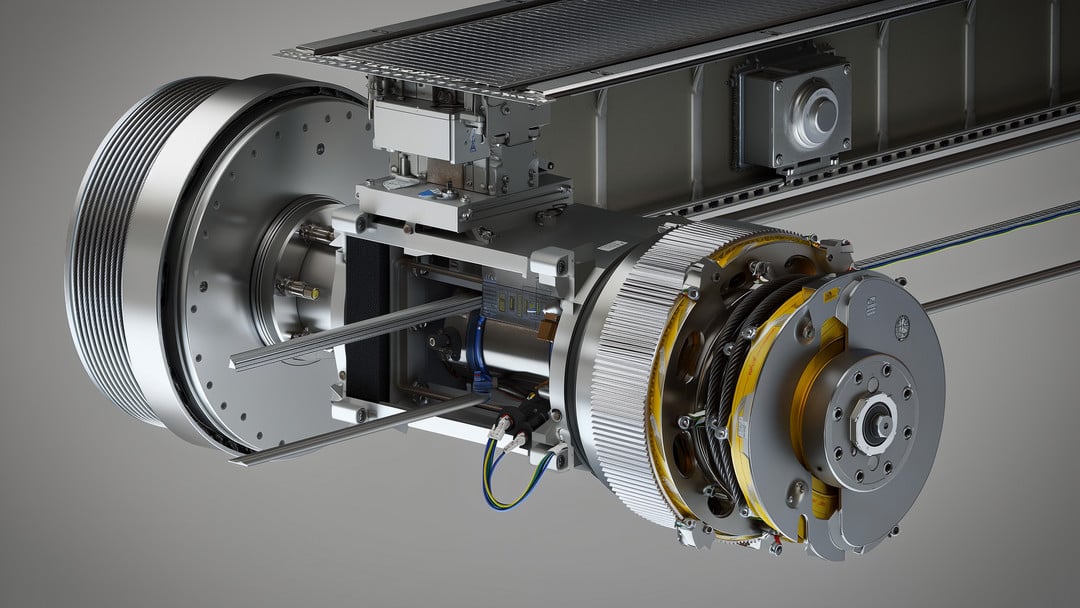
Earlier elevator drive systems relied more heavily on brushed DC motors, larger induction motors, and geared traction that traded efficiency and smoothness for simplicity, while modern elevator motor designs increasingly use compact permanent-magnet machines paired with VVVF drives to improve ride quality, energy use, and controllability. This shift matters in downtime-sensitive buildings because tighter speed regulation, lower heat loss, and quieter operation translate into fewer nuisance faults and more consistent leveling. Rare earth elements (REEs) enable key parts of this modernization by strengthening permanent magnets, stabilizing magnet performance at elevated temperatures, improving sensor and encoder reliability indirectly through materials choices, and supporting manufacturing and finishing steps such as certain polishing and catalytic processes in upstream supply chains. At a high level, REEs show up as magnets, optical materials, phosphors, catalysts, and specialty alloys. This article explains where REEs appear inside elevator motor ecosystems including traction machines, drives, brakes, and feedback devices, how those materials create measurable performance benefits, what the mine-to-motor supply chain looks like, which recent 2025-2026 trends are shaping availability and cost, and what engineers can watch for in the next decade.
Table of Contents
How Did the Elevator Motor Change Vertical Transportation—and Why Do Rare Earths Matter?
For most of the twentieth century, elevators relied on brushed DC motors, large induction motors, and geared traction systems. These designs were proven and relatively simple, but they came with trade-offs: bulky machine rooms, higher energy losses, audible gear noise, and limited speed control that sometimes left passengers feeling every stop and start.
Modern elevator motor designs look very different. Compact permanent-magnet synchronous motors (PMSMs) paired with variable-voltage variable-frequency (VVVF) drives now dominate new mid-rise and high-rise installations. These systems deliver tighter speed regulation, quieter operation, lower heat output, and smoother leveling at each floor. For hospitals, transit hubs, and high-rise residential buildings where every minute of downtime matters, that combination translates into fewer nuisance faults and more predictable service.
What makes these compact, high-performance motors possible? A group of metallic elements called rare earth elements, or REEs. REEs strengthen the permanent magnets at the heart of a PMSM, stabilize magnet performance at elevated temperatures, and support upstream manufacturing processes. They show up in the elevator ecosystem as magnets, optical materials, specialty alloys, and catalysts.
This article explains where REEs appear inside elevator motor systems, how they create measurable performance benefits, what the mine-to-motor supply chain looks like, and which 2025–2026 trends are shaping availability, cost, and engineering decisions.
Rare Earth Role in the Elevator Motor
Which Elements Are Used and Why
The permanent magnets inside most PMSM traction machines are neodymium-iron-boron (NdFeB) magnets. The rare earth elements neodymium (Nd) and praseodymium (Pr) are the primary ingredients. They deliver high remanence and energy product, which is a technical way of saying they produce strong magnetic fields relative to their size. That strength is what allows a modern elevator motor to generate the required torque in a package small enough to fit above a hoistway without a traditional machine room.
Two additional rare earths, dysprosium (Dy) and terbium (Tb), are often added in smaller quantities. Their job is to improve coercivity at high temperatures, which means the magnet resists losing its magnetization when things get hot. This matters during repeated starts, brake drag events, and warm machine-room-less enclosures. Technical papers from magnet manufacturers such as VACUUMSCHMELZE (VAC) and Proterial (formerly Hitachi Metals) document these grade selections in detail.
In applications where thermal margin and corrosion resistance are prioritized over cost, samarium-cobalt (SmCo) magnets (opens in a new tab) may be specified instead. SmCo uses the rare earth samarium and handles higher operating temperatures with less risk of irreversible demagnetization, as described in ASM International materials handbooks.
Two lighter rare earths, cerium (Ce) and lanthanum (La), can appear upstream in broader manufacturing ecosystems—for example, as polishing powders or catalyst inputs—even if they are not inside the final traction machine bill of materials. The U.S. Geological Survey (USGS) (opens in a new tab) rare earths commodity reports summarize these indirect uses.
How It Works
Inside the traction machine, the rotor carries an array of NdFeB magnets (sometimes with Dy or Tb additions). These magnets create a strong, stable magnetic field that interacts with the stator windings. Higher magnetic flux density means higher torque density, so the motor can be physically smaller while still handling rated load. This is especially important in machine-room-less layouts where footprint and thermal headroom are tightly constrained.
When rotor temperatures climb—whether from high duty cycles, restricted airflow, or a dragging brake—Dy/Tb additions or SmCo magnets reduce the risk of irreversible demagnetization. Stable magnet performance means stable torque production and fewer thermal derating events. Manufacturers document the maximum operating temperature and demagnetization margins for each magnet grade in their application manuals.
The VVVF drive closes the loop by using encoder or resolver feedback to commutate the motor precisely. Accurate position and speed sensing enable smooth acceleration, consistent floor leveling, and reduced mechanical stress on ropes, sheaves, and brakes. While REEs are not always central to the encoder itself, the entire control chain depends on predictable motor constants that stem from stable, high-quality magnets.
Journey from Mine to Product
Supply Chain Steps
The path from raw ore to an installed elevator motor rotor involves several tightly linked steps:
- Mining and mineral concentration from REE-bearing ores
- Chemical separation into individual rare earth oxides (a complex solvent-extraction process)
- Conversion of oxides to metals and then to magnet alloys
- Sintering, grain alignment, machining, coating, and final magnetization of finished magnets
- Integration of magnets into the motor rotor during traction machine assembly
Each step introduces yield loss and quality constraints that directly affect magnet grade consistency. Inconsistent grades can shift the motor's torque constant and thermal margin, which downstream creates commissioning headaches or nuisance faults if the controller's VVVF parameters no longer match the motor's actual characteristics.
After magnet integration, traction machine assembly combines rotor and stator laminations, windings, bearings, the brake assembly, and the encoder or resolver. The finished unit goes through balancing, hipot and insulation-resistance tests, back-EMF verification, and temperature-rise validation. These checks are aligned with IEC standards for rotating machines and OEM-specific procedures. Final system performance depends on how well the motor constants match the controller's drive parameters and protection settings, which is why material traceability and documentation matter for both safety and compliance.
Typical Chokepoints
Separation capacity is one of the most commonly cited bottlenecks. Producing high-purity Nd/Pr—and especially heavy rare earths like Dy and Tb—requires complex chemical infrastructure and stringent environmental controls. The International Energy Agency's 2025 critical minerals reporting highlights that heavy rare earth availability is consistently tighter than light rare earth supply, which can constrain the high-coercivity magnet grades specified for hotter duty cycles.
Magnet manufacturing itself has additional chokepoints. Sintering, grain alignment, corrosion-resistant coating, and precision grinding are all capacity-limited and sensitive to intellectual property constraints and quality system rigor. Variability at this stage can show up downstream as motor-to-motor constant drift. For the field engineer, that drift can mean extra commissioning time or unexpected overcurrent and overspeed faults if controller parameters are not revalidated by qualified personnel.
Statistics and Societal Impact
Quantitative Snapshot
The global installed base of elevators and escalators exceeded an estimated 22 million units as of 2025, with annual new-unit shipments continuing to track urbanization trends, according to industry briefings from the International Association of Elevator Engineers and supporting data from United Nations urbanization projections used in vertical transportation market reports.
Gearless PMSM traction machines now represent the majority of new installations in mid-rise and high-rise segments in Europe and East Asia, and their share is growing in North America and the Middle East, as summarized in 2025 and 2026 market research from Interact Analysis. This trend is driven by energy codes, space constraints, and owner expectations for quieter, smoother rides.
Each NdFeB-based traction machine rotor typically contains on the order of a few kilograms of rare earth magnet material, though exact mass varies with motor rating and design. VAC application notes and USGS rare earth end-use discussions provide supporting ranges. Even at that relatively modest per-unit mass, the cumulative demand across hundreds of thousands of annual shipments adds up to significant tonnage.
Energy savings are meaningful. Modern PM gearless systems can achieve efficiency improvements on the order of 20 to 30 percent compared to older geared induction configurations at partial load, according to OEM technical documentation and IEC and ISO building energy guidance. In a high-duty building running hundreds of trips per day, those percentage points translate directly into lower electricity bills and reduced machine-room heat.
Downstream Effects
Higher torque density and better part-load efficiency reduce heat output inside machine-room-less installations. Less waste heat means lower ventilation demand and fewer thermal trips for both the traction machine and the adjacent controller cabinet. For hospitals, airports, and transit stations, that translates into improved uptime in settings where elevator availability is directly tied to patient access, passenger flow, and operational continuity.
Smoother control and improved leveling accuracy reduce trip hazards at floor landings and door-zone faults. Lower mechanical stress can extend the service life of ropes, sheaves, and brakes. These are real benefits, but any safety or performance claims should be validated against field measurements and acceptance tests performed by licensed elevator contractors under applicable code requirements.
Innovators and History
Key Breakthroughs
The foundation for today's elevator motor technology was laid in the early 1980s, when researchers at General Motors (in the United States) and Sumitomo Special Metals (in Japan) independently developed high-energy NdFeB permanent magnets. This materials science breakthrough created a pathway to compact, powerful permanent-magnet motors. ASM International materials references and manufacturer retrospectives from Proterial document this history.
Later improvements in coercivity—the magnet's resistance to demagnetization—and in corrosion-protective coatings expanded the range of real-world duty cycles these magnets could handle. The elevator motor impact became more visible as VVVF drive technology matured and could precisely control PMSMs at low speed for smooth starts and accurate leveling.
The broad adoption of gearless traction machines in mid-rise and high-rise applications followed the evolution of power electronics, control algorithms, and relevant IEC standard families for rotating machines and drives. Regional elevator codes, including ASME A17.1/CSA B44 in North America and the EN 81 series in Europe, incorporated requirements that shaped how PM traction systems were tested and certified. Regenerative drives also became more common as building energy codes and total-cost-of-ownership models pushed owners to recover energy during braking.
From Lab to Product
Research translated into manufacturable systems when magnet suppliers standardized grades and coatings suitable for humid machine spaces, and when elevator OEMs packaged PM traction machines with matched drives, brakes, and feedback devices. Early commercialization typically came through OEM platform standardization and supplier qualification programs that demanded repeatable motor constants, documented thermal testing, and traceable quality-assurance records. This approach reduced commissioning risk and supported the documentation trail that code officials and safety inspectors expect.
Why It Matters Now
Current Drivers
In 2025 and 2026, modernization demand is accelerating. Much of the global installed base is aging, energy costs remain volatile, and building owners increasingly expect quieter, smoother rides with higher availability. Healthcare and transit facilities feel these pressures most acutely because elevator outages have outsized operational impact on patient flow and passenger throughput.
Engineering teams also face tighter space constraints and heat management challenges in retrofits, which pushes adoption of compact traction machines with improved drive controls. Recent OEM modernization guides and vertical transportation consultant practice notes reflect these trends.
At the same time, reliability expectations are rising. Remote monitoring, fault analytics, and condition-based maintenance are becoming standard practice in high-duty buildings. Stable motor performance and predictable thermal behavior simplify diagnostics and reduce nuisance callbacks. This elevates the importance of consistent magnet grade, verified motor constants, and documented compatibility between the elevator motor and the controller/VVVF configuration.
Security and Policy Context
REE processing and magnet manufacturing capacity remains regionally concentrated. A large share of global separation and sintered NdFeB production is located in a small number of countries—a point emphasized in 2025 and 2026 critical minerals assessments from the International Energy Agency, the USGS Mineral Commodity Summaries, and various national critical-minerals strategies.
Policy responses are underway. Governments are offering onshoring and "friend-shoring" incentives, funding recycling pilot programs, and tightening due-diligence expectations for supply chain traceability. For elevator industry stakeholders, the practical effect is that export controls, licensing uncertainty, and compliance documentation requirements can affect lead times and spares availability for traction machines that depend on specific magnet grades.
For safety-critical systems, procurement teams increasingly request documentation packages covering material traceability, testing, and conformity aligned with regional code and inspection regimes. Building managers and service companies should work with their OEM representatives and licensed contractors to confirm that replacement traction machines or rotors meet these documentation expectations.
Future Outlook
Materials and Design Trends
Magnet makers are actively working to reduce Dy and Tb content without sacrificing high-temperature coercivity. Techniques such as grain-boundary diffusion—where heavy rare earths are concentrated at grain surfaces rather than distributed throughout the bulk—can preserve demagnetization margin with significantly less heavy REE. Recent IEEE industry presentations and leading magnet supplier whitepapers from companies like VAC and Shin-Etsu describe these approaches.
Some motor designers are evaluating ferrite or hybrid magnet approaches for applications where torque density requirements are lower. However, the demanding duty cycles and tight physical envelopes typical of elevator installations often limit how much substitution is feasible without compromising performance or enlarging the motor package.
Recycling scale-up is expected to grow through end-of-life magnet recovery and manufacturing scrap reclamation. Quality control remains a barrier, though—oxygen content and contamination levels must stay low enough to produce high-grade sintered magnets suitable for traction machines. Manufacturing trends also include tighter integration of motor, brake, and encoder packages, along with improved coatings and corrosion barriers to reduce field failures in humid or coastal environments.
Five- to Ten-Year Scenario
Demand for PM traction systems is likely to track urbanization, high-rise construction, and modernization cycles over the next decade. Policy-driven supply diversification may slowly expand non-incumbent separation and magnet manufacturing capacity, but building and qualifying new facilities takes years. The main bottlenecks to watch are heavy REE availability for high-coercivity grades, qualification timelines for new magnet suppliers, and the time required to certify changes in safety-critical elevator motor assemblies under local code regimes. The IEA's forward-looking outlooks, national industrial strategy updates, and EN 81 and ASME code revision notes are useful sources for tracking these developments.
Risk mitigation strategies for procurement and engineering teams are expected to combine multi-sourcing, redesign toward lower-heavy-REE magnet grades where thermal modeling allows, and stronger incoming inspection and acceptance testing to catch motor-constant variance early. Any substitution or redesign should be evaluated and implemented only by qualified engineering teams and licensed elevator contractors to maintain compliance and safety.
Glossary
NdFeB magnet: A permanent magnet made from neodymium, iron, and boron, widely used in elevator PMSMs for its high energy product.
Coercivity: A magnet's resistance to being demagnetized by heat or opposing magnetic fields.
Remanence: The magnetic flux density retained by a magnet after an external magnetizing field is removed.
Grain-boundary diffusion: A processing technique that concentrates heavy rare earths at magnet grain boundaries to improve coercivity with less material.
SmCo magnet: A samarium-cobalt permanent magnet offering high thermal stability and corrosion resistance, used where operating temperatures are elevated.
VVVF/VFD drive: A variable-voltage variable-frequency (or variable-frequency drive) power electronics unit that controls motor speed and torque by adjusting voltage and frequency.
Demagnetization margin: The safety buffer between a magnet's operating point and the threshold at which it would irreversibly lose magnetization under thermal or electrical stress.
FAQs
How long does an elevator motor last?
Service life depends on duty cycle, thermal loading, bearing lubrication regime, alignment, and the control strategy used, so lifetimes can vary widely between low-use residential and high-duty transit applications. In practice, many failures are bearing-, insulation-, or brake/drag-related rather than magnet wear, and condition monitoring plus temperature management often extends useful life. Any life assessment should be made by a licensed elevator contractor using vibration, insulation-resistance/PI, and temperature-rise data.
Why does an elevator motor overheat?
Overheating commonly traces to overload, excessive starts per hour beyond the motor duty rating (S1/S3), poor ventilation in machine-room-less spaces, brake drag, mis-tuned VFD parameters, or harmonic losses from power quality issues. Elevated temperature can reduce insulation life and, in PM machines, can also erode demagnetization margin if operating limits are exceeded. A qualified technician should verify load, current, airflow, brake clearance, and drive fault history before replacing components.
Can you retrofit gearless traction with a permanent-magnet elevator motor?
Retrofitting from geared or older induction platforms to gearless PM traction can be feasible, but it is a system redesign that must address structural loads, sheave and roping geometry, brake and safety integration, controller and VFD compatibility, and code-required testing. The motor choice cannot be separated from the drive tuning and safety chain verification because torque control and stopping performance are code-sensitive. Engage a licensed elevator contractor and, where required, a vertical transportation consultant to scope compliance and acceptance testing.
Do rare earth magnets make elevators less safe if supply is disrupted?
Safety is primarily governed by codes, braking systems, safeties, governors, and verification testing, but supply disruptions can increase downtime risk by stretching lead times for traction machines or rotors that use specific magnet grades. That procurement risk can indirectly affect availability in critical facilities if spare strategies and cross-qualification plans are not in place. Facilities teams typically mitigate this through documented spares planning, multi-sourcing where allowed, and maintaining certified interchangeability records.
What documentation should be kept when replacing an elevator motor?
Keep the motor and traction machine nameplate data, test certificates including insulation resistance, hipot where applicable, and brake tests, controller and VFD parameter records, encoder and resolver compatibility notes, and any conformity declarations required under local code. Also retain commissioning results such as no-load and load current, temperature rise observations, leveling checks, and acceptance test reports signed by qualified parties. Documentation supports compliance audits, root-cause analysis, and faster future replacements while reducing operational risk.
Conclusion
Rare earth elements are deeply embedded in the performance chain of modern elevator motors, from the NdFeB magnets that enable compact gearless traction machines to the supply chain dynamics that affect lead times and spares availability. As urbanization and modernization cycles drive continued adoption of PM traction systems, engineers and facility teams must stay informed about REE supply risks, magnet technology trends, and the documentation practices that support compliance and safety. By understanding the mine-to-motor pathway, monitoring 2025-2026 market and policy developments, and working with qualified contractors and consultants, stakeholders can make better decisions about elevator motor specification, procurement, and lifecycle management in an evolving materials landscape.
