
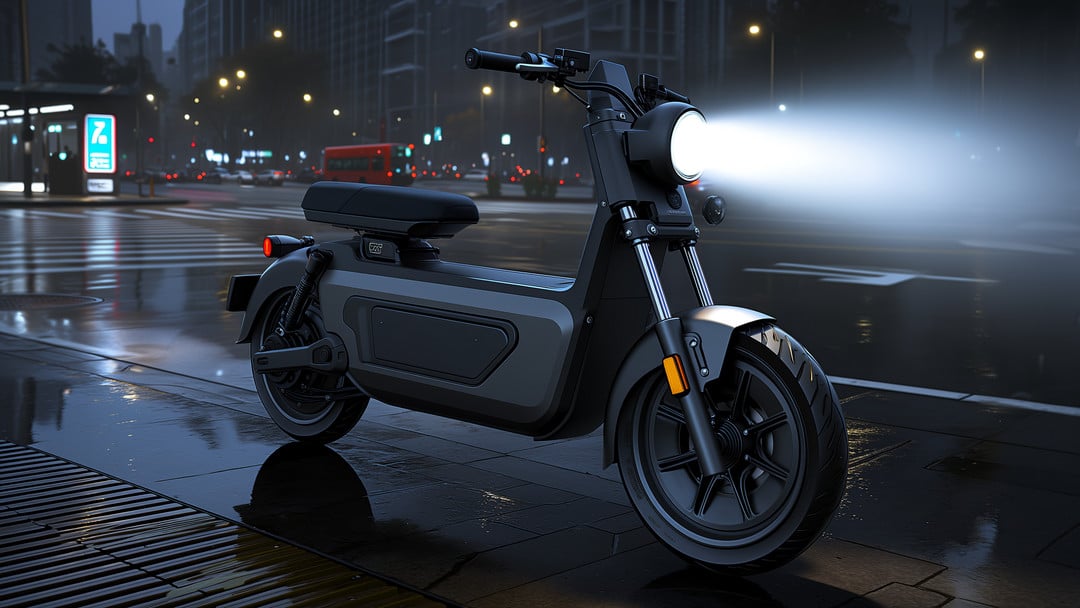
Before shared fleets and affordable personal rides, short trips often meant walking, slower transit connections, or bulky bikes that were harder to store indoors. Electric scooters compressed last-mile time while staying portable enough for apartments, offices, and classrooms. That portability-and-power combination relies on high energy density batteries, efficient motors, compact electronics, and bright lighting, and rare earth elements (REEs) quietly support several of those pieces. In electric scooters, REEs show up most often in permanent magnets for compact motors, in optical materials and phosphors for LEDs and displays, and in alloys and catalysts used upstream in manufacturing. In this article, readers will learn which REEs are most relevant, how they translate into real performance including torque, efficiency, thermal margin, and lighting, and what the mine-to-scooter journey looks like in practice. The article also previews 2025–2026 market and policy context, explains where supply-chain risk concentrates, and outlines how recycling and magnet innovation could change the outlook over the next decade.
Table of Contents
How Did Electric Scooters Change Urban Micromobility — and Why Do Rare Earths in Electric Scooters Matter?
Before shared fleets and affordable personal rides hit the market, getting through that awkward "last mile" between a bus stop and your office — or between a parking garage and a college lecture hall — usually meant walking, waiting for another connection, or lugging a heavy bike up a flight of stairs. Electric scooters changed that equation. They compressed short-trip travel time while staying portable enough to fold up, carry onto a train, and tuck under a desk.
That combination of portability and real power does not happen by accident. It depends on batteries that store a lot of energy for their weight, motors that deliver strong torque in a small package, compact electronics, and bright lighting that keeps riders visible at night. Behind several of those pieces, a family of metallic elements called rare earth elements, or REEs, plays a quiet but important role.
In most electric scooters, rare earths show up inside the permanent magnets that make compact motors possible, in optical materials and phosphors used for LEDs and displays, and in alloys and catalysts used upstream during manufacturing. This article walks through which rare earths matter most, how they translate into the torque, efficiency, thermal performance, and lighting you actually feel on a ride, and what the supply chain looks like from mine to finished scooter. It also covers where supply-chain risk sits in 2025 and 2026, and how recycling and new magnet technology could reshape the picture over the next decade.
Rare Earth Role in Electric Scooters
Which Elements Are Used and Why
Not every element on the periodic table matters here. A handful of rare earths do the heavy lifting in scooter components, and understanding which ones — and why — helps explain the design choices behind the motors and lights you rely on.
Neodymium (Nd) and praseodymium (Pr) are the headliners. These two elements form the backbone of NdFeB (neodymium-iron-boron) permanent magnets, which are widely used in compact electric motors. According to both the USGS and the International Energy Agency's critical minerals reporting, NdFeB magnets offer the highest magnetic energy density available for a given size and weight. That is exactly why motor designers choose them when the goal is a powerful motor that still fits inside a scooter hub or mid-drive housing.
Dysprosium (Dy) and terbium (Tb) play a supporting but important role. Added in small amounts to NdFeB magnets, they raise what engineers call "coercivity" — the magnet's ability to resist losing its magnetization when it gets hot. Motors heat up during hard acceleration, steep hill climbs, and sustained high-speed runs, especially in warm weather. According to IEA magnet-supply discussions and technical literature from major magnet producers, Dy and Tb additions help magnets hold their strength under those conditions.
Samarium (Sm) can appear in SmCo (samarium-cobalt) magnets, which prioritize temperature stability over cost. These are less common in everyday scooters but can show up in specialized or high-heat motor designs, as noted in ASM International materials references.
On the lighting and display side, europium (Eu), yttrium (Y), and terbium (Tb) have historically been used in phosphors — the materials that convert the blue or ultraviolet light from an LED chip into the white or colored light you actually see. Meanwhile, cerium (Ce) and lanthanum (La) can appear in glass polishing and specialty optical processes used for lenses and reflectors. The European Commission's critical raw materials briefings provide context on these applications.
How It Works
Here is how those elements connect to the ride experience in plain terms.
Inside a hub motor or mid-drive motor, NdPr-based magnets create a strong magnetic field in a compact rotor. A stronger field in a smaller space means higher torque density and better efficiency. For the rider, that translates into more hill-climbing ability per kilogram of motor weight and less wasted heat for a given load. Whether you are a 200-pound commuter tackling a bridge on-ramp or a college student zipping across campus, that torque density is doing work for you.
When the motor heats up — say, after a long uphill pull or repeated stop-and-go riding in summer — magnets with Dy or Tb additions hold their coercivity better. That means the motor delivers more consistent acceleration and does not gradually lose power as it warms up. For riders who depend on regenerative braking, this also helps maintain steady braking behavior over a ride.
For headlights and taillights, REE-influenced phosphor blends and optical materials help control the color and beam pattern of LEDs. The result is better visibility and usable illumination without bulky housings — important for all-weather riders and anyone sharing roads at night. Dashboard displays and status indicators also benefit from stable color emission, helping riders monitor speed, battery level, and fault codes at a glance.
Thermal constraints deserve extra attention. Scooters pack motor, controller, and battery into tight spaces with limited airflow. In higher-heat designs — dual motors, heavy payloads, or sustained hill climbing — heavy REEs like Dy and Tb or SmCo magnets may be chosen specifically to preserve magnetic performance when the rotor runs hot under sustained current.
Journey from Mine to Product
Supply Chain Steps
The path from raw earth to a working scooter motor is longer and more specialized than most riders realize.
It starts with ore mining and a process called beneficiation, which separates the valuable minerals from waste rock and produces a mixed rare earth concentrate. That concentrate then goes through chemical separation — a complex series of solvent extraction steps — to isolate individual rare earth oxides. Those oxides are converted into metals.
For magnets, the metals are alloyed into the right composition (for example, Nd, Pr, Fe, B, with possible Dy or Tb additions), then processed through powder metallurgy: the alloy is ground into fine powder, pressed into shape under a magnetic field for alignment, and sintered (heated under pressure) into a dense, finished magnet. This process flow is commonly described in USGS mineral industry surveys and magnet-industry process primers.
In parallel, some rare earths go into phosphor powders and optical materials through their own supply chains, involving controlled chemistry, coating steps, and quality testing to meet color and stability targets for LED and display component suppliers.
Finally, magnets, optics, LEDs, and electronic subassemblies are integrated into motors, lighting modules, and dashboards at the scooter level. End-of-line testing checks motor performance, brake cutoff behavior, and lighting compliance before a scooter ships.
Typical Chokepoints
Three bottlenecks stand out in this chain.
First, chemical separation capacity is a frequent constraint. Solvent extraction lines are expensive to build, require strict environmental controls, and take years to commission. Both the IEA and USGS have repeatedly flagged this step as a key vulnerability.
Second, heavy rare earth availability — especially Dy and Tb — can be tighter than light rare earth supply. This creates vulnerability for high-temperature magnet grades even when Nd supply looks adequate. The IEA's critical minerals analysis emphasizes this distinction.
Third, magnet manufacturing itself involves specialized steps where yield and expertise matter. Powder handling, alignment, sintering, machining, and coating all require know-how that is hard to replicate quickly. Scaling magnet production outside established hubs can take longer than scaling scooter assembly.
Statistics and Societal Impact
Quantitative Snapshot
The numbers around electric scooters and their materials tell a story of fast growth meeting concentrated supply.
Global micromobility deployment data — including shared e-scooter fleets — is tracked by the International Transport Forum (part of the OECD) and by city department of transportation annual mobility reports. The 2025 and 2026 releases from these sources show continued expansion in deployed units and trip counts across major urban markets.
For personal electric scooter shipments and market size, firms like IDC and Counterpoint Research publish annual estimates. These trackers distinguish between personal scooters and shared-fleet units, and methodology notes clarify what counts as a "scooter" versus other micromobility form factors.
According to IEA critical minerals annex tables and technical briefs from major magnet producers, a typical scooter motor contains a range of NdFeB magnet mass — not a single fixed number — with NdPr making up roughly 30 to 32 percent of the magnet's weight. The exact amount varies by motor size, design, and intended performance tier.
On the supply side, the 2026 edition of the USGS Mineral Commodity Summaries and the IEA Critical Minerals Market Review (2025 and 2026 editions) document rare earth mining and refining concentration by country, along with planned capacity additions.
Downstream Effects
What do these materials actually mean for riders?
Smaller, stronger magnets enable lighter motors for the same torque output. That improves portability — a direct benefit for last-mile transit riders folding a scooter onto a bus, or college students carrying one into a dorm. It also reduces energy use per mile, which stretches real-world range, especially in stop-and-go urban riding where frequent acceleration matters most.
More thermally robust magnet choices improve reliability by reducing the performance fade that can happen after repeated hard accelerations. This supports consistent regenerative braking behavior and steadier speed control — both of which matter for safety, especially for heavier riders tackling hills or riders navigating wet conditions.
Better lighting optics and stable color output from REE-influenced phosphors improve nighttime detectability. When paired with good infrastructure and responsible riding, this can reduce conflicts at intersections and on shared paths — a real concern for all-weather and delivery riders operating after dark.
Innovators and History
Key Breakthroughs
The story of rare earths in electric scooters starts well before scooters existed in their current form.
The modern rare earth magnet era began in the 1980s with the commercialization of NdFeB magnets. This milestone, widely documented by IEEE publications and ASM International overviews, made it possible to build compact, high-power motors that dramatically outperformed older ferrite magnet designs. Without this breakthrough, the small, powerful hub motors inside today's scooters simply would not exist.
Refinements came next. Engineers developed dysprosium additions and later microstructural control techniques to improve coercivity and temperature stability. These advances expanded where NdFeB magnets could perform reliably under higher heat loads — a critical step for motors squeezed into tight scooter housings. The IEA's magnet-supply discussions and materials society proceedings summarize this evolution.
High-efficiency brushless DC (BLDC) motor control was another key piece. As power electronics and sensors became cheaper and more reliable, permanent-magnet motors became practical at consumer price points — not just for industrial or aerospace use. IEEE industry retrospectives trace this progression from expensive niche technology to mass-market viability.
On the lighting side, LED performance improvements in lumen output, efficiency, and optics, combined with phosphor engineering advances, produced the bright, compact lights that scooter riders now take for granted. The U.S. Department of Energy's Solid-State Lighting program summaries document this trajectory.
From Lab to Product
Materials breakthroughs alone do not make a scooter. They became scooter-ready only after mass manufacturing matured for sintered magnets, automated motor winding, and controller firmware tough enough to handle vibration, water exposure, and variable loads.
The commercialization path typically moved from magnet producers to motor manufacturers and then to scooter OEMs. Testing feedback loops around heat, noise, durability, and supply availability shaped which magnet grades and lighting components became standard. A magnet that performs well in a lab but is hard to source reliably or too expensive for a sub-$700 scooter does not make it into production — a reality that budget-conscious and DIY-focused riders indirectly benefit from, since it pushes the industry toward practical, available materials.
Why It Matters Now
Current Drivers
In 2025 and 2026, cities around the world continue to wrestle with curb space, congestion, and emissions targets. Micromobility remains a practical complement to public transit where trip distances are short and parking is scarce. Recent updates from the OECD's International Transport Forum and city mobility strategy documents reflect this ongoing role.
Battery costs have continued to fall, cell quality has improved, and drivetrains have become more efficient. These trends have kept scooter performance rising even as safety scrutiny has tightened. The result is that attention is shifting from raw peak speed toward component reliability and sourcing — questions about how long a motor holds up, how consistent braking stays over thousands of miles, and whether replacement parts will remain available.
Consumer expectations are also rising. Riders want brighter lights, clearer displays, and smaller, lighter form factors. Each of those expectations indirectly increases demand for compact, efficient motors and optics — and ties product evolution more tightly to magnet and materials supply chains.
Security and Policy Context
The concentration of rare earth processing and magnet manufacturing capacity remains a key policy concern. China's dominant role in midstream steps — separation, metal-making, and magnet production — is frequently highlighted in IEA critical minerals reporting and in national critical-minerals strategies published by the United States, the European Union, and other governments.
Onshoring and "friend-shoring" initiatives in 2025 and 2026 target those midstream steps specifically, because having mined ore does not guarantee a finished magnet. U.S. Department of Energy and European Commission policy documents make this point clearly: the bottleneck is not just in the ground, it is in the factories that turn raw material into usable components.
Recycling pilots for NdFeB magnets and manufacturing scrap are expanding, but collection logistics and economics remain challenging for small consumer products like scooters. For now, primary supply and midstream capacity remain central to near-term resilience. That means scooter prices and availability can be affected by the same supply-chain pressures that hit electric vehicles and wind turbines.
Future Outlook
Materials and Design Trends
Magnet makers are actively working to reduce dependence on dysprosium and terbium. Techniques like grain-boundary diffusion allow engineers to concentrate heavy rare earths only where they are needed within a magnet, preserving high-temperature coercivity while using less material overall. The IEA's magnet technology sections and peer-reviewed materials journals describe these approaches as increasingly mature.
Substitution is another path. Some motor designs use ferrite magnets where the size and weight penalties are acceptable, or shift motor geometry to reduce the total amount of magnet material needed. These approaches can work — but they often trade torque density for cost savings, which can mean a heavier or bulkier motor for the same performance. For riders who prioritize portability or hill-climbing power, that tradeoff matters.
Recycling scale-up is likely to follow a logical sequence: large, easily collected streams first (industrial motors, wind turbines, manufacturing scrap), then smaller devices as collection and sorting systems improve. Analyses by the IEA and national laboratory reports describe this sequencing as the most realistic path forward.
Five- to Ten-Year Scenario
Demand for NdPr in permanent magnets (opens in a new tab) is expected to grow as electrification expands across transportation, appliances, and industrial equipment. The IEA's 2025 and 2026 outlooks emphasize that this broader demand growth can tighten supply for consumer micromobility during periods of rapid EV and wind-turbine buildout — even though each scooter uses a relatively small amount of magnet material.
The biggest bottlenecks over the next decade are expected to remain in three areas: separation capacity (opens in a new tab), heavy rare earth availability for high-coercivity magnet grades, and qualified magnet-manufacturing capacity outside established production hubs. These constraints create price volatility risk that can ripple through to scooter pricing and component availability.
Mitigation will likely combine several strategies at once:
- New mines reaching production in Australia, Canada, and other regions
- Expanded separation and metal-making capacity outside current dominant hubs
- Design-for-reduced-heavy-REE magnets using grain-boundary diffusion and microstructure optimization
- Recycling infrastructure scaling up from industrial to consumer streams
None of these changes is instantaneous. In the meantime, scooter engineers may increasingly prioritize better thermal management and motor efficiency to reduce the stress on magnets — effectively designing around supply risk rather than waiting for it to resolve.
Glossary
NdFeB (neodymium-iron-boron magnet): A type of permanent magnet made primarily from neodymium, iron, and boron that offers the highest magnetic energy density of any commercially available magnet material.
Coercivity: A measure of a magnet's resistance to losing its magnetization, especially under heat or opposing magnetic fields. Higher coercivity means the magnet holds its strength in tough conditions.
Grain-boundary diffusion: A manufacturing technique that introduces heavy rare earths like dysprosium or terbium along the boundaries between crystal grains inside a magnet, improving high-temperature performance while using less of these scarce elements.
Sintering: A process in which powdered material is compressed and heated below its melting point to form a dense, solid piece. This is a key step in making NdFeB magnets.
Phosphor: A material that absorbs light at one wavelength and re-emits it at another, used in LEDs to convert blue or ultraviolet light into visible white or colored light.
Color temperature: A measure of the warmth or coolness of a light source, expressed in Kelvin. Lower values appear warmer (yellowish), higher values appear cooler (bluish-white).
Brushless DC (BLDC) motor: An electric motor that uses permanent magnets on the rotor and electronically controlled coils on the stator, eliminating the brushes found in older motor designs. This results in higher efficiency, lower maintenance, and quieter operation.
FAQs
Do all electric scooters use rare earth magnets?
Many electric scooters use permanent-magnet BLDC motors that commonly rely on NdPr-based NdFeB magnets, but not every design does. Some motors can use ferrite magnets or different architectures, though these often change size, weight, or efficiency. The presence of rare earths depends on the motor type, magnet grade, and supply choices made by the motor manufacturer.
Which rare earths matter most for scooter performance?
Neodymium and praseodymium matter most because they enable compact, strong magnets that raise torque density and efficiency. Dysprosium and terbium can matter in smaller amounts when designers need better high-temperature resistance to demagnetization. Other REEs such as europium or yttrium are more tied to lighting and display materials than to propulsion.
Why do heavy rare earths like dysprosium and terbium show up in magnets?
Motors heat up during acceleration, hills, or high loads, and heat makes magnets more vulnerable to losing magnetization. Adding small amounts of Dy or Tb can raise coercivity so magnets hold their strength at higher temperatures. The tradeoff is cost and supply tightness, since heavy rare earths tend to be less abundant and harder to process.
How big is the rare earth supply-chain risk for scooters compared with other products?
Scooters compete for the same magnet supply chain used by EV traction motors, wind turbines, robotics, and many consumer appliances, so shortages or price spikes can ripple across categories. Because scooters are cost-sensitive and use compact motors, they can be exposed to magnet price volatility even if the total rare earth mass per unit is not large. Risk is often driven more by processing and magnet-making capacity than by raw ore availability.
Can rare earths in scooters be recycled effectively?
Technically, NdFeB magnets can be recycled, and industrial recycling is growing, especially from manufacturing scrap where collection is straightforward. For consumer scooters, practical recycling depends on disassembly, collection rates, and whether parts are designed to be removed and sorted efficiently. Over time, better design-for-recycling and improved collection systems could make scooter-related magnet recovery more viable.
Conclusion
Rare earth elements play a quiet but consequential role in making electric scooters compact, efficient, and reliable enough for everyday urban use. From the NdPr-based permanent magnets that deliver high torque density in small motors to the phosphor materials that enable bright, stable lighting and displays, REEs underpin several of the performance characteristics riders depend on. The supply chain that delivers these materials is long and concentrated, with chokepoints at chemical separation, heavy rare earth availability, and specialized magnet manufacturing. As electrification demand grows across EVs, wind energy, and consumer devices through 2025–2026 and beyond, competition for the same magnet supply will intensify. Innovation in grain-boundary diffusion, motor design optimization, and recycling scale-up offers paths to reduce heavy REE dependence, but none of these solutions is instantaneous. For scooter manufacturers, riders, and policymakers alike, understanding where rare earths fit in the micromobility ecosystem is essential for making informed decisions about product design, sourcing resilience, and the long-term sustainability of urban transportation.
