
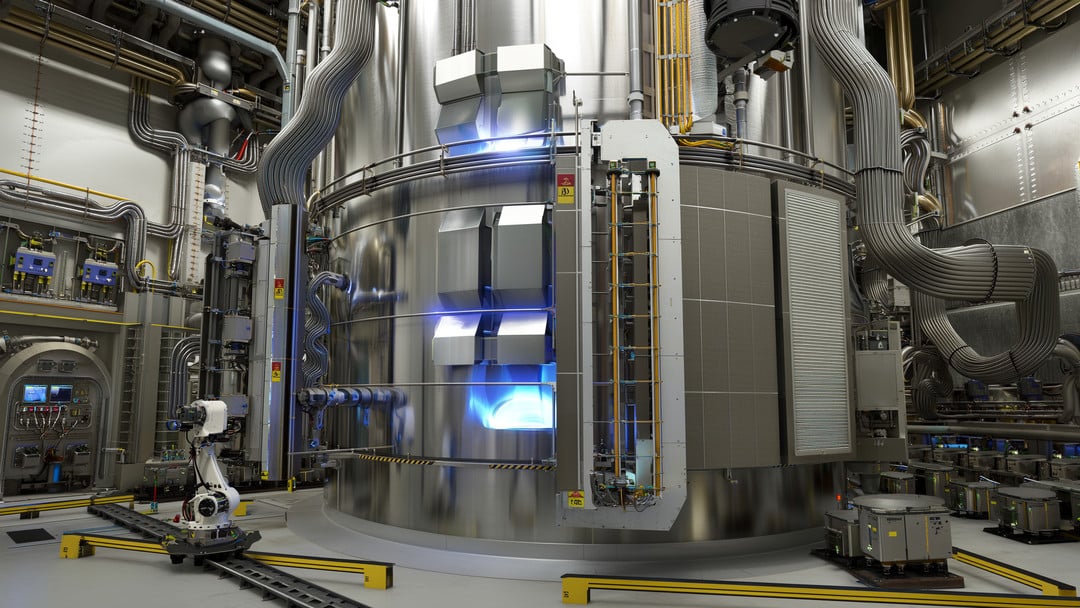
For most of the last 70 years, fusion was mainly a physics experiment: short pulses, fragile plasmas, and machines that proved it can work without delivering steady electricity to a grid. In the 2020s and mid-2020s, fusion shifted toward engineering: higher-field magnets, better plasma control, and more serious power-plant layouts that emphasize maintainability, heat exhaust, and fuel-cycle realism rather than just record temperatures. Rare earth elements quietly enable parts of that shift by improving magnet performance, optical sensing, radiation-tolerant materials choices, specialized alloys, and some high-value ceramics and coatings used in harsh environments. This article explains what fusion energy reactors are and what they are not, how major reactor approaches work, what net energy really means, and why engineering constraints such as materials damage, tritium supply, heat removal, and downtime still set the pace. You will also learn where REEs fit in the supply chain, which projects and milestones were verified by 2025 to 2026 per sources like IAEA, U.S. DOE national labs, and peer-reviewed journals, and what uncertainties remain.
Table of Contents
How Did Fusion Energy Reactors Change the Energy Landscape — and Why Do Rare Earths Matter?
For most of the past seventy years, fusion energy was a physics experiment. Researchers built machines that proved plasma could reach extreme temperatures and that hydrogen isotopes could fuse together, releasing energy. But those machines ran in short pulses, produced fragile plasmas, and never delivered steady electricity to anyone's wall outlet.
That started to change in the 2020s. The conversation shifted from "Can we make fusion happen?" to "Can we engineer a power plant around it?" Higher-field magnets, better plasma control, and more serious plant layouts began to dominate the discussion. Teams started worrying less about record-breaking temperatures and more about heat removal, maintenance robots, and whether there would be enough tritium fuel to keep a reactor running for years.
Rare earth elements — a group of seventeen metals with unusual magnetic, optical, and chemical properties — quietly enable parts of that shift. They show up in magnets that drive motors and pumps, in phosphors that help cameras see inside the plasma, and in specialized alloys that hold up in harsh environments. They are not the headline material in fusion, but they are woven through the engineering that could make fusion practical.
This article walks through what fusion energy reactors actually are, how the major approaches work, what "net energy" really means, and where rare earth elements fit in the supply chain. It also covers which milestones have been verified through 2025–2026 by sources like the IAEA, U.S. Department of Energy national laboratories, and peer-reviewed journals — and what uncertainties remain.
A quick primer on fusion basics
Fusion is the process that powers the sun. Light atomic nuclei — usually isotopes of hydrogen called deuterium and tritium — collide at extremely high speeds and merge into helium, releasing energy. To make this happen on Earth, engineers must heat fuel to over 100 million degrees Celsius, far hotter than the core of the sun, and hold it in place long enough for reactions to occur.
The superheated fuel becomes plasma, a state of matter where electrons are stripped from atoms. Because plasma is electrically charged, it can be confined with magnetic fields (the approach used in tokamaks and stellarators) or compressed with lasers or pulsed power (inertial confinement and related concepts).
A fusion energy reactor is a device designed to produce these reactions in a controlled, repeatable way. But calling something a "reactor" does not mean it is a power plant. A true fusion power plant would add heat-capture systems, turbines or gas-cycle generators, grid connections, a verified tritium fuel cycle, and maintenance infrastructure. The reactor is the core; the plant is the whole package.
Understanding net energy
One of the most misunderstood topics in fusion is "net energy." There are at least three levels worth knowing.
Scientific breakeven (Q-plasma greater than 1) means the plasma produces more fusion energy than the heating power injected into it. The National Ignition Facility at Lawrence Livermore National Laboratory demonstrated this in late 2022, a result confirmed in peer-reviewed publications by 2024.
Engineering breakeven (Q-engineering greater than 1) means the entire machine — magnets, cryogenics, pumps, control systems — produces more energy than it consumes. No facility has achieved this yet.
Grid breakeven means the full power plant, including heat conversion and all auxiliary systems, exports more electricity than it draws. This is the bar that matters for energy markets, and it has not been crossed.
When headlines say "fusion achieved net energy," they usually mean the first definition. The gap between scientific breakeven and grid-ready electricity is enormous, and it is mostly an engineering gap — materials, maintenance, fuel supply, and heat management.
Major reactor approaches
Several concepts compete for the path to a working power plant. Each has distinct advantages and challenges.
Tokamaks use a doughnut-shaped magnetic cage to confine plasma. They are the most studied design, with decades of data from machines like JET in the United Kingdom and ongoing construction of ITER in France. Tokamaks can achieve high plasma pressures, but most designs run in pulses unless advanced current-drive methods are used.
Stellarators twist the magnetic cage into a complex three-dimensional shape so the plasma can, in principle, run continuously without pulsing. The Wendelstein 7-X in Germany is the leading example. Stellarators are harder to build but may offer better steady-state operation.
Inertial confinement compresses tiny fuel pellets with lasers or particle beams. The National Ignition Facility uses this approach. It is well suited to weapons physics research and has demonstrated scientific breakeven, but scaling it to a power plant requires firing many pellets per second — a major engineering hurdle.
Magnetized target fusion and Z-pinch concepts use pulsed compression of magnetized plasma. Several private companies are exploring variations, some with compact hardware that could be manufactured in factories rather than built on-site.
According to the Fusion Industry Association's 2025 survey, more than forty private companies were pursuing fusion energy, with combined private investment exceeding seven billion dollars. The IAEA's Fusion Device Information System listed more than a hundred experimental fusion devices worldwide as of early 2026. These numbers frame the scale of activity, but they do not guarantee that any specific concept will reach commercial operation on a fixed timeline.
What still sets the pace
The hardest problems in fusion are no longer about plasma physics alone. They are about engineering constraints that determine whether a reactor can run reliably for years.
Neutron damage is a top concern. Deuterium-tritium fusion produces high-energy neutrons that slam into structural materials, weakening them over time. No material has been tested under a full fusion neutron spectrum for the thousands of hours a power plant would need. Facilities like the planned IFMIF-DONES neutron source are designed to fill this gap, but validated data is still limited.
Tritium supply is tight. Tritium is radioactive, with a half-life of about 12.3 years, and the global inventory is small — measured in kilograms, mostly produced as a byproduct of heavy-water fission reactors. A fusion power plant would need to breed its own tritium by surrounding the reactor with lithium-containing blankets. Demonstrating a tritium breeding ratio above 1.0 — meaning the plant makes more tritium than it burns — has not been done at scale.
Heat exhaust is punishing. The plasma edge can deliver heat fluxes comparable to a rocket nozzle. Divertor components that absorb this heat must survive thousands of cycles without cracking or eroding. Materials like tungsten are candidates, but long-term performance under realistic conditions is still being studied.
Maintenance and downtime may be the sleeper issue. Activated components must be replaced remotely, using robots that can work in radioactive environments (opens in a new tab) with high precision.The speed and reliability of this maintenance directly affects how much electricity a plant can deliver over its lifetime.
Rare Earth Role in Fusion Energy Reactors
Which elements are used and why
Rare earth elements in fusion hardware are less about enabling the fusion reaction itself and more about making everything around the plasma work better — compactly, precisely, and reliably under heat and radiation.
The most prominent REEs in fusion contexts are neodymium and praseodymium, which form the basis of NdFeB permanent magnets. These magnets appear in motors, pumps, actuators, and encoders throughout a fusion facility. They deliver high torque in small packages, which matters when space is tight and efficiency counts.
Dysprosium and terbium are added in small quantities to raise a magnet's coercivity — its resistance to losing magnetization when it heats up. In locations near warm components, this thermal margin can be the difference between a motor that drifts out of calibration and one that holds steady. Samarium pairs with cobalt in SmCo magnets, which handle higher temperatures better than NdFeB, making them useful in spots where cooling is limited. This mapping is consistent with materials overviews published by the U.S. Department of Energy and technical notes from major industrial magnet producers in 2024–2026.
Yttrium and europium appear in scintillators and phosphors used for radiation detection and plasma diagnostics. Cerium and lanthanum show up in some polishing powders and specialty glass formulations for optics and viewing windows. These uses align with REE application summaries from IAEA fusion technology publications and national laboratory instrumentation briefs from 2025–2026.
Gadolinium, with its high neutron-capture cross section, may be used in neutron detection instruments or shielding-adjacent measurement devices, as described in nuclear instrumentation references from IEEE and national lab reports.
How it works
Think of a fusion facility as a collection of subsystems, each with its own job. Rare earths contribute to several of them in practical, measurable ways.
In the cryogenic plant and vacuum systems, NdFeB and SmCo motor magnets provide higher torque density. That means smaller motors with lower electrical losses, which improves plant efficiency and makes equipment easier to swap out during maintenance.
For plasma diagnostics — the cameras, spectrometers, and detectors that watch what the plasma is doing — REE-enabled phosphors and scintillators based on europium and yttrium produce brighter, faster signals. Better signals mean better control feedback, which reduces the risk of plasma disruptions and improves overall machine availability.
In robotics and remote handling, neodymium and praseodymium magnets reinforced with dysprosium and terbium provide stable actuation even near warm components. Fewer calibration drifts mean faster maintenance turnarounds, which directly affects how much time the reactor spends producing energy versus sitting idle.
In higher-heat zones, designers may choose SmCo magnets or heavily reinforced NdFeB because coercivity drops as temperature rises. The trade-off is cost and supply risk versus reliability during off-normal thermal events — exactly the kind of engineering judgment that separates a research experiment from a power plant.
Journey from Mine to Product
Supply chain steps
The path from raw ore to a functioning motor inside a fusion facility involves many specialized steps, each with its own quality requirements.
It starts with mining REE-bearing ore — most commonly bastnasite, monazite, or ionic clay deposits — and concentrating it through physical and chemical separation. The concentrated material is then chemically processed to isolate individual rare earth oxides. This separation step determines whether a project can access lighter REEs like neodymium and praseodymium or the heavier, scarcer elements like dysprosium and terbium.
Once separated, the oxides are reduced to metals and alloyed into magnet materials. For NdFeB magnets, this involves strip casting the alloy, jet milling it into fine powder, pressing the powder in a magnetic field to align the crystal grains, and sintering — heating under pressure — to fuse it into a dense solid. The finished magnets are coated to resist corrosion and then integrated into motors, encoders, pumps, valves, and robotic joints.
For phosphors and scintillators, rare earth oxides are processed into specialized powders with tight particle-size and purity specifications, then incorporated into detector assemblies and optical components.
Final assembly for fusion applications includes qualification testing that goes beyond what consumer products require. Components may undergo thermal cycling, vibration testing, and radiation-adjacent qualification because fusion facilities prioritize long uptime and remote maintainability.
Typical chokepoints
Separation capacity is a well-known bottleneck. Producing magnet-grade neodymium-praseodymium and especially heavy REEs requires complex solvent-extraction chains with strict purity controls. Globally, this capacity is concentrated in a small number of facilities.
The magnet-making steps — alloying, strip casting, jet milling, pressing, and sintering — are also specialized, with limited global capacity. Small disruptions at any point can cascade into long lead times for the motors and actuators that fusion projects need.
Some sensor materials and coatings rely on niche powder specifications that work fine at laboratory scale but can expose quality and repeatability limits when scaled to power-plant quantities. Manufacturing readiness assessments discussed in U.S. DOE and IAEA technology readiness reviews from 2025–2026 flag this as an area needing attention as fusion moves from one-off experiments to repeatable industrial builds.
Statistics and Societal Impact
Quantitative snapshot
The scale of fusion activity has grown rapidly. According to the Fusion Industry Association's 2025 annual report, more than forty private fusion companies were active globally, with cumulative private investment surpassing seven billion dollars. This does not count public spending on facilities like ITER or national laboratory programs.
The IAEA's fusion device database listed over a hundred experimental fusion devices in operation or under construction worldwide as of early 2026, spanning tokamaks, stellarators, laser facilities, and alternative concepts.
On the materials side, the International Energy Agency's critical minerals reports from 2025–2026 noted that global NdFeB magnet demand continued to grow, driven primarily by electric vehicles and wind turbines, with total production exceeding roughly 200,000 metric tons per year. Heavy REEs like dysprosium and terbium remained supply-constrained, with the U.S. DOE's Critical Materials Assessment continuing to list them among the highest-risk elements for clean energy technologies.
Within a fusion plant, REEs show up mainly in auxiliary subsystems rather than in the reactor core itself. Bills-of-materials examples from EU DEMO-related design studies and U.S. DOE program reports indicate that motors, actuators, diagnostics, and robotic handling systems are the primary destinations for REE-containing components — not the vacuum vessel or plasma-facing structures.
Downstream effects
Better magnets and more reliable sensors may sound like small improvements, but they connect directly to a fusion plant's economics. Fusion costs will be dominated by uptime — how many hours per year the plant actually produces power — rather than by peak performance in a single experiment.
Higher-performance actuators and diagnostics can reduce unplanned shutdowns and speed up remote maintenance cycles. For today's experimental facilities, that means more productive research campaigns. For future power plants, it could be the difference between a capacity factor that makes economic sense and one that does not.
Innovators and History
Key breakthroughs
The NdFeB permanent magnet, developed independently by teams in Japan and the United States in the early 1980s, transformed motor and actuator design across many industries. By making compact, high-power magnetic components widely available, this breakthrough set the baseline for the efficient motors and precision robotics that modern fusion facilities depend on. The history of this development is well documented in materials science reviews and magnet industry records.
In the 2010s and 2020s, high-temperature superconducting magnet technology advanced rapidly. Teams at MIT and Commonwealth Fusion Systems demonstrated a 20-tesla HTS magnet in 2021 (opens in a new tab), changing the trade space between magnet size and field strength for some tokamak concepts.This progress is summarized in U.S. DOE program materials and peer-reviewed magnet engineering papers published through 2026.
Advances in optical diagnostics — faster detectors, better phosphors, and improved control algorithms — enabled more stable plasma operation. Specialized scintillators and precision optics, often incorporating rare earth elements, helped physicists see and react to plasma behavior in real time. These developments are described in IAEA diagnostics conference proceedings and national lab instrumentation reports.
Remote handling and maintainability standards matured alongside the machines themselves. As fusion devices became more activated by neutron bombardment and more complex in design, the need for robotic maintenance moved from a convenience to a hard requirement. Lessons from ITER's remote handling program and EUROfusion's maintenance concepts, documented in their public technical summaries through 2025–2026, shaped how the field thinks about plant design today.
From lab to product
The transition from custom laboratory parts to repeatable industrial products happened when vendors could meet tight tolerances, pass radiation-adjacent qualification tests, and guarantee long maintenance intervals. This shift is documented in large-project procurement reports from the ITER Organization and EUROfusion.
Private fusion companies accelerated this commercialization by designing their machines around manufacturable subsystems — magnets, power electronics, vacuum equipment, and robotics — rather than treating every component as a bespoke creation. Even so, these companies still depend on established industrial supply chains for the REE-based components embedded in their hardware.
Why It Matters Now
Current drivers
Grid planners and climate policy discussions are beginning to treat fusion as a potential source of firm, low-carbon power that could complement renewables. But this framing comes with a condition: pilot plants need to demonstrate credible availability, maintainability, and closed fuel cycles by the early-to-mid 2030s. This conditional optimism appears in government foresight documents from the U.S. DOE, UK STEP-related public materials, and IEA commentary published in 2025–2026.
A defining feature of the 2025–2026 period is the pivot from physics-first milestones to power-plant-first questions. Multiple design teams are now publishing explicit plant layouts and maintenance concepts that address heat exhaust, neutron damage limits, and tritium breeding — not just plasma performance. This shift is tracked in IAEA and national lab reports.
There is also pull from industrial spillovers. The magnets, cryogenics, robotics, and high-power pulsed systems being developed for fusion can benefit other sectors — medical devices, aerospace, industrial automation — even before a fusion plant connects to a grid.
Security and policy context
REE processing and magnet manufacturing remain geographically concentrated.As of 2025–2026, China continued to account for the majority of global rare earth separation and NdFeB magnet production, according to the U.S. DOE's critical materials updates and G7/EU critical raw materials policy documents.
Policy makers increasingly treat these supply chains as strategic. For fusion projects specifically, the risk is practical: if specialty motors, sensors, or magnet materials face long lead times or export constraints, project schedules slip — even when the underlying reactor concept is technically sound. This risk appears in recent industrial strategy briefings from government agencies and industry associations.
Onshoring efforts, recycling pilot programs, and supply diversification strategies are underway in the United States, European Union, Japan, and other countries. These matter for fusion not because fusion consumes enormous quantities of rare earths today, but because fusion timelines are long and any delay in qualifying components can push milestones back by years.
Future Outlook
Materials and design trends
Magnet designers are actively working to reduce heavy-REE intensity. Grain-boundary diffusion — a technique that places small amounts of dysprosium or terbium only at the microstructural boundaries where they are most effective — allows manufacturers to maintain coercivity with less total heavy-REE content. Combined with better thermal management in motor and actuator housings, these approaches can significantly cut dysprosium and terbium use without sacrificing performance. This trend is described in recent magnet engineering literature and industrial white papers published between 2024 and 2026.
Recycling is growing from informal scrap recovery toward more systematic end-of-life magnet and motor recovery programs. However, collection logistics and separation economics remain challenging, especially for magnets embedded in complex assemblies. U.S. DOE circular materials analyses from 2025–2026 discuss both the potential and the practical barriers.
For the fusion reactor core itself, materials research focuses on longer-life first walls and blankets, better coatings, and improved heat exhaust geometries. Rare earths are not the headline materials in these efforts — tungsten, reduced-activation steels, and silicon carbide composites take that role. But REE-enabled sensors and actuators may be essential for the high-availability maintenance models that make a power plant's economics work.
Five-to-ten-year scenario
If pilot plants proceed on current timelines, demand for REE-containing industrial components — motors, actuators, robotic systems, specialized detectors — could rise mainly through scale and redundancy rather than exotic new rare earth chemistries. A single fusion pilot plant might need hundreds of precision motors and dozens of diagnostic assemblies, each containing relatively small amounts of rare earth materials.
The most likely bottlenecks are not about running out of rare earths in the ground. They are about midstream capacity — the separation plants, alloy foundries, and magnet factories that turn raw materials into qualified components — and about supply-chain concentration for magnet-grade materials. Mitigation strategies discussed in 2025–2026 policy and industry planning documents include diversified refining capacity, design-for-substitution principles, and strategic inventory management.
Any honest timeline for fusion must be framed as conditional. Fusion development tightens if tritium breeding, materials lifetime, and maintainability are demonstrated early at pilot scale. It slips if any of these remain unresolved. Rare earths will not determine whether fusion works in principle, but they are part of the industrial infrastructure that determines whether it works in practice — reliably, affordably, and at scale.
Glossary
NdFeB (neodymium-iron-boron magnets): High-strength permanent magnets used in compact motors and actuators. They offer the highest energy product of any commercial magnet type.
SmCo (samarium-cobalt magnets): Permanent magnets that retain their strength better at higher temperatures than NdFeB, often chosen for demanding thermal environments despite higher cost.
Coercivity: A magnet's resistance to being demagnetized, especially important when magnets heat up during operation. Higher coercivity means the magnet holds its magnetization under stress.
Sintering: A heat-based manufacturing process that fuses powdered material into a dense, solid magnet without fully melting it.
Grain-boundary diffusion: A technique that boosts magnet coercivity by moving small amounts of heavy rare earth elements (like dysprosium or terbium) to critical microstructural boundaries, reducing total heavy-REE consumption while maintaining performance.
Phosphor and scintillator: Materials that emit light when excited by radiation or other energy inputs. They are used in detectors, imaging systems, and diagnostic instruments to convert invisible signals into measurable light.
FAQs
Are fusion energy reactors the same thing as fusion power plants?
A fusion energy reactor is a device designed to produce fusion reactions in a controlled way, but it may still be an experiment if it cannot run steadily, breed its own fuel, and export net electricity reliably. A fusion power plant adds full balance-of-plant systems including heat capture, turbines or Brayton cycles, grid interconnection, maintenance logistics, and a verified tritium fuel cycle, so reactor describes the core while plant describes the whole deliverable system.
Do rare earths make fusion possible, or just more practical?
Rare earths are not the core physics enabler of fusion, which depends on plasma temperature, density, and confinement time. REEs mainly support practicality through compact and efficient motors and robotics, stable sensing and diagnostics, and some specialized materials in instrumentation that help with reliability and maintainability.
Do fusion facilities create nuclear waste like fission plants?
Are fusion energy reactors the same thing as fusion power plants?
A fusion energy reactor is a device designed to produce fusion reactions in a controlled way, but it may still be an experiment if it cannot run steadily, breed its own fuel, and export net electricity reliably. A fusion power plant adds full balance-of-plant systems including heat capture, turbines or Brayton cycles, grid interconnection, maintenance logistics, and a verified tritium fuel cycle, so reactor describes the core while plant describes the whole deliverable system.
Do rare earths make fusion possible, or just more practical?
Rare earths are not the core physics enabler of fusion, which depends on plasma temperature, density, and confinement time. REEs mainly support practicality through compact and efficient motors and robotics, stable sensing and diagnostics, and some specialized materials in instrumentation that help with reliability and maintainability.
Why is supply-chain concentration a risk for fusion projects?
Fusion schedules are sensitive to long-lead industrial components, and REE-dependent items like high-performance motors and sensors can be delayed if separation, alloying, or magnet manufacturing is constrained. Because processing capacity is concentrated, policy changes, export controls, or simple capacity shortages can translate into project delays even when the underlying reactor concept is sound.
Could magnet design reduce dependence on heavy rare earths like dysprosium and terbium?
Many industries are already reducing dysprosium and terbium use through better thermal management, improved magnet microstructures, and grain-boundary diffusion methods that use smaller amounts more effectively. Fusion projects can benefit from the same playbook by keeping magnets cooler where possible, selecting samarium-cobalt in hotter zones, and designing actuators so performance does not hinge on the scarcest heavy rare earths.
Conclusion
Fusion energy reactors are transitioning from physics demonstrations to engineering-driven pilot plants, and rare earth elements play a quiet but meaningful role in that shift. REEs do not make fusion possible at a fundamental physics level, but they make the supporting systems more compact, reliable, and maintainable through better magnets in motors and actuators, brighter phosphors and scintillators in diagnostics, and specialized materials in instrumentation. The path to grid-relevant fusion power depends on resolving engineering challenges such as tritium breeding, neutron damage, and heat exhaust, and the availability of REE-based components is one of many supply-chain factors that can influence project timelines. As designers work to reduce heavy-REE dependence through grain-boundary diffusion and thermal management, and as recycling and diversification strategies mature, the fusion community can manage these material risks while focusing on the larger goal of delivering firm, low-carbon electricity.
