
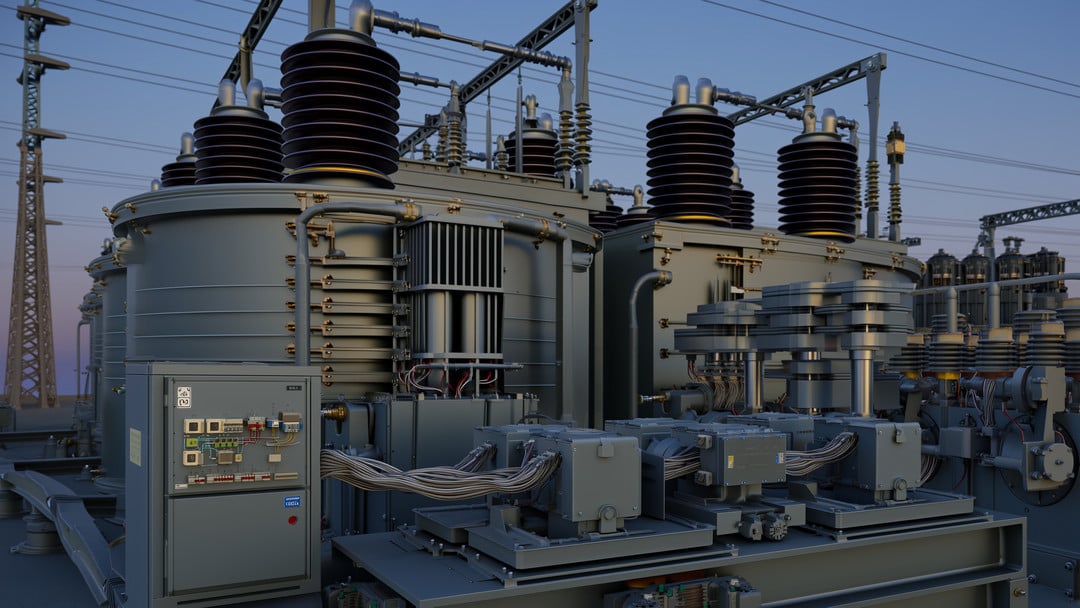
Grid transformers enabled long-distance, high-voltage transmission and flexible interconnection by making voltage conversion, reactive power management, and fault performance controllable at scale, whereas earlier grids were constrained by lower voltages, higher losses, and limited controllability. This shift improved reliability and allowed larger generation plants and regional power markets to form, but it also raised the importance of precision sensing, fast protection, and condition monitoring to avoid high-consequence failures. Rare earth elements matter less in the copper-steel core and coils than in the digital and electromechanical ecosystem around modern grid transformers: permanent magnets for sensors and actuators, phosphors and optics in monitoring and inspection tools, catalysts in materials processing, and alloying additions that support specialized components. In 2026 procurement and asset management, these subsystems influence uptime, safety, and lifecycle cost as much as nameplate MVA. This article maps which REEs show up in grid-transformer-adjacent components, explains the mechanism from element to performance benefit, traces the supply chain and chokepoints, summarizes 2025-2026 market and deployment signals, and outlines near-term risk and design trends relevant to utilities, EPCs, and developers.
Table of Contents
How Did Grid Transformers Change Power Grids — and Why Do Rare Earths Matter?
Before large grid transformers became standard equipment, power systems operated at relatively low voltages. Transmission distances were short, losses were high, and utilities could only serve limited areas. The ability to step voltage up for long-distance transmission and back down for distribution changed everything. It allowed larger generating plants to connect to load centers hundreds of miles away, enabled regional power markets, and made interconnected grids practical.
Grid transformers also introduced new layers of controllability. On-load tap changers manage voltage regulation in real time. Cooling systems protect windings under dynamic loading. Protection relays and monitoring devices guard against faults that could cascade across the system. These capabilities raised reliability — but they also raised the stakes. A single transformer failure at transmission voltage can cause widespread outages and take months to replace.
That combination of high consequence and high complexity is where rare earth elements enter the picture. They are not hiding inside the copper windings or grain-oriented electrical steel core. Instead, they show up in the sensors, actuators, monitoring devices, and inspection tools that surround a modern grid transformer. In 2026, as utilities push harder on condition-based maintenance and dynamic loading, these auxiliary subsystems influence uptime, safety, and lifecycle cost as much as nameplate MVA ratings.
This article maps which rare earth elements appear in grid-transformer-adjacent components, explains how each element contributes to performance, traces the supply chain and its chokepoints, summarizes current market signals, and outlines risk and design trends relevant to utilities, EPCs, developers, and procurement teams.
Rare Earth Role in Grid Transformers
Which Elements Are Used and Why
The rare earth elements most relevant to grid transformer auxiliary systems fall into a few functional groups.
Neodymium (Nd) and praseodymium (Pr) are the backbone of NdFeB permanent magnets. These magnets are compact and produce strong, stable magnetic fields, making them standard in position sensors, speed sensors, and small actuators found in cooling skid pumps, fans, and on-load tap changer drive assemblies. When operating temperatures are elevated — common near hot oil piping or in enclosed control cabinets — dysprosium (Dy) and terbium (Tb) are added in small quantities to maintain the magnet's resistance to demagnetization. The U.S. Department of Energy's Critical Materials assessments and the Critical Materials Institute consistently identify these four elements as central to high-performance permanent magnets.
Samarium (Sm) is the primary rare earth in SmCo magnets. These magnets trade some peak magnetic strength for superior high-temperature stability and corrosion resistance (opens in a new tab). That makes them relevant where sensors or actuators are mounted in persistently hot or harsh locations around a transformer — near radiators, in sealed enclosures with limited airflow, or adjacent to hot-oil circuits. ASM International handbooks provide widely referenced property baselines for these materials.
Europium (Eu) and yttrium (Y) appear in phosphors used in certain lighting and detector systems. Cerium (Ce) and lanthanum (La) show up in glass polishing compounds and optical glass formulations across industrial imaging supply chains. These elements are more relevant to inspection and diagnostic equipment used during factory acceptance testing and field maintenance than to permanently installed transformer components. The U.S. Geological Survey covers these usage patterns in its annual Rare Earths commodity summaries.
How It Works
Understanding the connection between a rare earth element and transformer performance requires tracing the functional chain from component to operational benefit.
On the cooling system, NdFeB or SmCo magnets sit inside speed sensors mounted on pump and fan motors. These sensors provide accurate RPM feedback to the cooling control system. Tighter cooling control keeps winding hot-spot temperatures lower and more predictable, which directly supports higher dynamic loading margins during renewable generation ramps or peak demand periods. Without accurate speed sensing, cooling response lags, and operators must derate the transformer or accept higher thermal risk.
For the on-load tap changer (OLTC), magnet-based position sensors using Nd and Pr — with Dy or Tb additions when thermal margins are tight — provide precise tap-position verification. Accurate position data under vibration and heat reduces the chance of misoperations and supports reliable voltage regulation, which is increasingly important as variable renewable generation creates more frequent voltage excursions on the transmission system.
In condition monitoring and inspection, REE-enabled phosphors and optical components improve signal-to-noise ratios in imaging and illumination tools used for factory QA and field diagnostics. Better imaging translates to faster, more reliable defect detection in bushings, seals, gaskets, and control cabinets during scheduled outages.
Thermal constraints are a recurring theme. Auxiliary cabinets and cooling equipment can see sustained elevated ambient temperatures and localized hot spots during fault events. When temperatures exceed standard NdFeB operating limits, heavy REE additions (Dy, Tb) or a switch to SmCo chemistry may be required to prevent demagnetization. This is a well-documented design trade in magnet supplier datasheets and Critical Materials Institute summaries.
Journey from Mine to Product
Supply Chain Steps
The path from raw ore to a functioning speed sensor on a transformer cooling skid is long and specialized. It typically follows this sequence: mined ore is processed into a mineral concentrate, then chemically separated into individual rare earth oxides of controlled purity. These oxides are reduced to metals and alloyed into magnet compositions (NdFeB or SmCo) or formulated into phosphor and optical materials. The International Energy Agency's critical minerals reporting and USGS supply chain summaries describe this staged processing chain in detail.
Magnet manufacturing alone involves powder processing, pressing, sintering at high temperature, precision machining, surface coating for corrosion resistance, and finally magnetization. The finished magnet then enters a sensor or actuator assembly that must meet industrial specifications for electromagnetic compatibility, ingress protection, and temperature and vibration tolerance typical of substation environments.
For phosphor and optical components, the chain includes controlled crystal growth, coating, and integration into illumination or detection modules. Each step adds transformation time, cost, and quality control requirements.
Typical Chokepoints
Three areas consistently create bottlenecks in this supply chain.
Separation and purity is the first. Producing magnet-grade rare earth oxides and metals requires tight impurity control. Heavy REEs like Dy and Tb are inherently more constrained in supply relative to light REEs such as Nd and Ce, so even small demand increases can tighten availability. The IEA's critical minerals analyses and U.S. DOE supply risk assessments highlight this mismatch repeatedly.
Magnet manufacturing capacity is the second. Sintering lines, coating processes, and quality assurance protocols are specialized. Lead times can stretch when demand surges across industries — electric vehicles, wind turbines, and industrial automation all compete for the same magnet production slots.
Component qualification is the third. Utilities and transformer OEMs typically require traceability documentation, formal change control, and reliability testing for any device deployed on a high-consequence asset. Qualifying a new sensor supplier or an alternate magnet grade is not a fast process. For specialized optical components used in inspection equipment, controlled crystal growth and phosphor coating processes can add further long-tail delays.
Statistics and Societal Impact
Quantitative Snapshot
The global power transformer market was valued in the range of 30 to 35 billion USD in 2025, with large power transformers (100 MVA and above) representing the segment under greatest supply pressure, according to MarketsandMarkets and Wood Mackenzie grid equipment outlooks published in 2025. Growth rates in the mid-single digits are projected through 2028, driven by grid expansion, aging fleet replacement, and renewable interconnection.
Procurement lead times for large power transformers remained elevated in 2025 and into 2026. NERC reliability assessments and European TSO procurement briefings reported typical lead times of 18 to 36 months for new large units, with some specialized designs extending further. Factory slot availability, not just manufacturing duration, was frequently the binding constraint.
The REE content in transformer-adjacent components is modest on a per-unit basis. Based on DOE Critical Materials Institute case studies and available OEM sensor bill-of-material data, a typical monitoring-equipped grid transformer might contain tens of grams to a few kilograms of rare earth magnet material across its full complement of sensors, actuators, and monitoring devices. The exact amount depends on the scope of the monitoring package specified.
Deployment drivers in 2025–2026 include record renewable interconnection queues, HVDC corridor expansion, and accelerating data center construction. The IEA's Electricity 2025 report and regional transmission planning documents from ENTSO-E and U.S. ISO/RTO organizations all point to rising substation build rates and increasing monitoring expectations for new transformer installations.
Downstream Effects
Better sensing and monitoring translate directly into operational value. Detecting incipient faults earlier — through dissolved gas analysis trends (opens in a new tab), bushing capacitance shifts, or cooling system anomalies — enables condition-based maintenance instead of time-based maintenance. Utilities can make better loading decisions during peak demand and renewable ramps, reducing forced outage risk and avoiding unserved energy.
Reliability and safety improvements also reduce the likelihood and consequence of catastrophic failures. Faster detection of bushing degradation, cooling system decline, or abnormal tap changer behavior supports the asset health indices that modern utility risk-based planning depends on. When a single large power transformer failure can cost millions of dollars and take months to remediate, even small gains in monitoring accuracy are significant.
Innovators and History
Key Breakthroughs
The development of SmCo magnets in the 1960s and 1970s, followed by the invention of NdFeB magnets in the early 1980s, created the foundation for compact, high-field permanent magnets that eventually became standard in industrial sensors and actuators. ASM International historical reviews and widely cited materials science literature document this progression, noting contributions from researchers in the United States, Japan, and Europe.
Separately, the evolution of transformer condition monitoring created the demand pull for these components. The development of dissolved gas analysis instrumentation, bushing monitoring systems, and digital control integration over the 1990s and 2000s drove adoption of high-reliability sensors and electronics where REE-enabled magnets and optical components found indirect but important roles. IEEE transformer committee guides and CIGRE technical brochures chronicle this adoption in detail.
Standards maturation played a parallel role. Diagnostic practices like frequency response analysis, partial discharge measurement, and online monitoring frameworks moved from laboratory techniques to routine industry practice through successive editions of IEEE and IEC standards.
From Lab to Product
Materials breakthroughs became manufacturable through advances in powder metallurgy, improved anti-corrosion coatings, and better high-temperature coercivity engineering. Early approaches added heavy REEs uniformly through the magnet; more recent grain-boundary diffusion techniques achieve similar coercivity with significantly less Dy or Tb. These processing improvements qualified magnets for sustained operation in industrial environments rather than controlled lab conditions.
Transformer OEMs and service firms then integrated these components into packaged monitoring systems and auxiliary skids with utility-grade quality assurance, change control procedures, and interoperability requirements. The result was a translation of materials science advances into fleet-scale reliability tools that could be specified, procured, and maintained within established utility asset management frameworks.
Why It Matters Now
Current Drivers
Grid expansion and refurbishment activity in 2025 and 2026 is running at historically high levels. Renewable interconnection queues, data center load growth, and resilience hardening programs are all increasing the number of transformers being deployed. At the same time, utilities are specifying denser monitoring packages for high-value assets, which means more sensors per transformer and more REE-containing components per substation.
Higher volatility in transformer loading profiles makes this monitoring more valuable, not less. As wind and solar generation ramp up and down, transformers experience more frequent thermal cycling. Dynamic thermal management and real-time condition monitoring help operators push closer to true thermal limits without exceeding them, which defers costly upgrades and improves asset utilization. Cooling system speed sensors, OLTC position monitors, and bushing capacitance instruments all contribute to this capability.
Security and Policy Context
Processing and magnet manufacturing remain geographically concentrated. The IEA's Critical Minerals 2025 report and U.S. DOE supply chain strategy updates continue to flag midstream separation and sintered magnet production as areas where a small number of countries dominate global output. Policy responses in 2025 and 2026 include onshoring incentives under the U.S. Inflation Reduction Act, strategic stockpiling discussions in the EU and Japan, and recycling pilot programs aimed at recovering magnet materials from end-of-life electronics and industrial equipment.
For procurement teams, this concentration creates a specific risk profile. Export controls and trade restrictions affecting critical minerals and magnet inputs can disrupt the supply of sensor-heavy monitoring packages even when transformer steel and copper are sourced from unaffected regions. Qualifying alternate sensor suppliers, maintaining spares inventories for high-failure-impact monitoring components, and requiring change-control notifications for substituted magnet grades are becoming standard elements of 2026 asset management practice.
Future Outlook
Materials and Design Trends
Heavy-REE reduction in permanent magnets is an active area of development. Grain-boundary diffusion techniques that concentrate Dy or Tb at grain surfaces rather than distributing it uniformly through the magnet bulk can maintain high-temperature coercivity with significantly less material. DOE and Critical Materials Institute program publications describe ongoing improvements in this area, and peer-reviewed magnet processing research shows continued gains through 2025 and 2026.
Recycling is scaling up, though not primarily from transformer-related sources. End-of-life magnets from electric vehicle motors, consumer electronics, and wind turbine generators represent larger and more accessible feedstock volumes. Increased recycled supply could stabilize pricing and availability for the sensor and actuator magnets used across grid transformer auxiliary systems. The EU's Critical Raw Materials Act and IEA reporting track this policy and technology trajectory.
Design trends in transformer monitoring point toward more sensor fusion, non-contact measurement techniques, and higher-temperature electronics packaging. These approaches can reduce maintenance burden while keeping magnet-based sensing accurate under harsh substation conditions. For procurement teams and specification writers, this shifts emphasis toward validated reliability data, documented change control, and demonstrated performance at rated operating temperatures.
Five-to-Ten-Year Scenario
Demand for REE-dependent components in grid infrastructure is likely to rise over the next decade. Monitoring density per transformer is increasing. HVDC buildout requires converter transformer installations with extensive auxiliary systems. Substation automation and digital twin initiatives add further sensor and actuator requirements. Even though the transformer active part remains largely REE-free, indirect REE exposure through lifecycle support contracts, spare parts, and monitoring upgrades is becoming more significant.
Bottlenecks in heavy REE availability and magnet manufacturing capacity may persist, particularly if electric vehicle and wind energy demand grows as projected. Mitigation strategies for the grid sector will likely include multi-sourcing of sensor and actuator suppliers, qualifying alternate sensor designs that reduce or eliminate REE content, growing recycled feedstock contributions, and regional midstream investments aligned with industrial policy initiatives cited by the IEA and national energy ministries.
Glossary
NdFeB — A family of permanent magnets based on neodymium, iron, and boron, widely used for compact, high-strength magnetic fields in sensors and actuators.
SmCo — A family of permanent magnets based on samarium and cobalt, valued for high-temperature stability and corrosion resistance in harsh operating environments.
Coercivity — A magnet's resistance to losing its magnetization when exposed to heat or opposing magnetic fields. Higher coercivity means better performance at elevated temperatures.
Grain-boundary diffusion — A magnet processing method that concentrates heavy rare earth elements at grain boundaries rather than throughout the bulk, boosting coercivity while using less Dy or Tb.
Sintering — A high-temperature densification step in magnet manufacturing where pressed powder is heated to form a solid, dense structure without fully melting.
Phosphor — A luminescent material that absorbs energy and re-emits it as visible light, used in lighting, display, and some detector or inspection systems.
Condition monitoring — The practice of using sensors, analytics, and diagnostic techniques to detect abnormal transformer behavior before it leads to failure, supporting maintenance planning and loading decisions.
FAQs
Do grid transformers contain rare earths in the core or windings?
The active part of most grid transformers is dominated by electrical steel, copper or aluminum, cellulose insulation, and insulating liquid, so REEs are generally not a primary constituent of the core and windings. REEs are more likely to appear indirectly in auxiliary systems, monitoring devices, sensors, and some inspection tools used in manufacturing and maintenance.
Which transformer subsystems are most likely to use REE-containing components?
Sensor and actuator assemblies associated with cooling equipment, tap changer auxiliaries, and monitoring packages are the most likely areas, because permanent magnets such as NdFeB or SmCo are common in non-contact sensing. Optical and phosphor-related REE uses are more likely tied to diagnostic and inspection equipment rather than being embedded permanently in the transformer.
Why are Dy and Tb considered higher-risk materials than Nd or Pr?
Dysprosium and terbium are heavy rare earths that are typically less abundant and have tighter supply relative to demand, and they are used to improve magnet coercivity at elevated temperatures. Because only small additions can be performance-critical, disruptions can affect availability and cost of specific magnet grades used in industrial sensors and actuators, as discussed in IEA and U.S. DOE critical materials assessments.
Can REE supply issues delay transformer projects even if the transformer itself is mostly steel and copper?
Yes, because modern installations increasingly rely on monitoring, control cabinets, and auxiliary equipment that may include magnet-based sensors and specialized electronics with their own supply chains. If utilities specify comprehensive monitoring packages, delays in these components can affect commissioning readiness even when the main transformer is delivered.
What procurement practices reduce exposure to REE-related component risks?
Procurement teams can request traceability for critical sensor and actuator components, enforce change-control notifications for substituted magnet grades, and qualify alternates early through factory acceptance and functional tests. Stocking strategies for high-failure-impact monitoring components and verifying multi-source availability can also reduce downtime risk during maintenance or replacements.
Conclusion
Rare earth elements occupy a small but strategically significant position in the grid transformer ecosystem. While the transformer active part remains dominated by electrical steel, copper, and insulating materials, the auxiliary systems, sensors, actuators, and monitoring tools that ensure reliable operation increasingly depend on REE-enabled components such as NdFeB and SmCo permanent magnets and phosphor-based optical materials. As grid expansion accelerates through 2025-2026 and beyond, driven by renewable interconnections, HVDC buildout, and data center load growth, the monitoring density per transformer is rising and with it the indirect exposure to REE supply chains. Utilities, EPCs, and developers can manage this exposure through proactive procurement practices including traceability requirements, change-control notifications, alternate qualification, and strategic spares stocking. Meanwhile, materials science advances in heavy-REE reduction, recycling scale-up, and regional midstream investment are gradually broadening the supply base. Understanding where rare earths appear in the transformer value chain and why they matter for performance is essential for informed asset management and resilient grid planning in the years ahead.
